
The Supreme Court Will Hear the Case That Could Let ICE Detain Millions Without a Bond Hearing
Ricardo Barbosa da Cunha lived in Massachusetts for two decades, married, had two kids, and ran a small construction business -- then immigration agents arrested him and said he wasn't entitled to a bond hearing, ever, under a new reading of a 30-year-old law. Nine of 11 federal appeals courts say that reading is wrong. On October 1, the Supreme Court agreed to hear his case -- not the government's preferred alternative -- a decision that could reach as many as 6 million people.
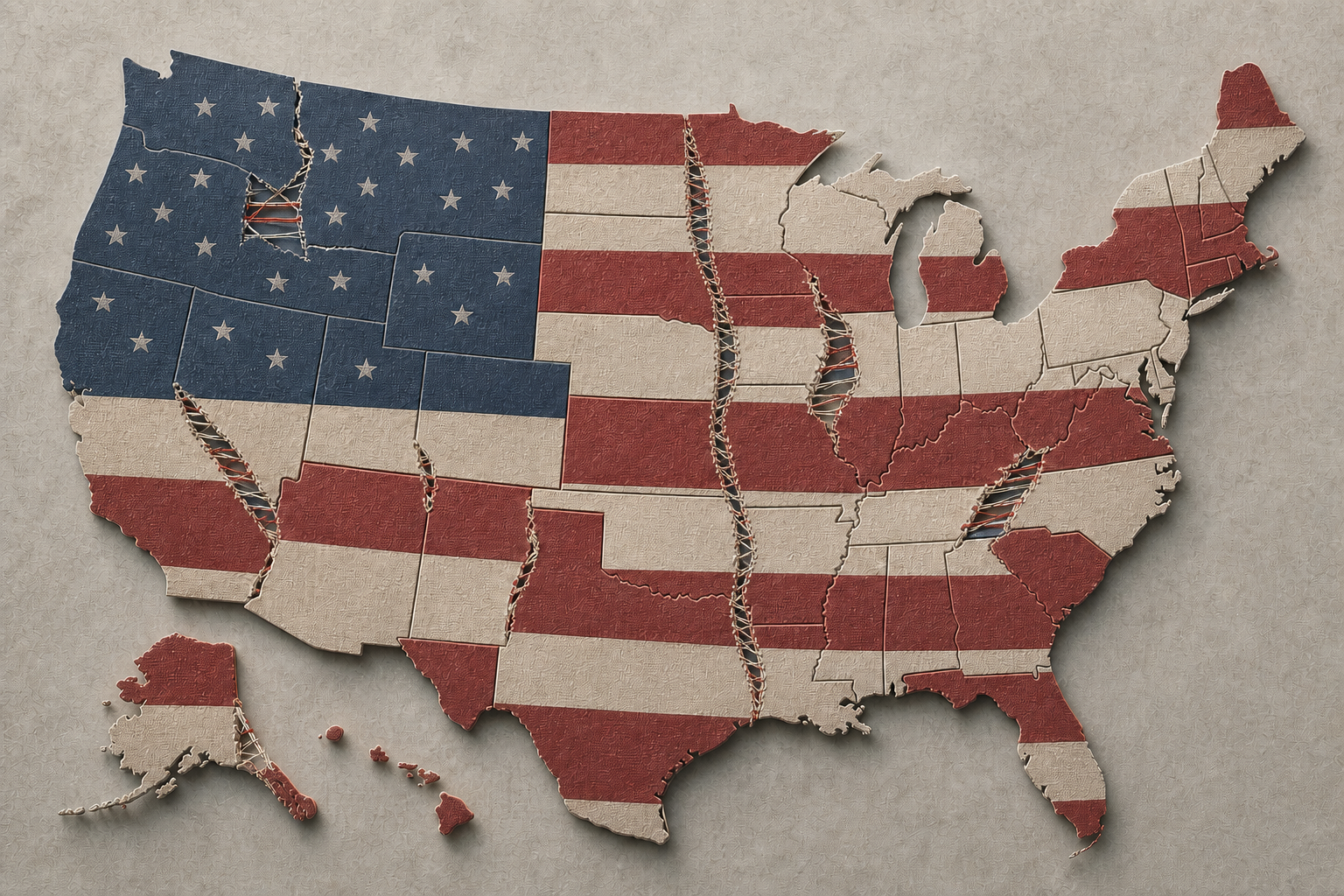 PoliticsYour Outrage Isn't Just Heard by Campaigns — It's Harvested, and Both Parties Built the Machine
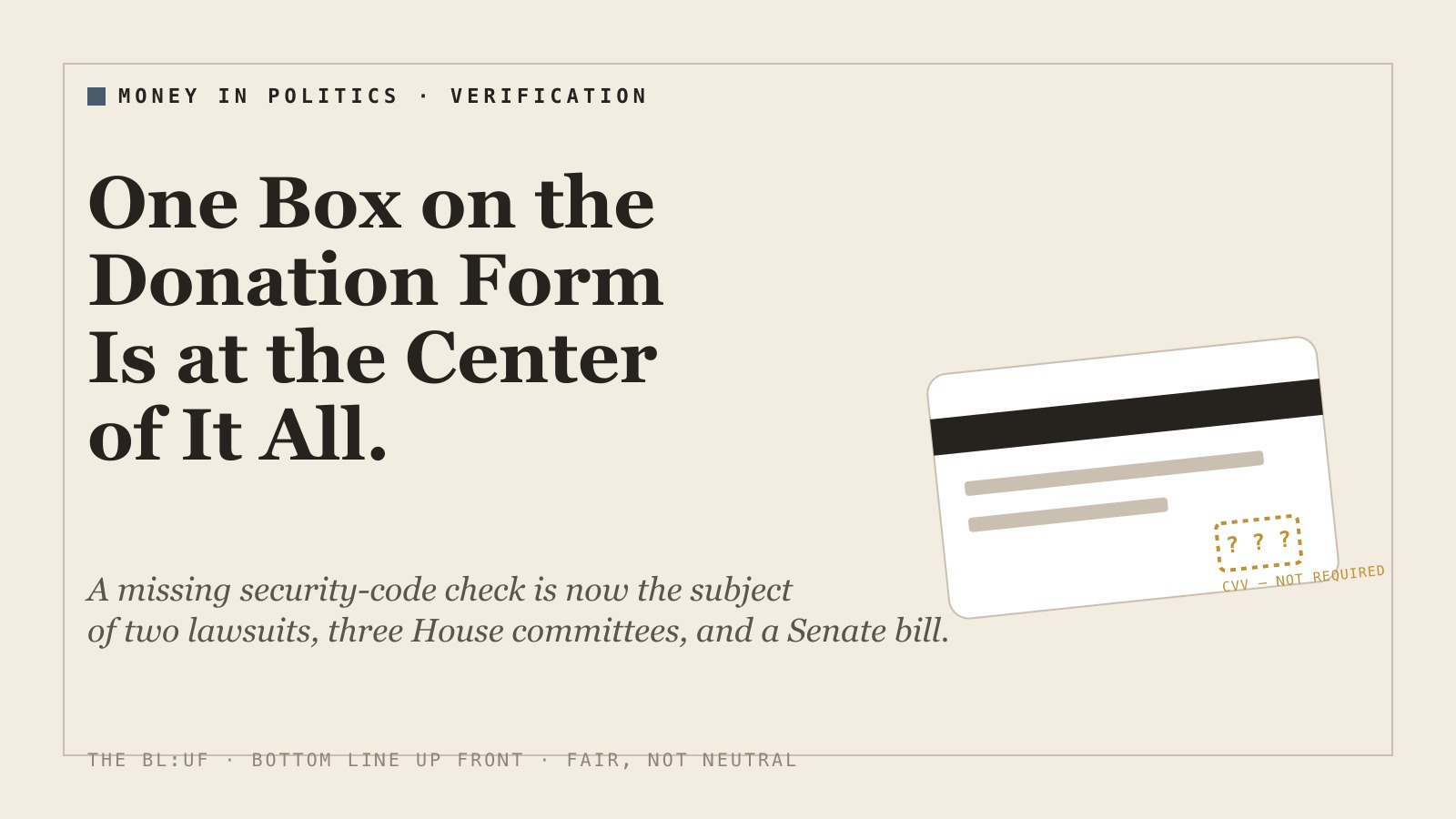 PoliticsRepublicans Say ActBlue Covered Up Foreign Donations. Ten Witnesses Pleaded the Fifth. Here's What's Actually in the Record.
 The SystemA Private Data Center Got Labeled a Military Project. That's How It Beat a Public Vote — and a Dying Lake's Water Law.
 Tech & YouMicrosoft Rebuilt Windows Recall After a Security Disaster. A Year Later, Researchers Are Still Getting In.
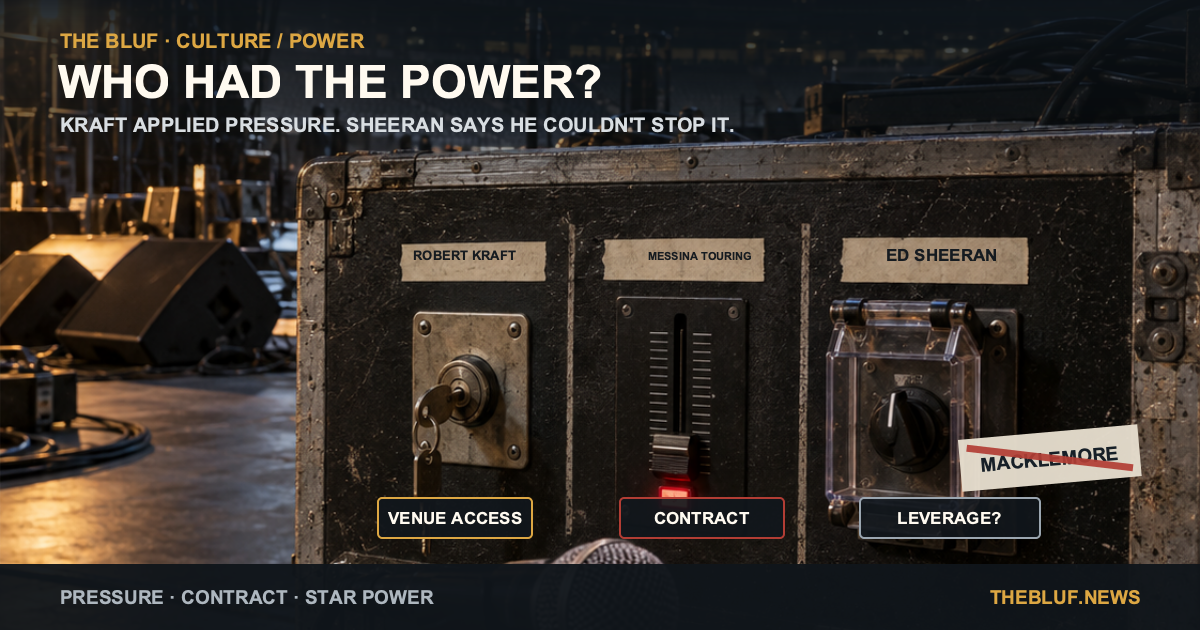 EntertainmentEd Sheeran Says He Couldn't Save Macklemore's Spot on His Tour. People Who Know How These Deals Work Say Stars Like Him Usually Call the Shots.
 TLDR — the podcastThe long version, read to you.▶ Listen
Civic. Travel. Food.
The bottom line, up front.
Eight ordinary places are building a profile of you.
Click a place — car, phone, home, work, store, street, school, or airport — to see what gets collected, who may receive it, and what you can actually do.
The questions we keep answering.
8 parts publishedThe Divided States of AmericaOpen the series → 17 parts publishedUnited Surveillance of AmericaOpen the interactive map →
 2 parts publishedAdvise and ConsentOpen the series →
 7 parts publishedNobody Told YouOpen the series →
 2 parts publishedAre We the Bad Guys?Open the series →
 5 parts publishedElder CareOpen the series →
 6 parts publishedThe OverlookedOpen the series →
 5 parts publishedUnder the HoodOpen the series →
 3 parts publishedNatural CausesOpen the series →
 4 parts publishedThe RealignmentOpen the series →
 1 part publishedQuietly RaisedOpen the series →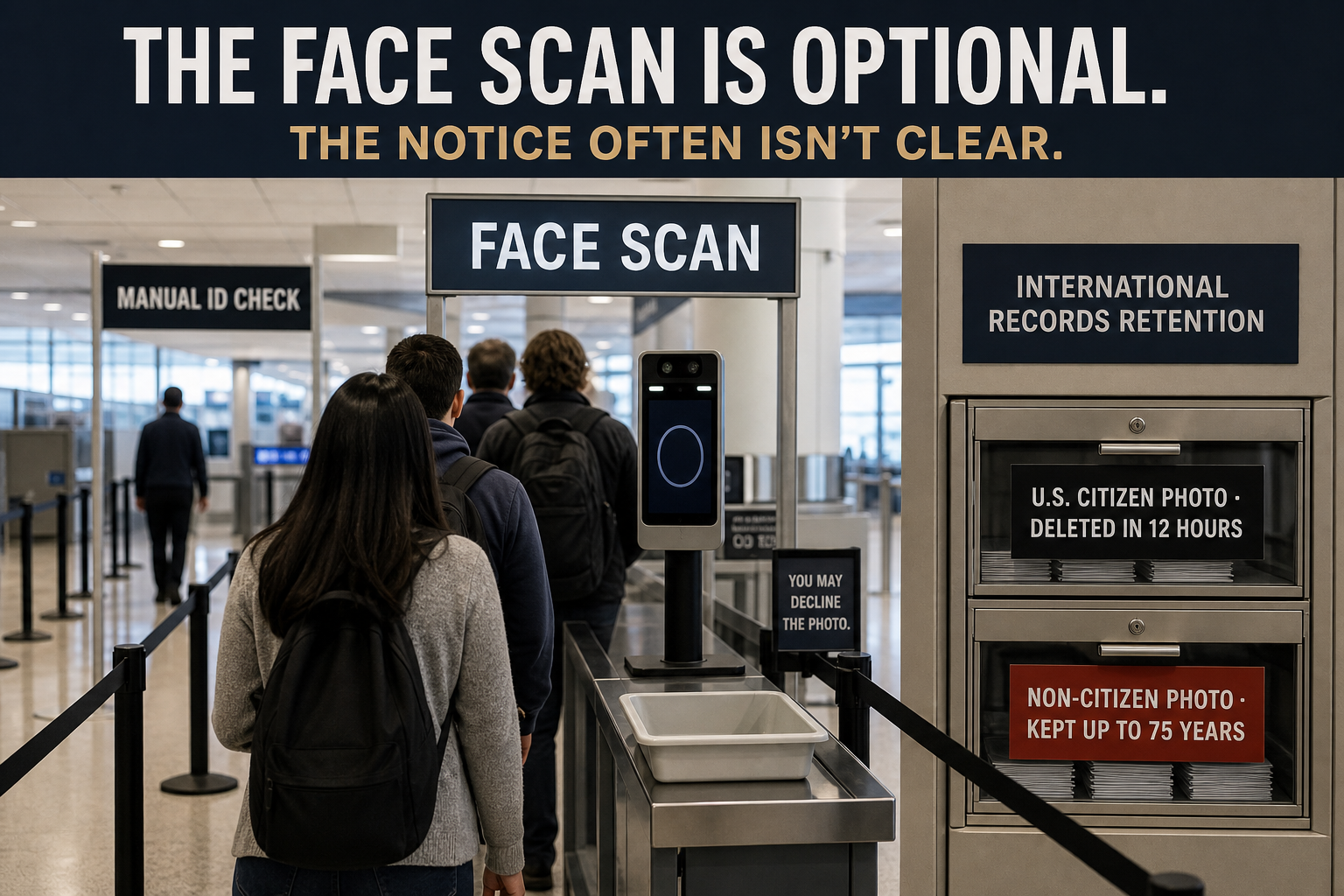
TSA's face-scanning checkpoints are legally optional for domestic travelers — but a federal oversight board's own May 2025 report found the agency doesn't clearly tell you that, and TSA's own accuracy testing found a real gap in match rates for Black travelers. For international travel, CBP keeps non-citizens' face data for up to 75 years. It deletes U.S. citizens' photos in 12 hours. Congress has been trying to pause the program since 2023 and hasn't.
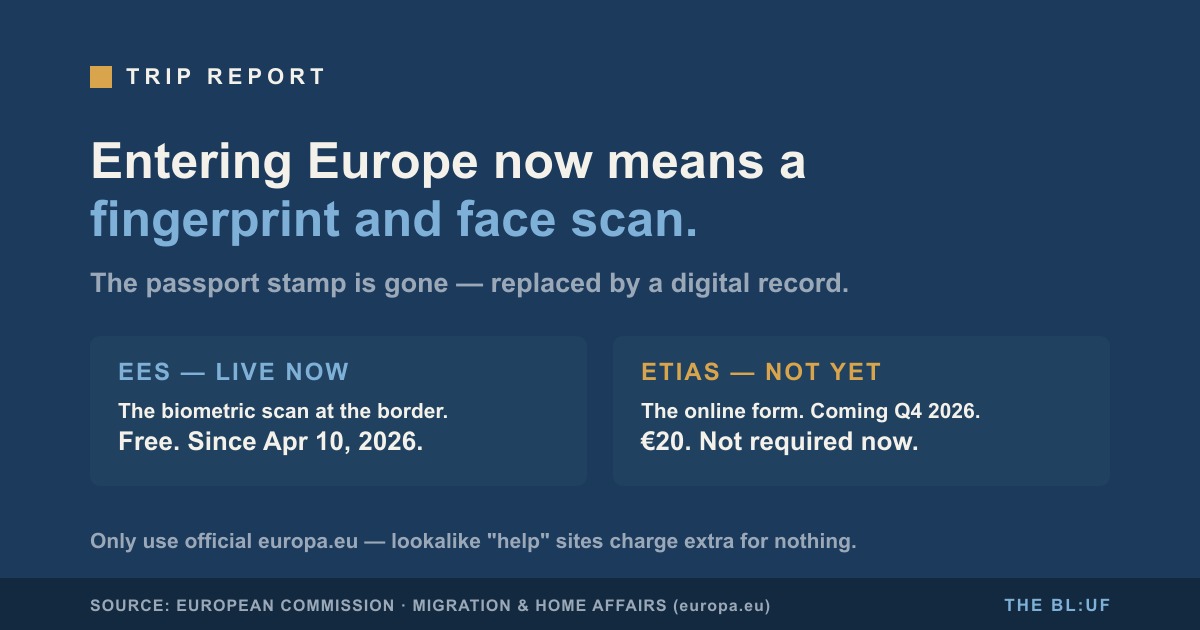
The EU's Entry/Exit System (EES) became fully operational across all 29 participating countries on April 10, 2026. Every non-EU visitor — US passport holders included — now has fingerprints and a facial photo taken at the border on short stays, and the passport stamp is gone, replaced by a digital record. The EES is free. A separate online authorization called ETIAS — €20, valid up to three years — is due to launch in the last quarter of 2026, so a trip this summer needs the scan but not yet the form.
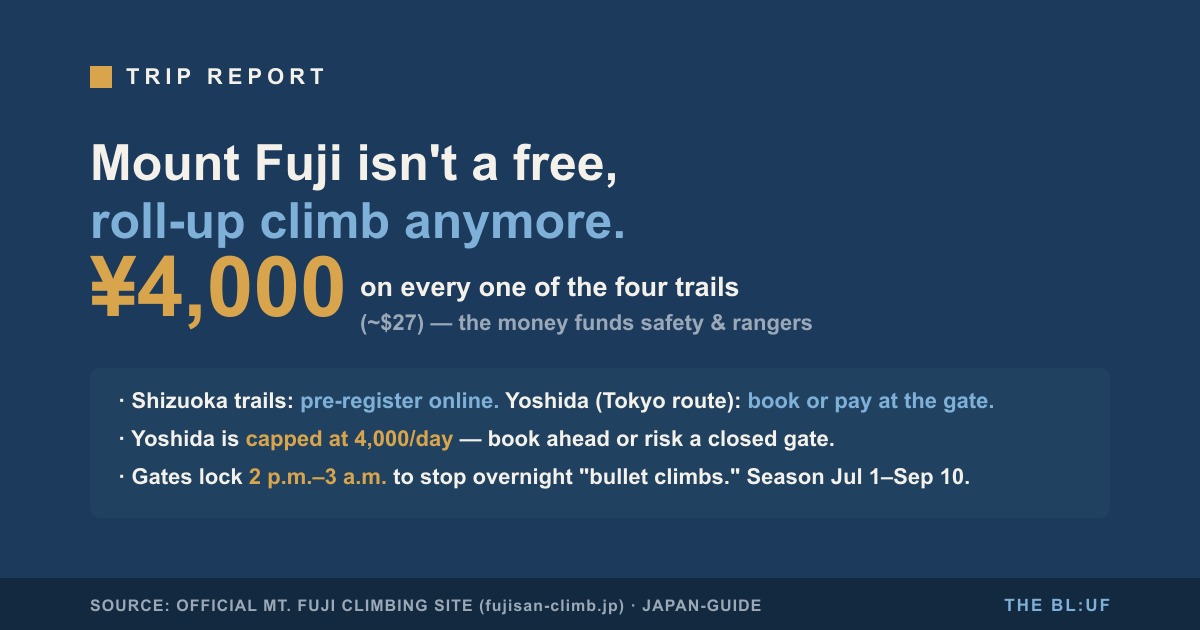
For the 2026 season, every one of Mount Fuji's four official summit trails charges a flat ¥4,000 (about $27) entry fee — the free, roll-up-and-climb Fuji is gone. On the three Shizuoka-side trails you register and pay online before you arrive; on the busy Yoshida Trail (the Tokyo route) you can book ahead or pay at the gate, but it's capped at 4,000 climbers a day and can close once it fills. Gates on all trails lock from 2 p.m. to 3 a.m. to stop the exhausting overnight "bullet climb." Practical takeaway: for Yoshida, book early or risk the cap; on the Shizuoka trails, pre-register online; and bring real boots and rain gear either way.
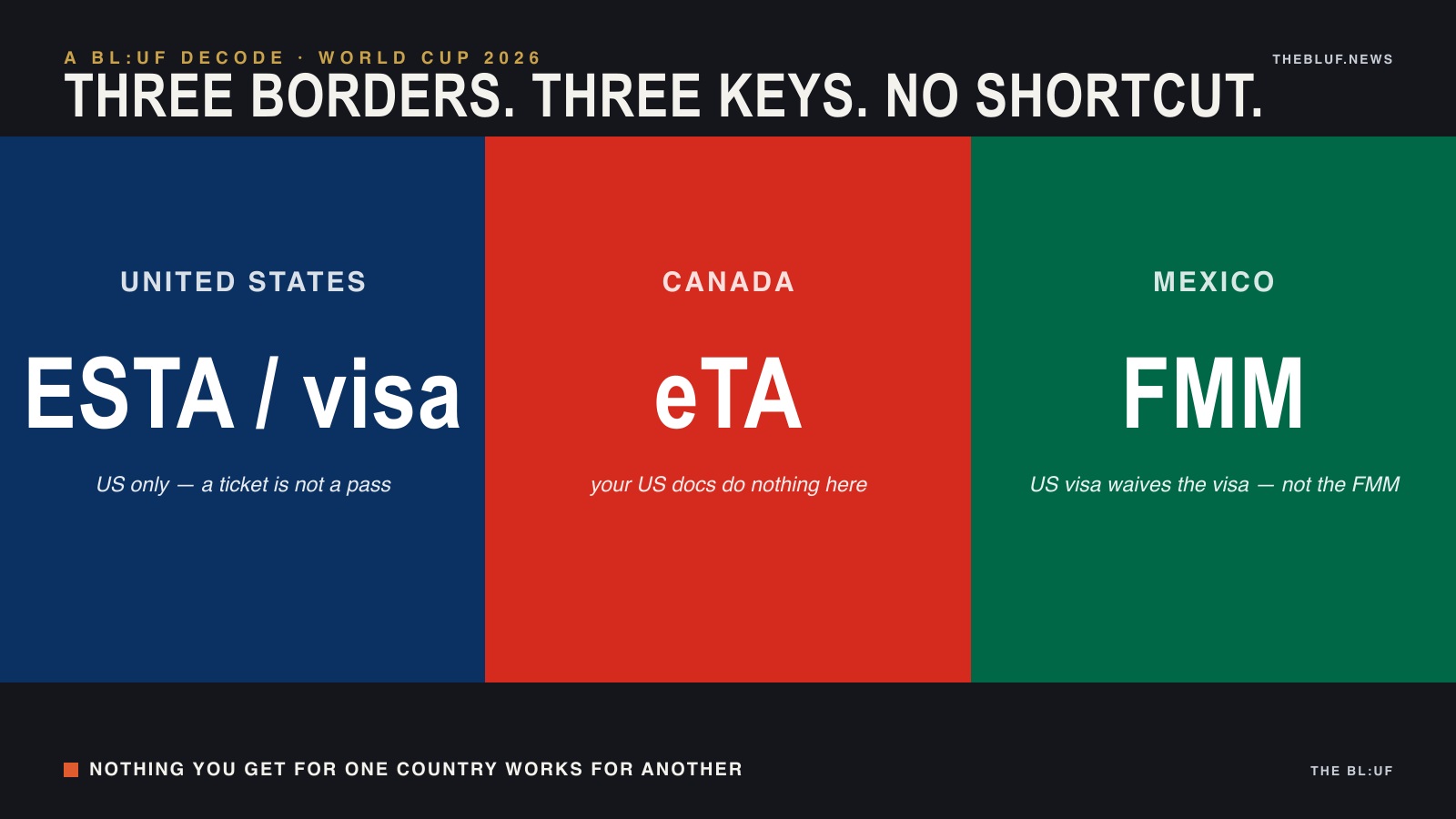
This is the first World Cup spread across three countries — the US, Canada, and Mexico — and each one is its own immigration system that ignores the other two. A US visa or ESTA gets you exactly nowhere in Canada or Mexico; a quick hop to Cancún or Toronto does **not** reset your 90 days in the US; and there is no "Fan ID" or special World Cup visa, whatever anyone selling one tells you. For most fans coming from visa-waiver countries it's a three-item checklist, not chaos. But the traps that strand people aren't the obvious ones — so here's the map before you buy the flights.

Spain is heading for another record ~100 million visitors — and is deliberately steering them off the overcrowded coast (Barcelona, the Balearics, the Canaries) toward 'Empty Spain': inland regions, the green north, and the off-season. It's working — inland visits are up about 60%.