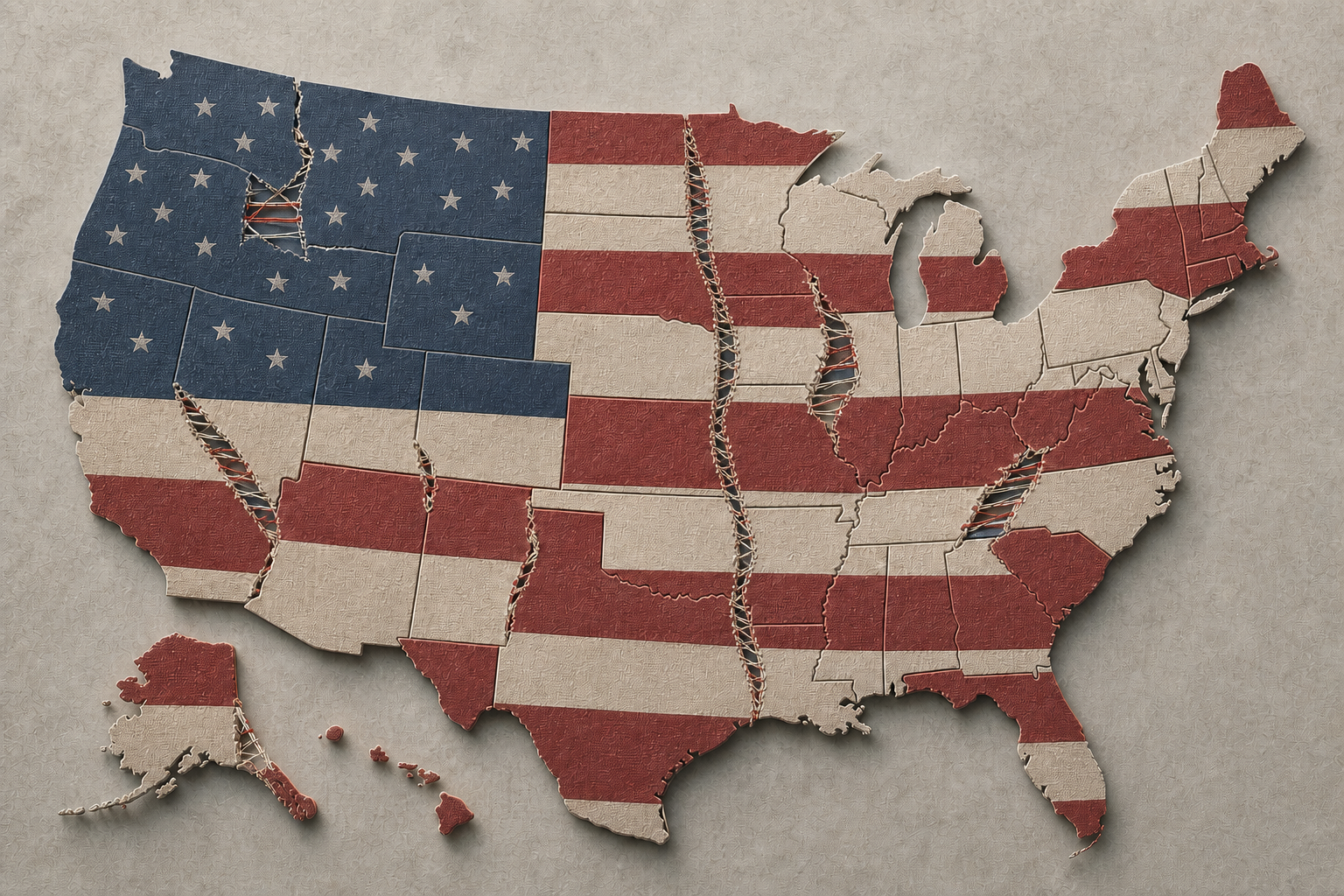
A monster earthquake in one country. A volcano stirring in another. Floods, a freak heat wave, a sinkhole swallowing a street — all in the same news week. It's hard not to feel like the planet is winding up for something, and plenty of viral clips will tell you exactly that.
It isn't. But the honest answer is more interesting than either the doom or the dismissal — because some of these things genuinely are connected, and the whole trick is knowing which.
What's actually linked
Geology and weather do run on real chains of cause and effect — just local ones, not a global conspiracy of the Earth.
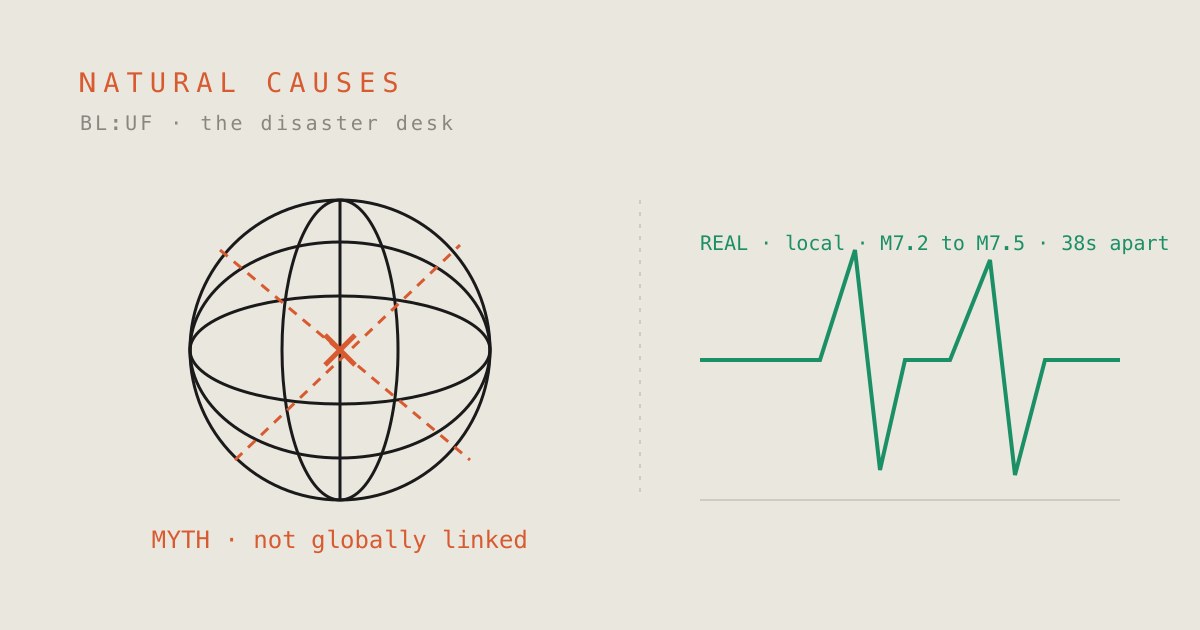
- One quake can set off its neighbors. When a fault slips, it loads the rock right next to it. In Venezuela this June, a magnitude 7.2 was followed by a 7.5 just 38 seconds later — the country's strongest in over a century, and a disaster that has killed more than 3,500 people as of July 7, 2026, with the toll still rising. The first didn't reach across the planet to cause the second; it shoved the fault next door over the edge. Aftershocks are the same story, smaller.
- Hot oceans make stronger storms. A warmer sea surface is fuel, which is why the most intense hurricanes have been spinning up faster. El Niño and La Niña — swings in Pacific Ocean temperatures — tilt whether a season runs heavy on Atlantic hurricanes or Pacific typhoons.
- A subduction quake can raise a tsunami; drought and a leaking pipe can open a sinkhole. Real chains, every one — but each is a local mechanism with a known reach.
What only looks connected
- "Earthquakes are increasing." They aren't. We have far more seismometers than we did 30 years ago, so we detect more — especially the small ones. More dots on the map means better instruments, not more earthquakes.
- The run of giant quakes in the 2000s — Sumatra, Chile, Japan — felt like a building pattern. Seismologists tested it, and the global run is statistically indistinguishable from a random streak: the same way a coin can land heads five times in a row and mean nothing.
What's pure myth
- A quake on one side of the planet setting off a quake on the other: no — by the time the shaking has traveled that far it's far too weak to break a distant fault.
- Planetary alignments, "pole shifts," Schumann-resonance doom: no — they feel scientific because they borrow real words, but the forces are tiny. A planetary alignment tugs on Earth's crust less than the Moon does every day, and the Moon doesn't set off earthquakes either.
- A hurricane causing a tsunami, or the reverse: no — they're different machines entirely.
The one real thread
There is a single force touching almost all of it — but not the way the doom clips mean. Climate change does not cause earthquakes or volcanoes. What it does is amplify the damage: higher seas push a storm surge farther inland, warmer air holds more rain for a flood, a hotter ocean loads more energy into a cyclone. It's an impact multiplier, not a shared trigger. The ground isn't waking up — the water and the air are just getting more dangerous to live next to.
So: is the planet waking up? No. Is nothing happening? Also no. A handful of real, local, well-understood chains are running at once, and the internet stitches them into one story the science doesn't support. Knowing the difference is the difference between being prepared and being panicked.
Next in Natural Causes → Part 2: the disaster that is almost never what it looks like — the sinkhole.