1. THE WEDGE — every day is the apocalypse
Open your phone in an election year and the tone is always the same: all caps, a countdown, a catastrophe. "They're winning. We're finished. FINAL chance. DONATE NOW." The messages are engineered to feel that way. Campaigns A/B-test subject lines and only the versions that pull the most money go to the whole list — so the winners are almost always the ones that scare or enrage you most. (Boston Review; Fast Company, Sept 2020) The system doesn't reward calm; panic converts.
2. THE MACHINE — how the anger becomes money
The pipes are huge. Almost all small-dollar money flows through two platforms: WinRed (right) and ActBlue (left). In 2020, ActBlue processed ~$3.2B and WinRed ~$1.9B (OpenSecrets, Aug 2021); by 2024, ActBlue ~$3.8B and WinRed $1.8B from 4.5M donors (FEC filings; WinRed). Halfway through the 2026 midterm cycle, ActBlue had already pulled in a record $568M in Q1 and $586M in Q2 — its best non-presidential quarter ever, roughly $1.15B for the first half of the year (ActBlue, Q1 2026; ActBlue, Q2 2026); WinRed's committee reported $748.8M in total receipts for the 18 months from January 2025 through June 2026 (FEC). At that scale, tiny tweaks that squeeze a little more per donor add up fast.
The appeals are built to be toxic — on purpose. A 2025 study in Party Politics analyzed 2020 Facebook ads and found messages aimed at donors were measurably more toxic, more negative, and more likely to invoke a polarizing president than messages aimed at voters — the "turn up hostility to raise money" pattern showed up across the board (the study found GOP ads on average more toxic than Democrats'). (Kim, Zilinsky & Brew, Party Politics 31(3):549–561, 2025) Anger isn't a byproduct of the fundraising. Anger is the product.
Some of it became a trap. The clearest case: the pre-checked box. In 2020 a New York Times investigation found Trump's operation + WinRed set donation forms to auto-enroll people in recurring weekly charges — you had to un-check a box to avoid it — then added a second pre-checked box (an extra gift they internally called the "money bomb"). Some supporters were charged half a dozen times in a month without realizing. (NYT/Goldmacher via Baltimore Sun) The damage showed at the banks: Trump's operation refunded $122.7M to WinRed donors (10.7% of its platform raise); the Biden/ActBlue refund rate was ~2.2%. At one point late 2020, these unwanted charges were up to 3% of all fraud complaints at banks and a major card company. (CNN, Aug 7 2021; Forbes)
Not only a Republican tactic. ActBlue used pre-checked recurring boxes too; when four state attorneys general (AGs) — NY, CT, MD, MN — opened a consumer-protection probe of both platforms in 2021, ActBlue moved to end the pre-checked practice as of July 1, 2021. (CNN, Jul 9 2021; Foley Hoag)
Then there are "scam PACs" — committees that raise on a name or cause and spend almost none on politics; watchdogs estimate 80–90%, sometimes 99%, vanishes into "overhead" and the operators' pockets. (Brennan Center) In April 2024 the Campaign Legal Center asked the FEC to investigate two using AI-style Trump-voice clips — Patriots for American Leadership ($1.4M raised, 3% to candidates) and Campaign for a Conservative Majority ($480K). (CLC, Apr 22 2024) It happens on the left too: in 2025 the Democratic National Committee (DNC) moved against "National Democrats," which raised >$500K from small donors via misleading texts and spent <$10K on one candidate; ActBlue booted it. (Axios, Oct 2025)
3. WHO PROFITS — the people downstream of your anger
- The platforms take a cut on every transaction and process billions; volume is the business, and fear drives volume.
- Consultants and list vendors get paid to write, test, and blast the messages and rent donor lists; a furious donor who gives five times is worth more than a calm one who gives once — so the incentive is to keep you furious.
- PAC operators (in the scam cases) are the whole point: the "cause" moves money into salaries and a friendly web of firms they often own. Operators Matthew Tunstall and Robert Reyes Jr. got 10 and 7 years in prison for exactly this. (OpenSecrets, Aug 2023)
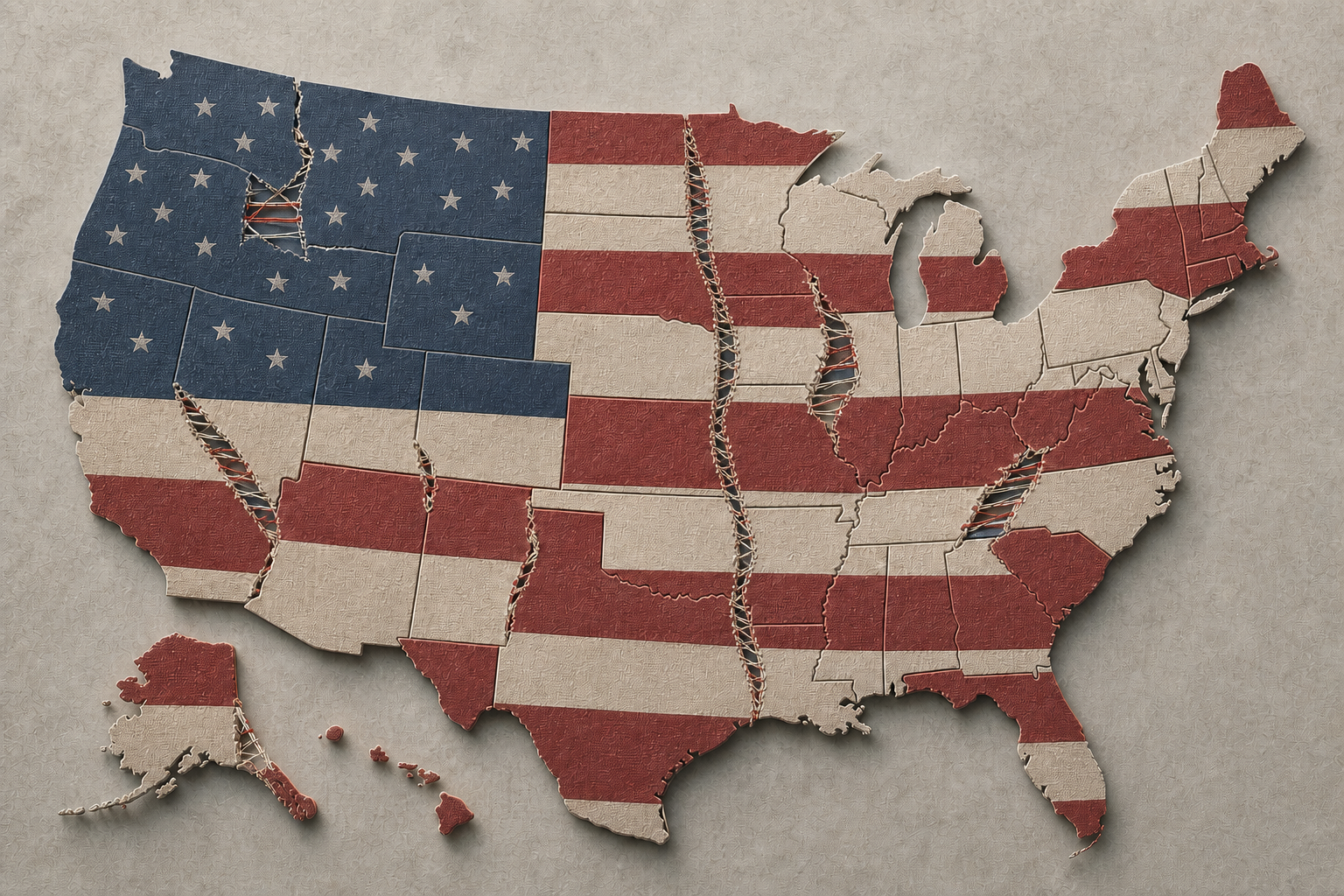
The through-line, both sides: the enemy is a revenue source. A resolved fight raises nothing; an existential threat raises everything — so the machine keeps the other side cast as an existential threat, the exact belief this series is about.
4. COMMON GROUND — what curbs it, and your one move
The quiet agreement the machine talks over: a Brennan Center poll of 2,000 registered voters, fielded April 28–May 6, 2026, found 92% — 90% of Republicans, 93% of Democrats, 93% of independents — call corruption in politics a big problem, and 79% want a constitutional amendment restoring limits on money in elections. (Brennan Center, 2026) Almost nobody, left or right, is for being tricked into recurring charges.
- The pre-checked box is on its way out after the 2021 state attorneys general probe; states kept consumer-protection/auto-renewal laws in force.
- A federal "click-to-cancel" rule was written, struck down, and is now being rewritten from scratch. The FTC finalized its Negative Option / Click-to-Cancel rule in Oct 2024 (clear disclosure, express consent, easy cancellation) (FTC); in July 2025 the Eighth Circuit vacated the whole rule on a procedural failure, days before it took effect. (Latham & Watkins) In March 2026 the FTC reopened the rulemaking with a new public-comment notice (comments due April 13, 2026) — but a replacement rule is likely years away, and it's existing state auto-renewal laws and the FTC's other enforcement tools that apply right now. (Federal Register, Mar 13 2026; Gibson Dunn) So the protection people assumed was coming still isn't in force.
Your one move: before giving to any group that reached you through a scary text, do two 30-second checks. (1) On the payment screen, read the fine print and un-check any box that signs you up for repeat charges — that one click saved thousands of 2020 donors from surprise withdrawals. (2) If it's a PAC (not a candidate's own committee), look it up on OpenSecrets and see how much it actually spends on politics vs. overhead; if only a few cents on the dollar reach real campaigns, that's your answer. Giving straight to the candidate's official committee cuts most middlemen out.
Back to the throughline: we imagine the other side as far more extreme than it is, and the most plugged-in are the most wrong (More in Common, 2019). The anger till needs that gap open. Every apocalyptic text bets you believe your neighbor is the end of the world. You don't have to take the bet — un-checking one box is a fine place to start refusing.