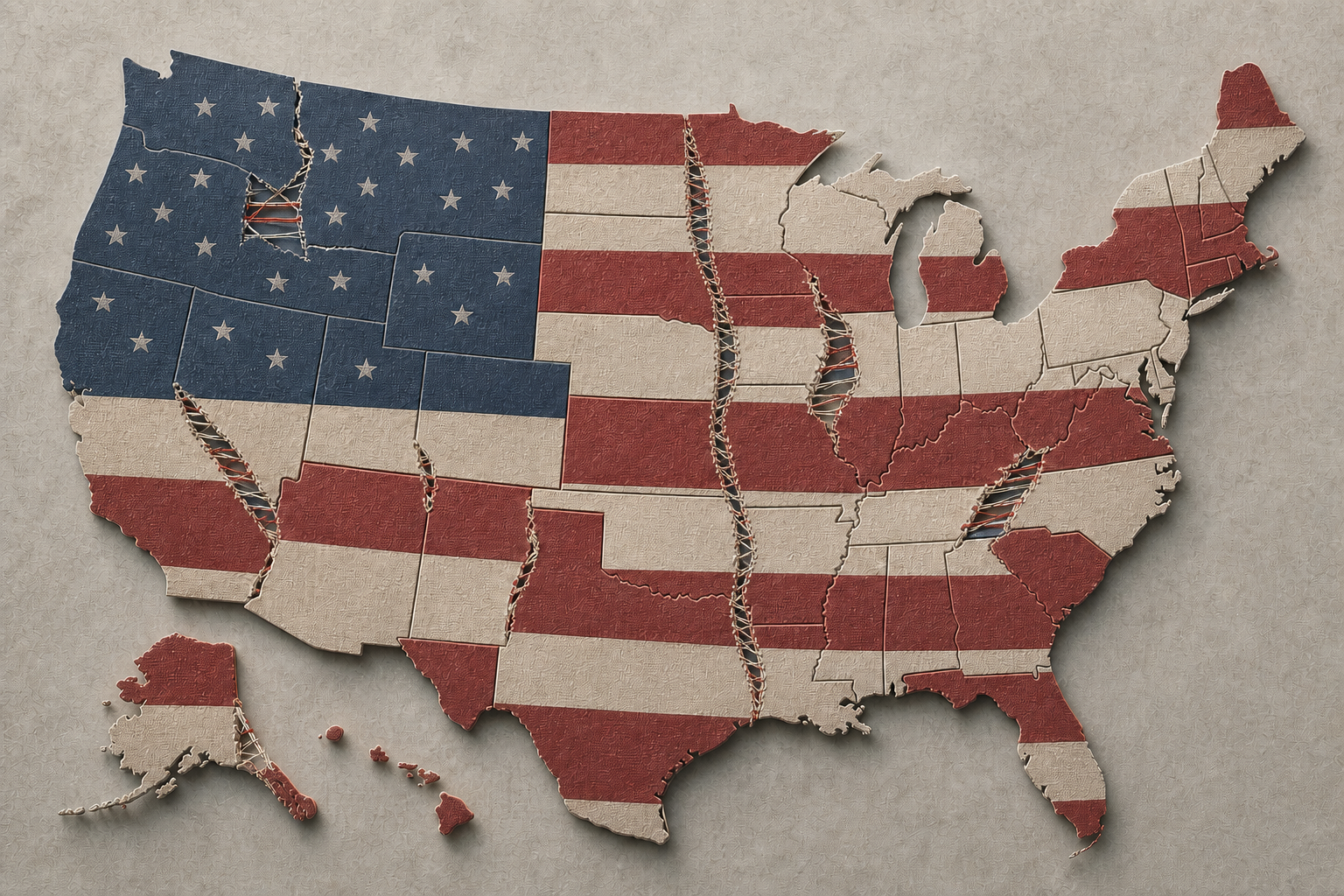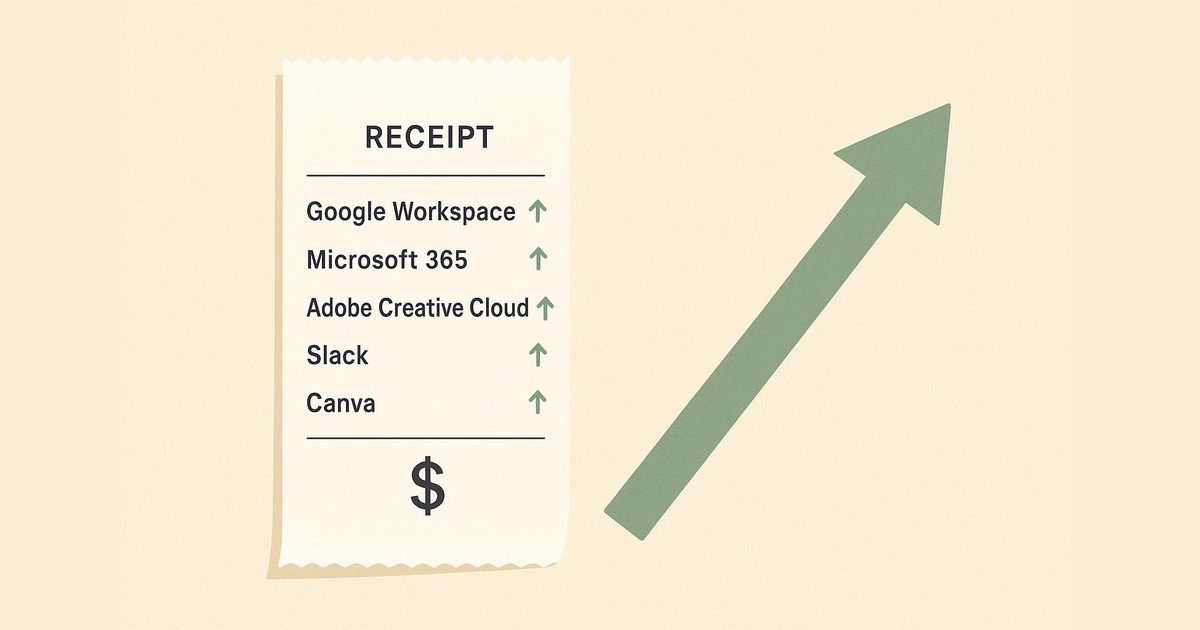
Every company in this piece is making money — most of them a lot of money. They raised your prices anyway, usually with a vague email and no way to say no. And more and more, they charge you for things that used to be free: watching the video your own security camera recorded, using a feature already built into the car you bought, a capability that cost nothing last year. The excuse keeps changing — "AI," "innovation," "value" — but the move is the same, and it's coming from companies whose own numbers show they don't need the money.
This isn't one company having a bad year and passing the cost along. It's a pattern, running three ways at once: raise the price and don't really explain it; bundle in something you didn't ask for and can't remove; or take something that was free and put it behind a subscription. Below: who's doing it, what they're already making, and — because there's almost always a way out — what you can use instead.
They raised the price. Here's what they were already making.
Start with the part that's supposed to justify a price increase: the company needed the money. Here's what these companies actually earned in their most recent full year — in plain English, how much they brought in, how much they kept as profit, and how many cents of every dollar that profit worked out to. Audited figures, not press-release spin.
| Company | Product | Year | Money brought in | Money kept (profit) | Profit per dollar |
|---|---|---|---|---|---|
| Alphabet | Google Workspace | 2025 | $402.8 billion | $132.2 billion | 33 cents |
| Microsoft | Microsoft 365 | 2025 | $281.7 billion | $101.8 billion | 36 cents |
| Adobe | Creative Cloud | 2025 | $23.8 billion | $7.1 billion | 30 cents |
| Salesforce | Slack | 2025–26 | $41.5 billion | ~$7.5 billion | 18 cents |
| Netflix | Netflix | 2025 | $45.2 billion | $11.0 billion | 24 cents |
| Disney | Disney+ / Hulu | 2025 | $94.4 billion* | $12.4 billion* | 13 cents* |
| Comcast | Peacock | 2025 | $123.7 billion* | $20.0 billion* | 16 cents* |
| Warner Bros. Discovery | Max | 2025 | $37.3 billion* | $727 million* | 2 cents* |
| Amazon | Prime Video | 2025 | $716.9 billion | $77.7 billion | 11 cents |
| Spotify | Spotify | 2025 | ~$18.9 billion* | ~$2.4 billion* | 13 cents |
| Canva | Canva | 2025 | $3.5 billion (its own claim) | won't say — filings show a loss | — |
*Whole-company figures for Disney, Comcast, and Warner Bros. Discovery — the streaming service is one part of a much larger business, so the profit-per-dollar is for the parent, not the app. Spotify reports in euros (€17.2 billion revenue, €2.2 billion profit); shown here in approximate dollars for comparison.
A few of those numbers need the context a table can't hold:
- The record years are real. Alphabet's $132.2 billion profit was a record, and the part of its business where Workspace sits got more profitable last year, not less — from keeping about 14 cents of every dollar to about 24. Microsoft's 36 cents is company-wide; the division that actually sells Microsoft 365 keeps 58 cents of every dollar — the most profitable line in the whole company.
- Two need an honest asterisk in the other direction. Peacock itself lost about $1.1 billion — the one product here that isn't making money yet, even as its owner, Comcast, made $20 billion. And Warner Bros. Discovery barely turned a profit company-wide and still owes $33.5 billion from a merger — though Max's own profit more than doubled, to $1.4 billion. Printing that is what makes the rest of the table trustworthy.
- Canva is the odd one out. Its own filings with Australia's government show it lost money every year checked — $242 million in 2024 alone — while it publicly calls itself "profitable" on a cash-flow basis, a real but much softer claim than its marketing implies.
But the headline holds: most of these companies are making enormous, in several cases record, profits. The price increase wasn't survival. It was extraction on top of plenty.
Move one: raise the price, skip the explanation
Here's what changed, by how much, and — the part that stings — whether you could decline it and keep your old price. Mostly, you couldn't.
| Company / product | What changed | Increase | Effective | Can you opt out? |
|---|---|---|---|---|
| Netflix | Price hike + password-sharing crackdown | Standard $17.99→$19.99, Premium $24.99→$26.99 | Mar 2026 | No — extra household members cost $7.99–$9.99 each |
| Disney+ | Price hike + password-sharing "Extra Member" fee | Ad-free $15.99→$18.99 | Oct 2025 | No |
| Peacock | Third hike in three years | Premium +$3 to $10.99, Premium Plus +$3 to $16.99 | Jul–Aug 2025 | No (a cheaper "Select" tier has less content — it isn't your old plan) |
| Max | Price hike, password crackdown expanding globally in 2026 | Standard +$1.50 to $18.49, Premium +$2 to $22.99 | Oct 2025 | No |
| Amazon Prime Video | Ad-free add-on repriced and repackaged as "Prime Video Ultra" | $2.99→$4.99/mo (+67%) | Apr 2026 | No — even at the higher price, some ad formats remain |
| Spotify | Third price hike in four years | Individual $11.99→$12.99, Family $19.99→$21.99 | 2025 and Jan 2026 | No |
Notice how thin the explanations are. "Content costs." "Value." Streaming services in particular pair the hike with a second squeeze — cracking down on password sharing, so the same service that costs more also does less than it did a year ago.
Move two: the "AI" excuse
The newest justification is artificial intelligence — bundled into the base price of a product whether you use it or not, across five of the biggest names in software.
| Company / product | What changed | Increase | Effective | Can you opt out? |
|---|---|---|---|---|
| Google Workspace | Gemini AI folded into all Business/Enterprise plans; paid add-on discontinued | 16.7%–22.2% | Jan 2025 (new); Mar 2025 (existing) | No |
| Microsoft 365 | Copilot Chat bundled into nearly every commercial tier | 5%–43% by tier | Jul 2026 | No |
| Adobe Creative Cloud | "Creative Cloud Pro" bundles Firefly AI credits into the All Apps plan | up to 16.7% (individual), ~11% (teams) | Jun–Sep 2025 | Existing subscribers auto-migrated |
| Slack (Salesforce) | Standalone Slack AI add-on discontinued; equivalent AI now requires Business+ | Business+ up 20% | Jun 2025 (add-on lost at next renewal after Aug 17, 2025) | No — must upgrade tier to keep AI features |
| Canva | "Teams" renamed "Business," AI tooling bundled in | proposed 300%, landed near 67% after backlash | Sep 2024–2025 | No |
There's a tell in how this played out. Google and Slack both first sold their AI as an optional paid add-on — and when not enough people bought it, folded it into everyone's base price instead. The AI wasn't in demand. It became mandatory anyway.
And Google, who started the pattern, still won't say what it made. In 2023 it raised Workspace prices for the first time since 2006. In 2024 it launched Gemini as a separate $20–30/user add-on. In January 2025 it discontinued that add-on and folded Gemini into every base plan, raising prices 16.7% to 22.2% with no way to decline. Since then, on every 2025 earnings call, Alphabet's CFO has used a version of the identical sentence — "double-digit growth in Workspace, driven by an increase in average revenue per seat and the number of seats" — which blends the price hike and new customers into one vague figure and breaks out neither. Workspace has never been reported as its own line; it's buried in a $58.7 billion "Google Cloud" segment. No Wall Street analyst has isolated what the increase brought in either. Eighteen months on, the company that pioneered the "AI" price hike has never once said what it was worth — only that it was worth doing.
Microsoft is running the identical play a year behind: Copilot Chat bundled into nearly every Microsoft 365 tier, announced December 2025, effective July 1, 2026, with some frontline plans rising 43%. Its stated reason is "continuous innovation and value" — no number attached. The division that sells Microsoft 365 already keeps 58 cents of every dollar it earns.
Move three: now you pay for what used to be free
This is the one that feels the most like a hand in your pocket, because the thing you're being charged for already existed — you already had it, or you already bought the hardware it runs on.
- Watching your own security camera's video. Google renamed its Nest Aware plan "Google Home Premium" and put camera features — including recorded video history and familiar-face alerts — behind that paid tier. Cameras you already own record footage you now have to subscribe to see the history of.
- Features already built into your car. Mercedes sells a software unlock for extra acceleration the hardware is already capable of — $1,950 for life or $60 a month on the EQE. Tesla charges roughly $2,000 to unlock an "Acceleration Boost" the car can already do. BMW tried this with an $18-a-month subscription for heated seats already installed in the car — and reversed it after public backlash, which is the proof this isn't inevitable when customers push back loudly enough.
- Using non-brand printer ink. HP's printer firmware blocks third-party ink cartridges from working at all — and pushed that lockout onto more models in early 2026. It drew a class-action settlement in 2025 that paid consumers nothing (only $5,000 each to three named plaintiffs) and let just 21 specific models roll the lockout back.
- Keeping the device you already bought working. In October 2025 Google stripped remote control and notifications from first- and second-generation Nest thermostats — hardware people paid for, degraded by a software update.
The "AI" bundle is the same move in a newer costume: a $20–30 Gemini add-on almost nobody chose became a mandatory line on everyone's bill. Whether they take something free and charge for it, or add something unwanted and make it unremovable, the direction is one way — more out of your pocket, less choice about it.
Regulators are starting to notice
This isn't just a consumer-complaint pattern anymore. In September 2025 the FTC secured a $2.5 billion settlement from Amazon — its largest civil penalty in a rule-violation case — over a Prime cancellation flow that took four pages and six clicks to finish. In March 2026 Adobe agreed to pay $150 million to the DOJ and FTC for hiding early-termination fees in fine print and defaulting customers into annual plans billed monthly. A federal appeals court vacated the FTC's broader "Click-to-Cancel" rule in July 2025 on a technicality, but the agency kept bringing cases under its existing authority — which is how the Amazon and Adobe settlements happened anyway. A 2024 international sweep of 642 subscription platforms across 27 countries found 75.7% used at least one manipulative design pattern in their pricing or cancellation flow.
Cheaper or free, right now
There's almost always a way out. None of these is a flawless swap — each has a real gap, noted honestly — but they're worth knowing before you accept the next renewal notice.
Instead of Google Workspace / Microsoft 365: LibreOffice (fully free, no cloud collaboration of its own) · OnlyOffice (free desktop editors, no user cap) · Zoho Workplace's free tier (free for up to 5 users, but no IMAP mail on the free tier) · Proton Mail + Drive + Docs (Docs is free; Mail/Drive free tier caps around 1–5GB) · WPS Office (free, Microsoft-format compatible, carries in-app ads).
Instead of Adobe Creative Cloud: GIMP (photo, free) · Krita (illustration, free) · Inkscape (vector, free) · DaVinci Resolve (video — the free version is a permanent, professionally capable tool, not a trial, capped at 4K) · Photopea (a free, browser-based Photoshop clone). One irony worth knowing: Affinity — the classic one-time-purchase alternative to Adobe — is now owned by Canva, which relaunched it in October 2025 free for its core tools. The catch: it requires a Canva account, and its AI features sit behind a Canva Pro subscription. The anti-subscription alternative is now partly owned by a company in this piece.
Instead of Slack: Discord (free, widely used by small teams, not built for business compliance) · Microsoft Teams' free tier (unlimited 1:1 calls; group meetings cap at 60 min) · Mattermost (free, open-source, you host it) · Zulip (a genuinely free cloud tier with full message history).
Instead of Canva: Photopea, Figma's free tier (2 editors, 3 projects), GIMP, and the newly-free Affinity apps above.
Instead of Netflix/Max/Disney+/Peacock, at least sometimes: Kanopy and Hoopla — free with most U.S. library cards, though libraries set monthly caps and the catalogs skew independent/classic rather than new releases. For free ad-supported streaming with no card needed: Tubi, Pluto TV, and The Roku Channel are all still operating in 2026 with real (older-skewing) libraries. Amazon's Freevee shut down as an app, but its content moved into Prime Video's "Watch for Free" section — still accessible with just a free Amazon account, no Prime required.
Instead of HP's ink-locked printers: Epson EcoTank and Canon MegaTank use refillable tanks with no third-party-ink lockout. They cost more upfront (roughly $199–$599) but run about $0.01–$0.02 a page versus $0.10–$0.25 on a cartridge printer — real savings of $300–$800 a year for a household that prints. If you do buy HP, declining "HP+" enrollment at setup keeps third-party ink usable.
Instead of Nest cameras with a Google Home Premium subscription: Reolink and UniFi Protect both offer genuinely local, no-subscription storage with clean security records (ordinary patched bugs, no data-mishandling scandal). Eufy and Wyze also offer no-subscription local storage but carry real history worth knowing — Eufy was caught in 2022 quietly uploading supposedly "local-only" footage to the cloud (a New York AG settlement closed it in 2025), and Wyze has had two separate user-data exposure incidents (2019 and 2024). Both say the issues are fixed; both still get flagged by name in 2026 privacy reviews.
✅ Do It Now
Yes — you can file a complaint, and it's the lever that actually works. The FTC's $2.5 billion settlement with Amazon and its $150 million settlement with Adobe were built on complaints from ordinary customers. Reporting a deceptive fee, a subscription you couldn't cancel, or a charge you never agreed to is the single most effective thing you can do.
- File with the FTC at reportfraud.ftc.gov — it takes about five minutes. Include the company, what happened, the dates, and the dollar amounts. The FTC doesn't resolve your individual bill, but it's the database regulators mine to build the cases that do.
- File with your state attorney general — search "[your state] attorney general consumer complaint." State AGs often act faster on individual disputes, and many states have their own auto-renewal and hidden-fee laws with real teeth.
Know what's worth reporting. A company refusing to keep your old price isn't illegal on its own. What regulators act on is the fine print: fees that surface only at checkout, defaults that quietly opt you into a pricier plan, charges you never agreed to, and cancellation flows deliberately harder than sign-up. If that's what happened to you, it's a complaint worth filing.
Before your next renewal: check the real dollar change against the service's official pricing page — several viral figures for these hikes don't match the companies' own numbers — and look for a lower or legacy tier before it auto-renews. After it renews, you're usually locked in until the next cycle.
Why this is a BL:UF story
Cost-of-living stories usually mean groceries and rent — the bills you notice because they're big and singular. This is the quiet version: a dozen small increases across a dozen subscriptions, each easy to shrug off alone, each justified with a word — "AI," "value," "content costs" — that doesn't hold up against the companies' own numbers. The bottom line: these companies are making a lot of money, in several cases record money; they raised your prices anyway, with little explanation and no easy way to say no; a growing share of what you're now paying for used to be free; and in almost every case there's a real alternative you probably didn't know about.
The Receipts
BL:UF doesn't ask you to trust us. Check our work:
Company financials (revenue, profit, margins, segment data) — each company's most recent full-year 10-K / 20-F and earnings releases, SEC EDGAR; Canva figures from its ASIC statutory filings (Australia) via Startup Daily, and Canva's own Dec 2025 revenue claim.
Google Workspace Gemini bundling + "average revenue per seat" quote — official Google Workspace Updates blog (Jan 2025); Alphabet Q2/Q3/Q4 2025 earnings call transcripts via Motley Fool: fool.com/earnings/call-transcripts; price history via 9to5Google and Jacobin: jacobin.com/2025/02/google-workspace-increase-prices-cloud
Microsoft 365 Copilot Chat bundling — Microsoft 365 Blog, Dec 4, 2025: microsoft.com/en-us/microsoft-365/blog
Adobe Creative Cloud Pro migration — Adobe official help page: helpx.adobe.com
Slack pricing change — Slack official announcement, June 2025: slack.com/blog/news/june-2025-pricing-and-packaging-announcement
Canva pricing history and backlash — TechFinitive: techfinitive.com/canva-price-hike-highlights-growing-cost-of-gen-ai
Streaming price increases — CNBC, MacRumors, Variety, TheWrap, TechCrunch (figures in the tables above).
Mercedes / Tesla acceleration unlocks; BMW heated-seat reversal — Mercedes-Benz USA press release; InsideEVs; Autoblog; Edmunds: edmunds.com/car-news/bmw-relents-on-heated-seat-subscription.html
HP ink lockout and class-action settlement — The Register: theregister.com/2025/03/19/hp_printer_lawsuit_settled
Nest / Google Home re-paywalling and thermostat feature removal — How-To Geek: howtogeek.com/these-smart-home-devices-are-officially-too-old-for-2026
Eufy 2022 data scandal + 2025 NY AG settlement; Wyze 2019/2024 incidents — Hunton Andrews Kurth; The Verge; GeekWire; The Register; Washington Post.
FTC v. Amazon $2.5B settlement — FTC press release, Sept 2025: ftc.gov/news-events/news/press-releases/2025/09
DOJ/FTC v. Adobe $150M settlement — DOJ press release, March 2026: justice.gov/opa/pr/adobe-agrees-150-million-settlement
FTC Click-to-Cancel rule vacated — 8th Circuit, July 2025, via Coulson PC: coulsonpc.com
International dark-pattern sweep (75.7%) — ICPEN 2024 sweep via Berkeley Technology Law Journal: btlj.org