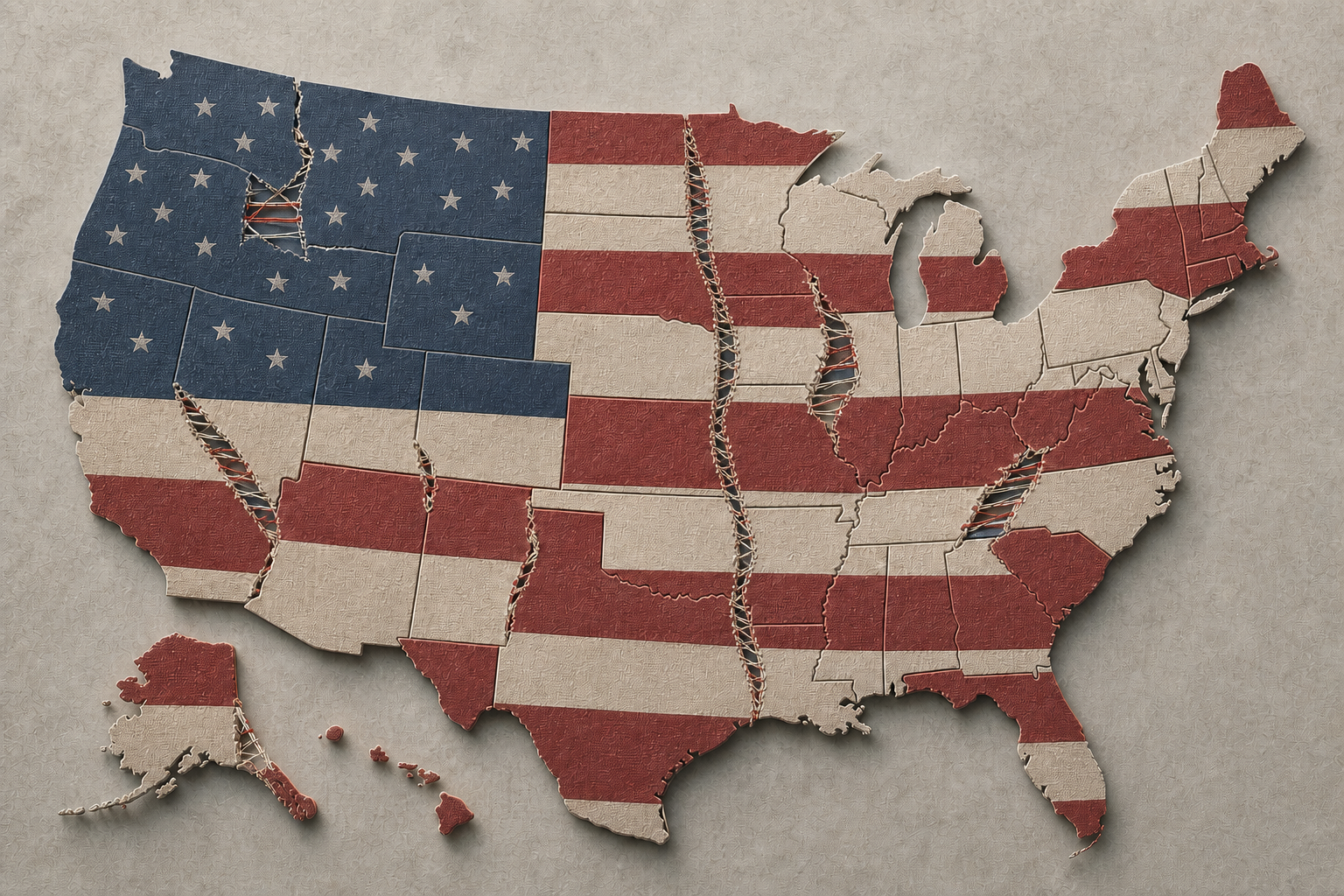
Your Outrage Isn't Just Heard by Campaigns — It's Harvested, and Both Parties Built the Machine
Every "BREAKING: we're finished, DONATE NOW" text treats an ordinary Tuesday as the end of the world — because fear and anger are the two feelings that reliably open a wallet. Behind those messages sits an industry: fundraising platforms, PAC operators, and consultants whose paychecks go up when you believe the other side is about to destroy the country. Some of it crossed into outright traps — pre-checked boxes that charged donors again and again until their banks flagged fraud. Republicans and Democrats both run this machine. Here's how it works, and how to stop feeding it.
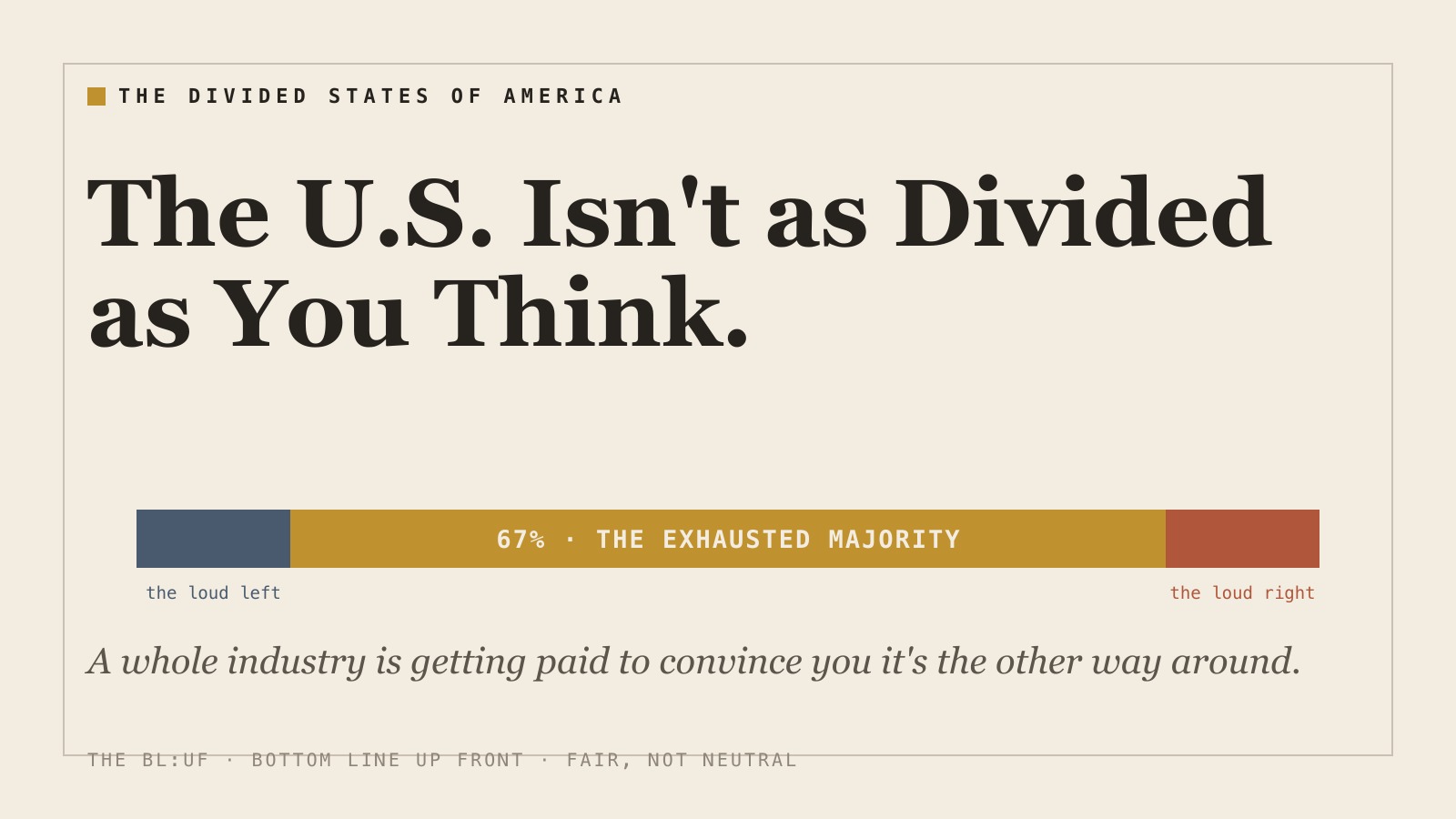
The U.S. Isn't as Divided as You Think — and a Whole Industry Is Getting Paid to Convince You It Is
Americans wildly overestimate how much the other side hates them. That gap is not an accident. A machinery — engagement algorithms, outrage media, campaign fundraising, and foreign influence operations — earns money, ratings, votes, and clicks every time we treat our neighbors as the enemy. This series finds the machinery, names who profits, and maps the common ground the fight is hiding. **The pain is real. A lot of the villains are manufactured.**
Your Feed Makes You Angrier at the Other Side Than Anyone in Your Actual Life Does — Because Outrage Is What It Was Built to Sell
The division you feel scrolling isn't mainly a plot to brainwash you. It's a side effect of a business decision. Social platforms rank posts by what keeps you watching, and a mountain of evidence — including the companies' own leaked research — shows attacking the other side travels farther than almost anything else online. So the machine turns the anger up, because your attention is the product it sells to advertisers. The good news, also proven: turn the animosity dial down and people actually cool off. **The pain is real. The dial is real. And it was set to "angry" for money, not malice.**
Your Anger Is the Product: How Partisan Media Gets Paid to Keep You Furious
The news that makes you angriest at the other side is often the news designed to. Across cable, talk radio, and the partisan web — on the left and the right — the business runs on fear and outrage, because outrage holds an audience, and an audience is what gets sold. Researchers who counted it found outrage in 100% of the cable-opinion episodes they studied. This is how the machine works, who cashes the check, and how to turn the volume down without tuning out.
The Reason Your Representative Is More Extreme Than Your Neighbors: the Map Was Drawn So the Only Election That Matters Is a Primary You Probably Skipped
Most Americans are moderate and exhausted, but the people they send to Congress keep getting more extreme. That's not a mystery — it's the machinery. Safe districts, low-turnout primaries, and a winner-take-all two-party system quietly pay politicians to please their angriest voters and ignore everyone in the middle. In 2024, about **7% of voters — the ones who showed up for the primaries that actually decided the race — effectively chose 87% of the U.S. House.** Both parties built this map, both benefit, and there are real fixes on the table — though they work better in theory than the loudest reformers admit.
Some of the Anger Is Manufactured: How Foreign and Domestic Operators Get Paid to Amplify America's Fights
A lot of American division is real. But some of the ugliest fights online were deliberately lit — and fanned — by people who don't care who wins. Russia's troll farm once staged an anti-Muslim rally *and* the counter-protest against it, at the same Houston corner, on the same afternoon, for about $200. Teenagers in a small town in North Macedonia pumped out fake pro-Trump and anti-Clinton stories purely for the ad clicks. Modern engagement-farms reached 140 million Americans a month on Facebook by posting whatever enraged us most. The goal was never a policy. The goal was the fight itself — a distracted, divided America is weaker, and outrage pays. **One honest caveat runs through this whole piece: researchers still argue how much these operations actually changed anyone's mind, versus just amplifying anger that was already there. We'll show you both sides of that debate.**
Most Americans Are Losing Ground in the Same Economy — While the Culture War Keeps Them Fighting Each Other Instead of the Cause
The economic pain is real, and it does not care what party you belong to. Wages stalled while the work got more productive. Barely half of kids now out-earn their parents, down from nearly all of them two generations ago. Hundreds of thousands of Americans a year die of drugs, drink, and suicide. That part is measured fact, and this piece lays it out cold. Then it takes on a harder, contested claim — that the culture war often aims that anger sideways, at other people just as squeezed, instead of at what's squeezing everyone. We mark clearly where that's fact and where it's interpretation, and give the strongest argument *against* it a fair hearing. The pain is real. Whether the enemy you've been handed is the right one is the fight worth having.
You Agree With the Other Side More Than You Think — and the Research Shows What Actually Calms the Fight
The belief that America is split into two armies that hate each other is itself something being sold to you. The evidence: partisans wildly overestimate how extreme the other side is, and the more news you consume, the worse your guess gets. About two-thirds of us are a tired, flexible middle — and on the things that hit your wallet, big majorities of Republicans and Democrats already agree. Researchers have even tested what cools the anger down. Some of it works. This is the hope bookend, and it's earned, not wished for.
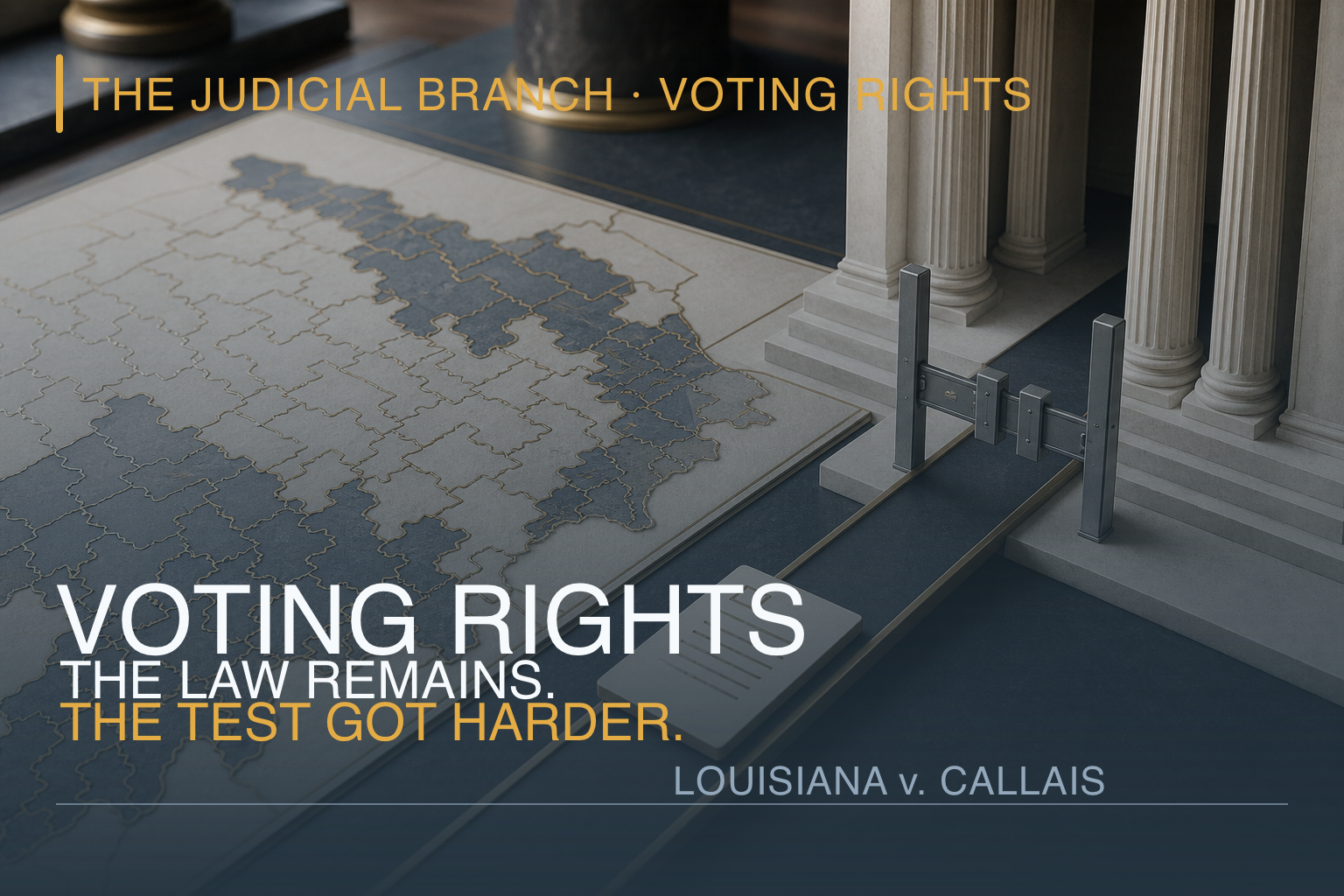
The Supreme Court Made Voting-Rights Cases Much Harder to Win. It Didn’t Strike Down the Law to Do It.
On April 29 the Court ruled 6–3 that Louisiana’s congressional map was an unconstitutional racial gerrymander — and, more lastingly, rewrote the test for proving a map discriminates against minority voters. The Voting Rights Act is still law. Winning a case under it just got much harder.
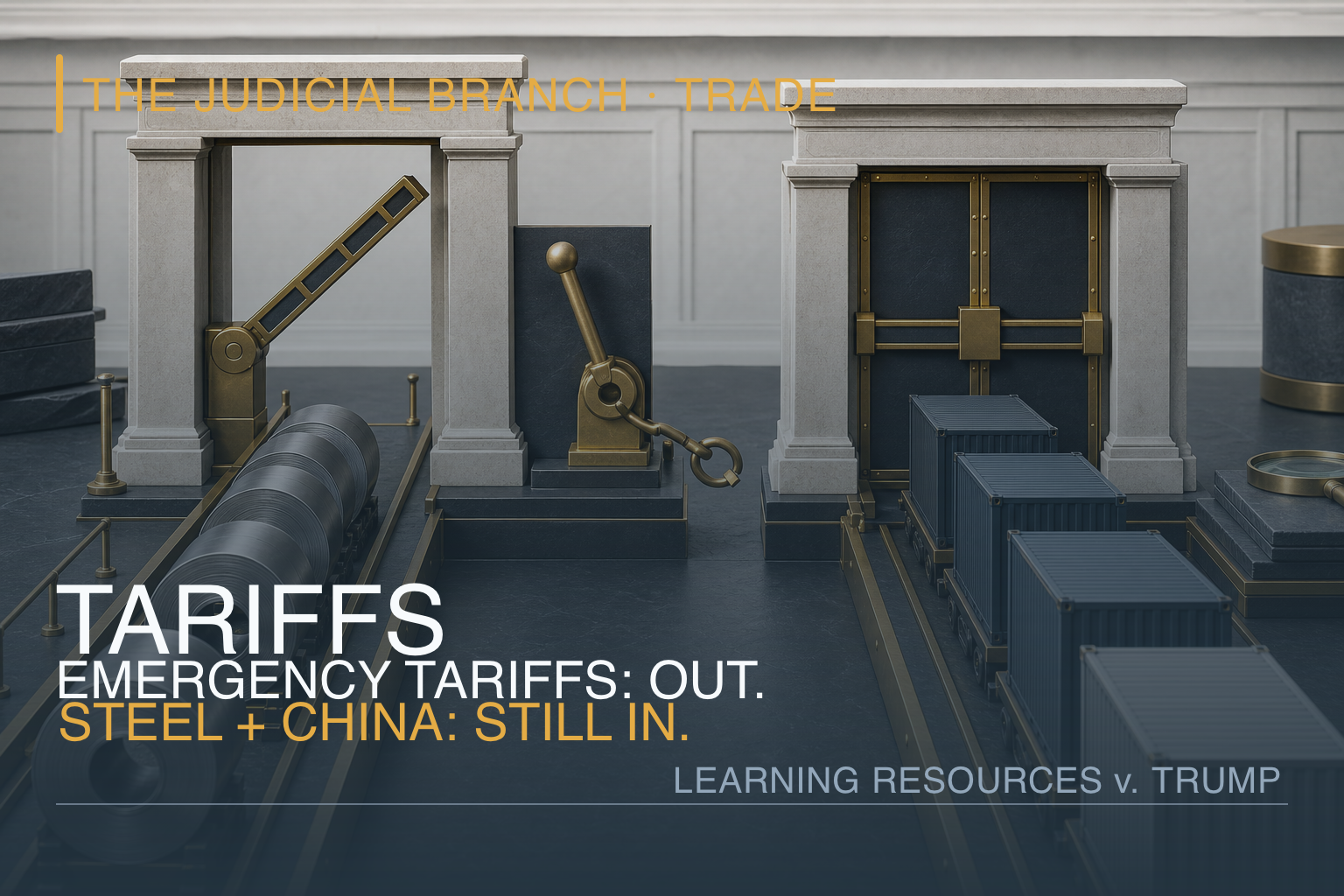
The Supreme Court Threw Out Trump’s Emergency Tariffs. The Steel and China Tariffs Survive.
On Feb 20 the Court ruled 6–3 that the president can’t use a 1977 emergency-powers law (IEEPA) to impose tariffs — ending the “Liberation Day” and fentanyl tariffs. But tariffs under other laws — steel, aluminum, China — are untouched. And the lineup wasn’t left-vs-right: Roberts and the three liberals plus Gorsuch and Barrett.
The Supreme Court Cleared the Way to End TPS for Haitians and Syrians. It Did It by Ruling Courts Can’t Step In.
On June 25 the Court ruled 6–3 that courts can’t review the administration’s decision to end Temporary Protected Status for ~350,000 Haitians and ~6,000 Syrians. It did not order anyone deported and did not rule the terminations legal — it removed the courts as a check. The practical effect: the protections can now end.