THE WEDGE — why the news feels built to enrage you
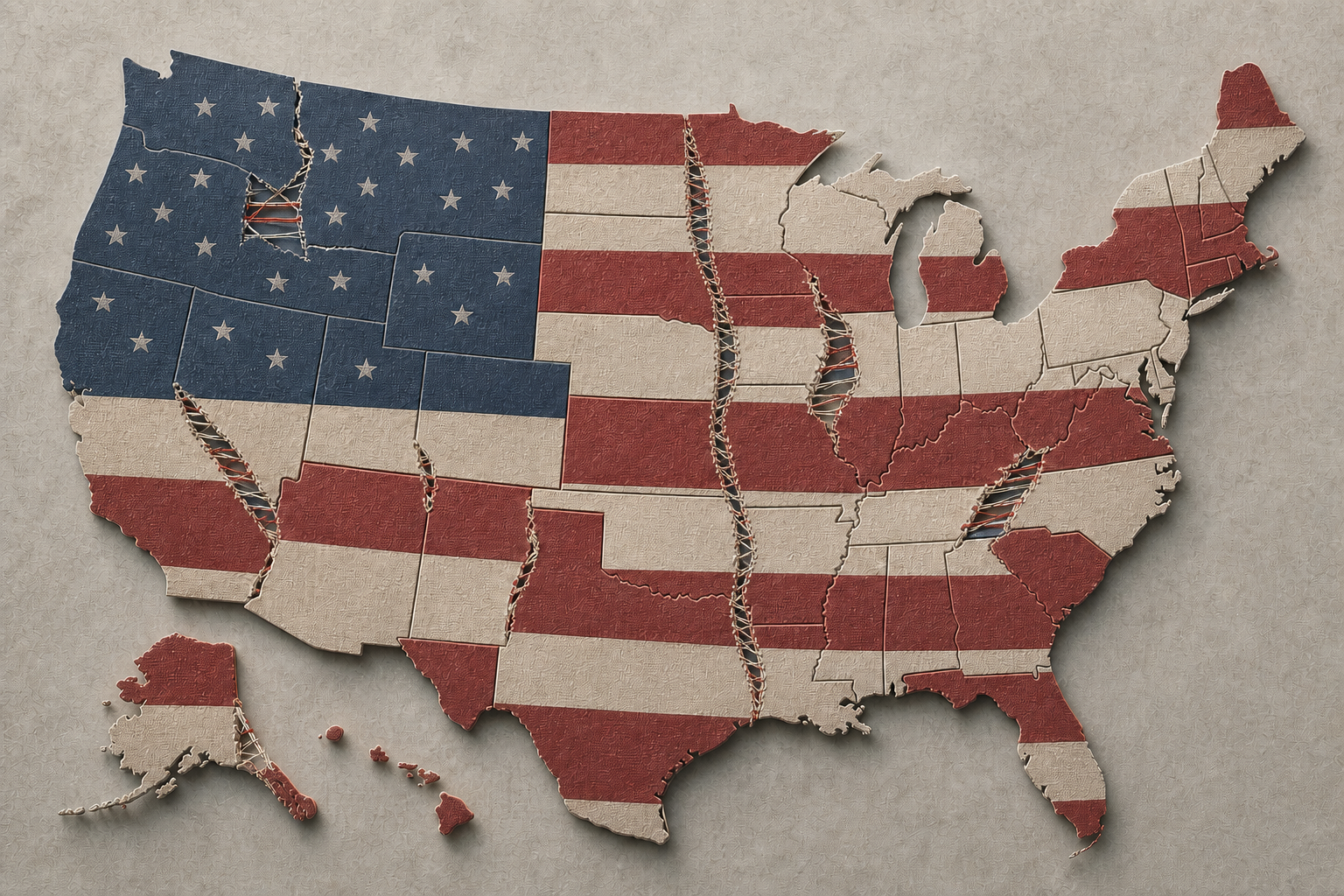
Notice the feeling first. You open an app, turn on a channel, start a podcast, and within a minute you're not informed — you're mad. At a senator, a governor, a group of people you've never met. That feeling isn't a glitch. For a large slice of what we call "news," the feeling is the product.
There's a name for it. Political scientist Jeffrey Berry and sociologist Sarah Sobieraj (Tufts) call it "political opinion media," and its main tool is "outrage" — speech built to provoke a gut reaction (anger, fear, moral disgust) using mockery, name-calling, fear-mongering, and casting the other side as a threat, rather than laying out facts and letting you decide. (Scholars Strategy Network; The Outrage Industry, Oxford UP, 2014) The outrage isn't a side effect of the news business. On a big part of the dial, it is the business.
THE MACHINE — how outrage became the product
The rules changed. For decades U.S. broadcasters ran under the FCC's "Fairness Doctrine," requiring opposing views on controversial issues. In August 1987 the FCC repealed it; stations could now run one-sided opinion all day. Talk radio, led by hosts like Rush Limbaugh, rushed through the door. (Poynter, 2025; Reagan Library)
Then researchers counted the outrage. Over 10 weeks in 2009, Berry & Sobieraj analyzed the 10 top cable-opinion shows, 10 top talk-radio shows, and 20 political blogs, coding 13 forms of outrage:
- 100% of cable-opinion episodes contained outrage; ~90% of talk radio; ~80% of blogs.
- Talk radio averaged about one outrageous statement per minute.
- And on both sides: on Fox and MSNBC opinion shows alike, outrage showed up roughly every other minute of non-commercial airtime. (SSN; Political Communication, 2011)
Why outrage? It's cheap and it holds a crowd — you don't need a foreign bureau to make anger about the other party, just a host, a camera, and a villain. A 2025 working paper (Univ. of Colorado Boulder + Norwegian School of Economics) that used AI on closed captions from six cable networks 2012–2024 put it plainly: lead author Diego Garcia said outlets learned by trial and error that "anger is very powerful… It seems to work to increase engagement." The same analysis found the enemy-framing tell — networks spend more time attacking the other party than discussing their own: Fox aimed ~60% of its 2024 coverage at Democrats; MSNBC did the reverse. (CU Boulder, Jul 30 2025) (working paper — not yet peer-reviewed.)
WHO PROFITS — follow the anger to the money (both sides)
- Cable, right: Fox News is the most-watched cable-news network and the profit center of Fox Corp, built on affiliate fees (per-subscriber money cable providers pay whether you watch or not) — about $1.03B in affiliate fees in Q4 FY2023 alone. A loyal, tuned-in audience is what makes those fees valuable. (Fox Corp Q4 FY2023; SEC 8-K)
- Cable, left: same math. MSNBC's viewership fell ~51% after the 2024 election; Comcast spun off most of its cable channels (incl. MSNBC, rebranded "MS NOW" in Aug 2025) into a new company, Versant Media Group, which completed the separation and began trading on Nasdaq as VSNT on January 5, 2026. When the anger cools, the business gets shaky enough that the parent company cuts it loose entirely. (WaPo, Nov 27 2024, Forbes, Jan 6 2026)
- Talk radio, right: Rush Limbaugh — 650+ stations, ~15M listeners — accumulated an estimated $1.1B in career pre-tax earnings (Forbes); barter syndication gave the show to stations nearly free in exchange for national ad time. (Forbes, Feb 17 2021)
- Partisan digital, right: The Daily Wire draws ~3/4 of revenue from subscriptions, a paid base reported ~850k (down ~1/3 in 2025). (Puck; Forbes, 2022)
- Partisan digital/audio, left: Crooked Media's Pod Save America runs a paid "Friends of the Pod" membership — different politics, identical logic: build a devoted audience, charge for deeper access. U.S. podcast ad spend is projected >$3B in 2026. (Crooked Media; IAB)
The through-line: someone downstream of your anger is getting paid — on the left and the right.
COMMON GROUND — turn the volume down without going deaf
If outrage is a product, you're not obligated to keep buying it — and you can starve the machine without unplugging.
- Know the difference between news and outrage programming — the reporters gathering facts vs. the hosts paid to make you feel something. Straight reporting still exists; learn to tell them apart. (Oxford UP, 2014)
- Don't get your whole picture from one channel. The CU Boulder researchers' own advice: "Don't rely solely on your favorite cable station for news." (CU Boulder)
- Support the businesses that report instead of enrage — reporting is expensive; outrage is cheap; where your attention and dollars go decides which model survives.
- The one move: audit your own information diet for a week. Write down what you watch/read/hear and mark each: informing me, or performing anger for me? You'll feel the difference within days.
And it ties back to where the series began: More in Common's Perception Gap — the more political media people consume, the worse their read of the other side gets. The outrage economy isn't just selling you anger; it's selling you a distorted picture of your neighbors that happens to keep you watching. (More in Common, 2019) The other half of the country isn't the product being sold to you. Your fear of them is.