
The Supreme Court Decides This Week Whether to Hear a Case That Could Let ICE Detain Millions Without a Bond Hearing
Ricardo Barbosa da Cunha lived in Massachusetts for two decades, married, had two kids, and ran a small construction business -- then immigration agents arrested him and said he wasn't entitled to a bond hearing, ever, under a new reading of a 30-year-old law. Nine of 11 federal appeals courts say that reading is wrong. On September 28, the Supreme Court decides whether to even hear the government's appeal of his case -- a decision that could reach as many as 6 million people.
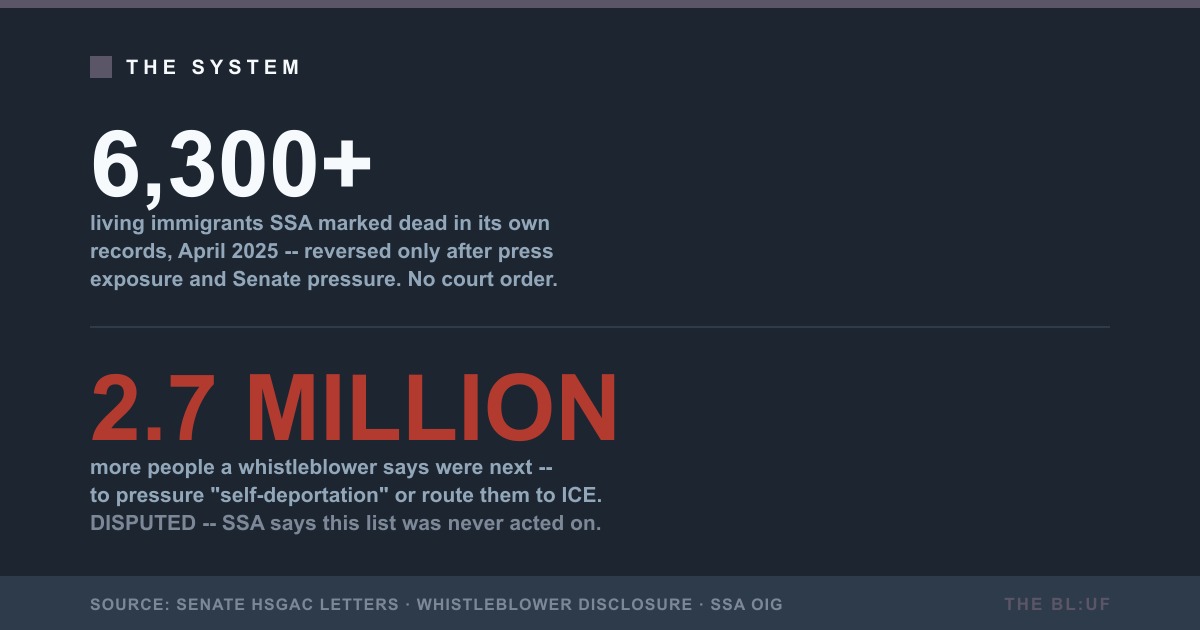
The Government Marked 6,000 Living Immigrants as Dead. A Whistleblower Says a Much Bigger List Was Coming Next.
In April 2025, the Social Security Administration marked more than 6,000 living immigrants as dead in its own records -- at least 6,300, per Senate Finance Committee letters and contemporaneous reporting -- later reversed. A former career SSA official, Jeremiah Schofield, has now come forward to say that was the smaller version of a larger plan: DOGE staffers detailed to SSA and DHS wanted to mark 2.7 million more people dead, with the explicit goal, per Schofield's account of a DOGE staffer's own words, of pressuring people to "self-deport" or routing them to ICE when they showed up to prove they were alive. SSA disputes the 2.7 million figure was ever acted on, and Commissioner Frank Bisignano has denied under oath that living people have been added to the death file "from the day I've been here" -- a true statement about his own tenure, which began a month after the April 2025 episode. Congress says the agency's broader answers on DOGE's conduct at SSA have been "inadequate."
There's a Rule That Lets a Country Refuse to Hear Your Asylum Case. It's Quietly Going Global.
It's called “safe third country.” The idea: if you could have asked for protection somewhere safe along the way, the country you actually reach can refuse to even hear your claim — and send you back. The US and Canada have done it at their shared border since 2004. As of June 12, 2026, the EU's biggest asylum overhaul in 30 years builds the same logic into law across 27 countries. And on June 25, 2026, the US Supreme Court blessed a different route to the same destination — officers may turn asylum seekers away at a port of entry before they ever legally “arrive.”
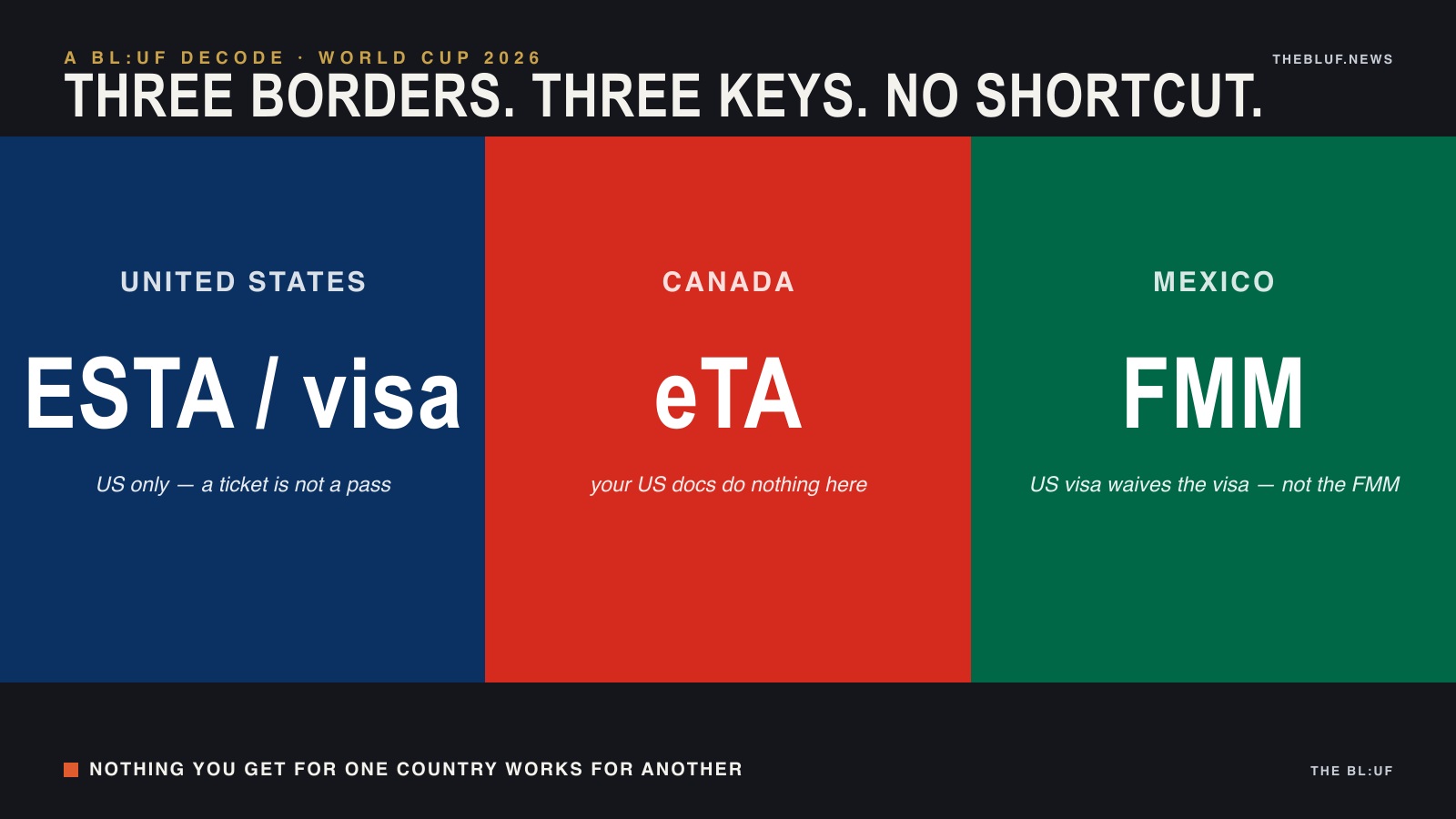
Following Your Team Isn't One Trip. It's Clearing Three Borders.
This is the first World Cup spread across three countries — the US, Canada, and Mexico — and each one is its own immigration system that ignores the other two. A US visa or ESTA gets you exactly nowhere in Canada or Mexico; a quick hop to Cancún or Toronto does **not** reset your 90 days in the US; and there is no "Fan ID" or special World Cup visa, whatever anyone selling one tells you. For most fans coming from visa-waiver countries it's a three-item checklist, not chaos. But the traps that strand people aren't the obvious ones — so here's the map before you buy the flights.
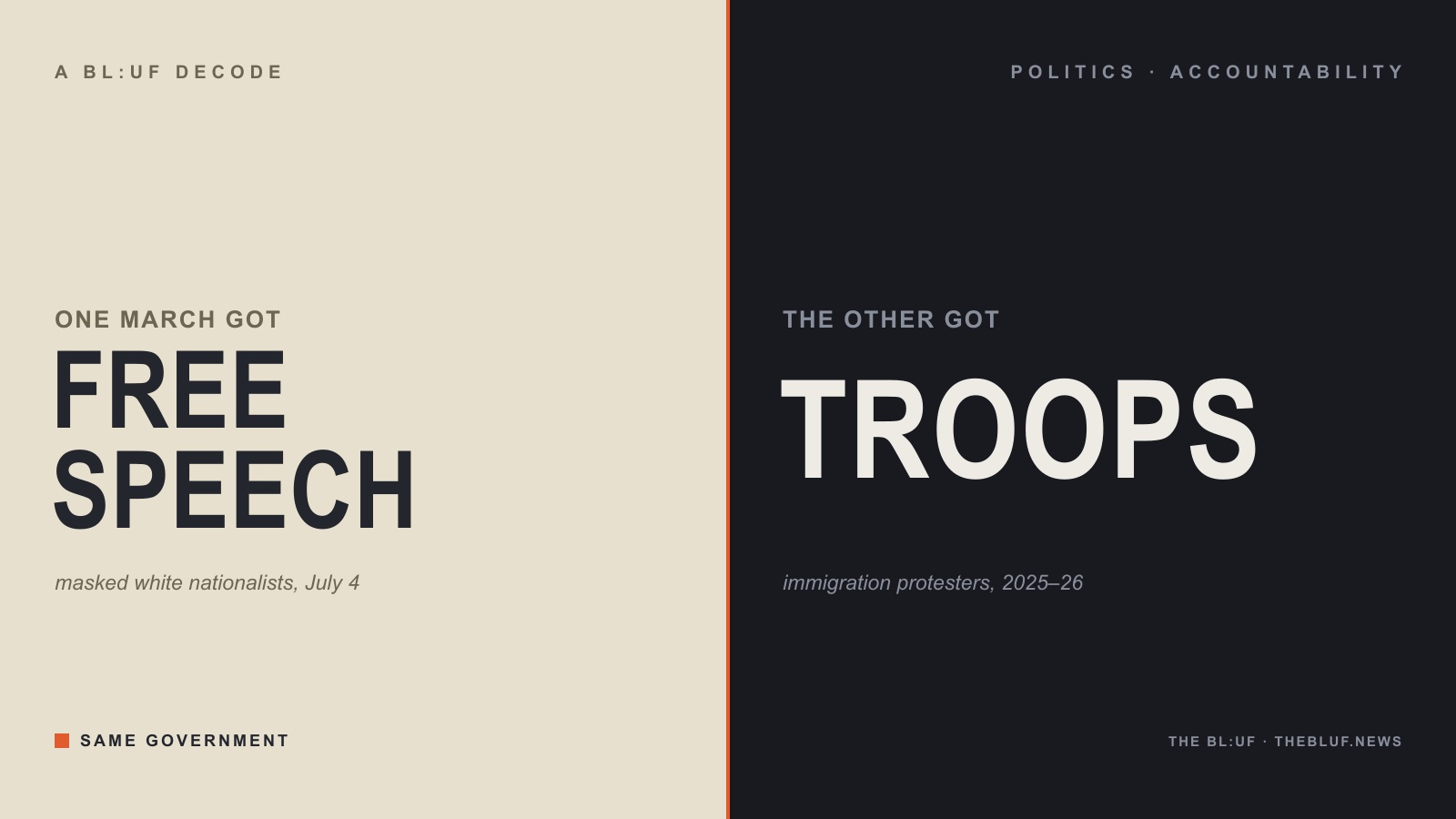
One March Got "Free Speech." The Other Got Troops.
On July 4, masked white nationalists marched past the U.S. Capitol, and a sitting Cabinet secretary called it "free speech" in a "messy democracy." Over the past year, the same administration met immigration protesters — including peaceful ones and bystanders — with troops a federal judge ruled were deployed illegally, mass subpoenas for critics' data, facial-recognition surveillance, and the label "insurrectionists." The conduct at those events wasn't identical. But the government's own words and posture flipped depending on who was marching, and for what.
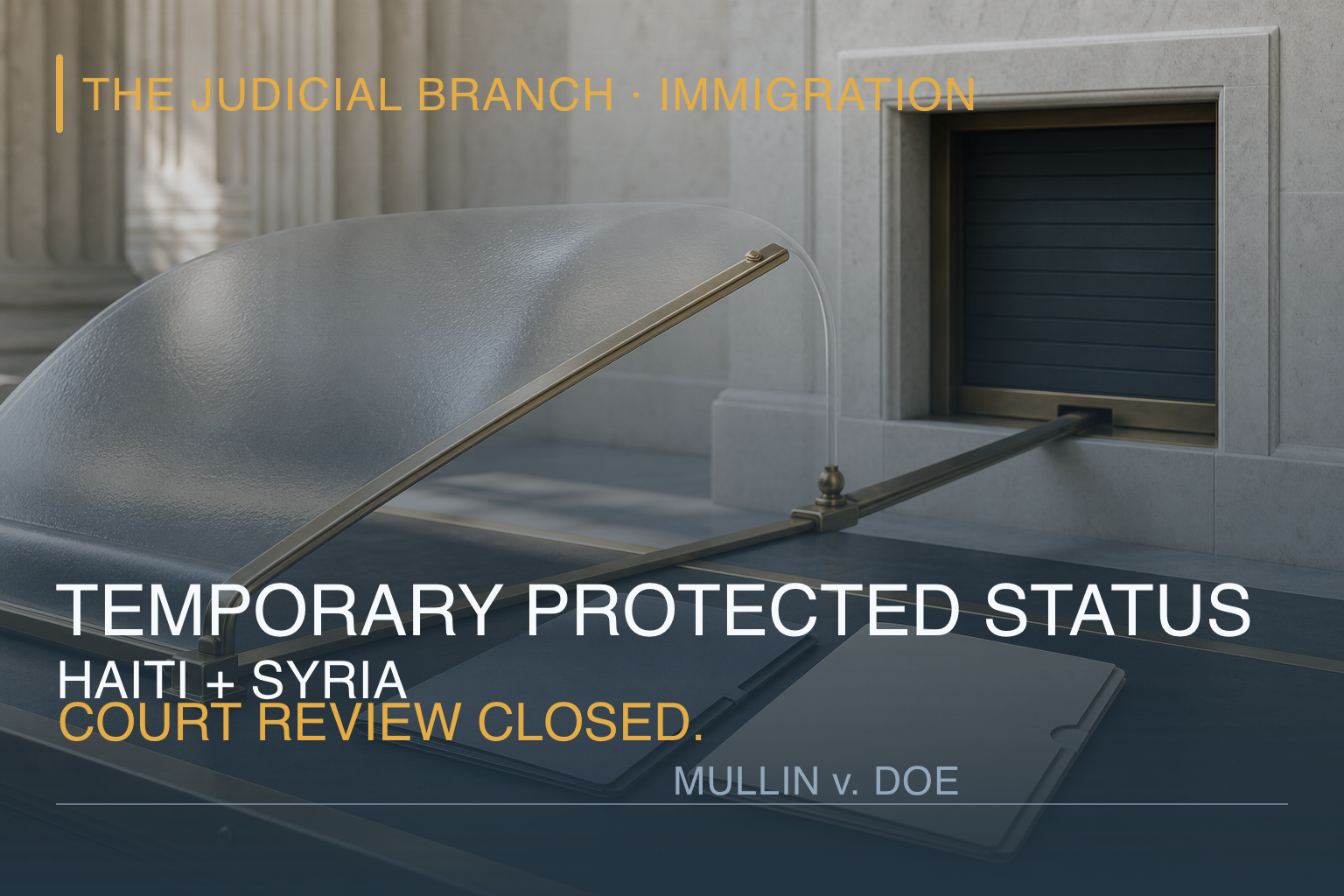
The Supreme Court Cleared the Way to End TPS for Haitians and Syrians. It Did It by Ruling Courts Can’t Step In.
On June 25 the Court ruled 6–3 that courts can’t review the administration’s decision to end Temporary Protected Status for ~350,000 Haitians and ~6,000 Syrians. It did not order anyone deported and did not rule the terminations legal — it removed the courts as a check. The practical effect: the protections can now end.