Most people picture asylum as a simple promise: reach a safe country, ask for protection, get a hearing. There is a quiet rule that breaks that chain — and it is spreading.
What "safe third country" means
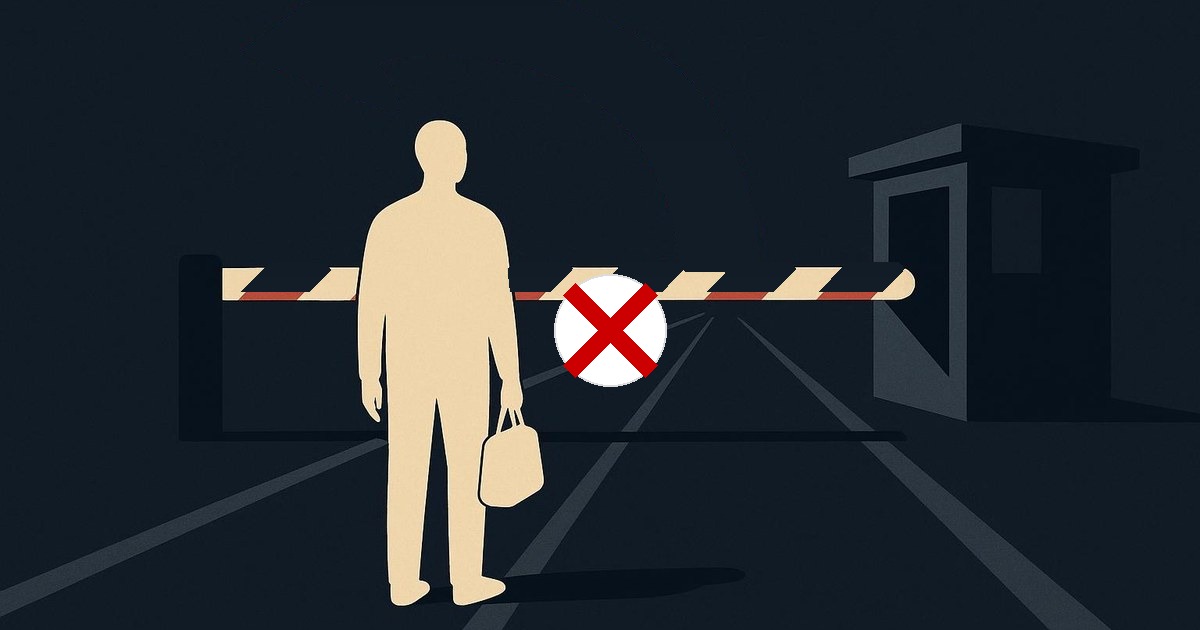
The rule lets a country declare your claim inadmissible — not rejected on the facts, but never heard at all — because you passed through, or could have applied in, some other country it considers safe. A related idea, "first country of asylum," applies when you already had protection somewhere you transited.
It collides with the oldest promise in refugee law: non-refoulement. Article 33 of the 1951 Refugee Convention bars sending a refugee back "to the frontiers of territories where his life or freedom would be threatened." No reservations are allowed. "Safe third country" is only lawful if the other country is genuinely safe and won't pass the person further down the line. That "if" is the whole fight.
The version on North America's border
The US–Canada Safe Third Country Agreement has been in force since December 2004. The rule: asylum seekers must claim in the first of the two countries they reach, so each side can turn back claimants who arrive from the other.
For years there was a loophole — it only applied at official border posts, so people crossed irregularly in between (Quebec's Roxham Road became famous for it). In March 2023, an Additional Protocol extended the agreement to the entire land border. Cross irregularly now and you can be sent back if you're caught within 14 days.
The EU just rewrote the whole system
On June 12, 2026, the EU's Pact on Migration and Asylum began to apply — the biggest overhaul in three decades. Two pieces matter here:
- Regulation 2024/1351 (the Asylum and Migration Management Regulation) replaces the 30-year-old Dublin system that decided which EU country must handle your claim — Dublin is repealed and the AMMR takes over on July 1, 2026, a few weeks after the rest of the Pact. It adds "mandatory solidarity": countries under pressure get help, and any state that refuses to take its share of relocated people pays roughly €20,000 per person it declines.
- Its companion, Regulation 2024/1348, is where the formal "safe third country" power lives — letting a state rule a claim inadmissible when the applicant has a real connection to a safe country elsewhere.
- And it is still being loosened: in February 2026 the EU adopted Regulation 2026/463, widening when a state can call a country “safe” — including mere transit through it — making inadmissibility easier to invoke.
One thing not to confuse: the US–Canada deal is a two-country turn-back treaty. The EU's AMMR is an internal burden-sharing law among 27 states — it doesn't ship people out of Europe; it decides who inside Europe is responsible. Different tools, same family of logic.
The US just took a different road to the same place
On June 25, 2026, the US Supreme Court decided Mullin v. Al Otro Lado by 6–3. The case never touched “safe third country.” It did something simpler.
The Court held that people who present themselves at a port of entry on the Mexican side of the border have not legally “arrived” in the United States — so they are not eligible to ask for asylum, or even to be inspected. The practice has a name: “metering.” Officers had used it to turn asylum seekers back before they could set foot on US soil. The ruling blesses it.
Put the two mechanisms side by side. Safe third country says: you could have asked somewhere else. Metering says: you were never here to ask. Different doors into the same room — the claim is never heard on its facts.
One detail that resists a tidy partisan reading: metering did not begin with this administration. Border officers were already turning people back in the final months of the Obama administration.
Where else it's showing up
- The UK's Rwanda plan — the most aggressive "send them somewhere else" scheme — was scrapped in July 2024 by the new government; on his first full day in office, PM Keir Starmer called the scheme "dead and buried." No one was ever forcibly removed under it.
- Italy's deal with Albania to process asylum seekers offshore has been repeatedly blocked by courts and pivoted, in 2025, toward a return-hub model. It is contested, not settled.
The pattern is clear: wealthy democracies increasingly want the option to not hear a claim at all. Whether the "third country" is truly safe is the question that keeps landing back in court.
Go deeper: LegisPlain's plain-English decode of the EU regulation that replaced Dublin.
Receipts: UNHCR (1951 Convention, Article 33 non-refoulement); Canada.ca (US–Canada STCA in force Dec 2004; March 2023 Additional Protocol — whole border, 14-day return); EUR-Lex & European Council (Reg 2024/1351 AMMR replaces Dublin, applies July 1 2026; Reg 2024/1348 safe-third-country inadmissibility applies June 12 2026; Reg 2026/463 widens safe-third-country (Feb 2026); solidarity / €20,000 per non-relocated applicant); Al Jazeera (UK scraps Rwanda plan, July 2024, no forced removals); IRC / Human Rights Watch (Italy–Albania contested, repurposed 2025); NPR, NOTUS & American Immigration Council (Mullin v. Al Otro Lado, decided June 25 2026, 6–3 — ports of entry, “metering”; the practice predates the current administration).