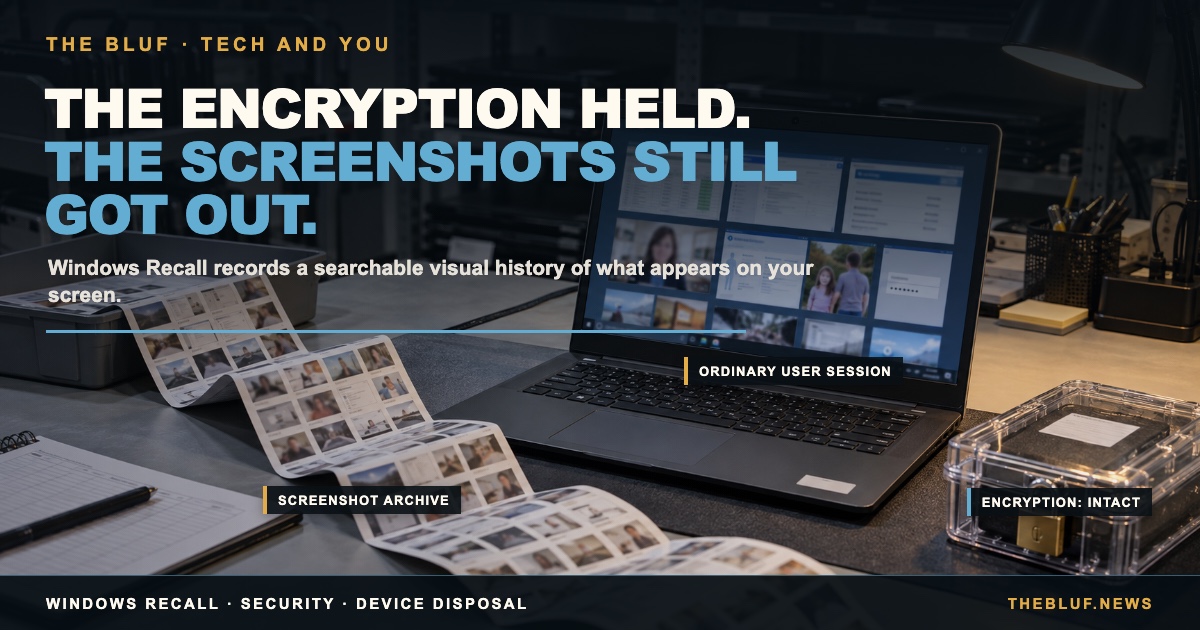
Microsoft Rebuilt Windows Recall After a Security Disaster. A Year Later, Researchers Are Still Getting In.
Windows Recall — the Windows 11 feature that screenshots your screen every few seconds and makes it searchable — nearly launched in 2024 with its entire database sitting unencrypted, extractable by any app on the machine. Microsoft pulled it back, rebuilt the security around it, and relaunched. A year later, a researcher who broke the original version came back and broke this one too — no admin rights, no broken encryption, just an ordinary Windows login. Microsoft says that's not a security bypass, it's the feature working as designed. Fewer than 10% of Windows 11 PCs can even run it right now.
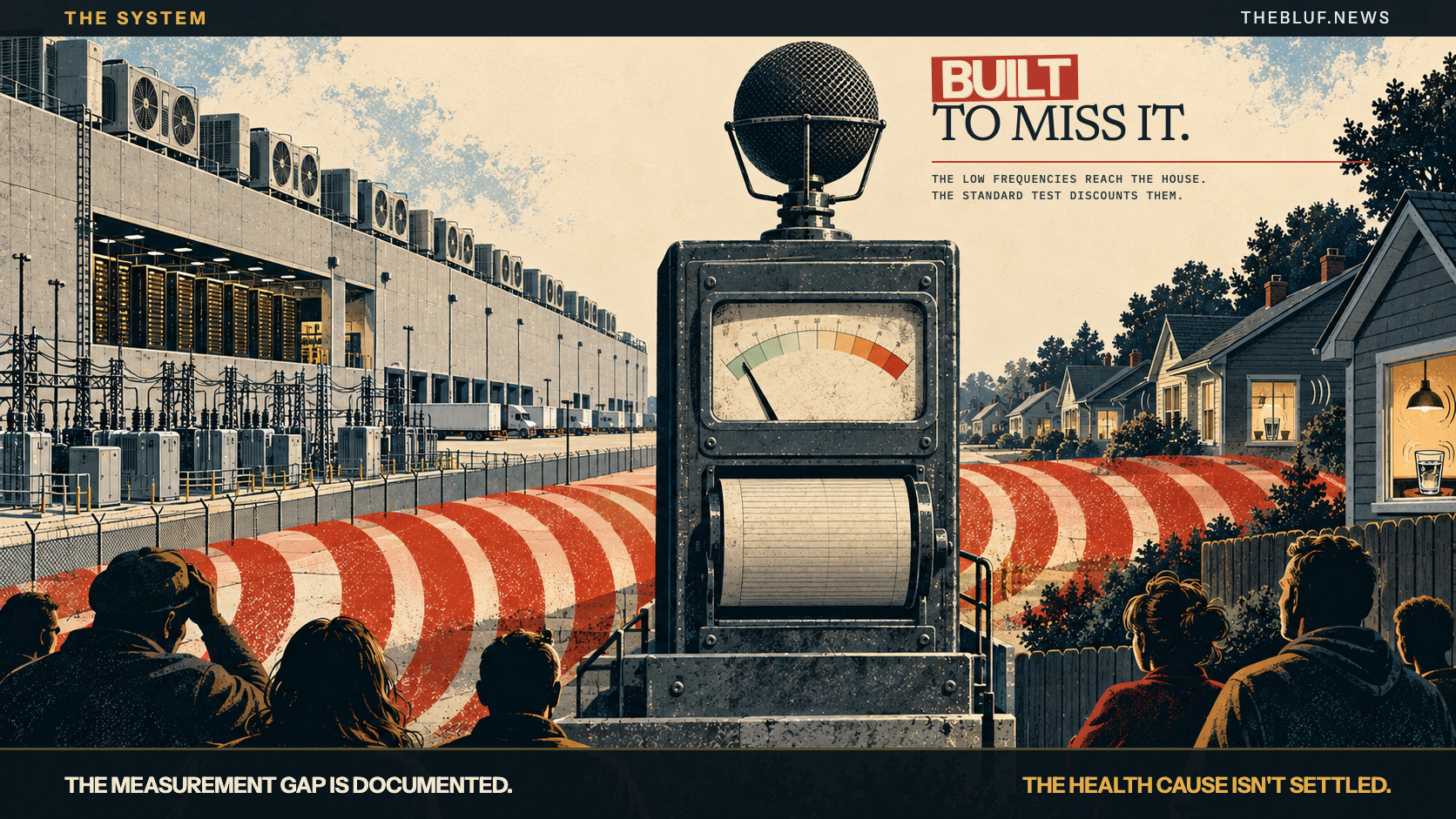
The Noise Coming Off Data Centers Might Be Making Neighbors Sick — and the Meter Cities Use to Check Can't Actually Hear It
People living near data centers report real, disruptive symptoms — headaches, nausea, insomnia, high blood pressure — that they link to a constant low hum and infrasound their homes can't escape. Whether that sound is actually causing those symptoms is a genuinely open scientific question. What isn't in question: the noise meters cities use to enforce local rules are built in a way that specifically misses the exact sound these buildings make. A data center can pass a legal noise test and still be pumping real, unmeasured low-frequency sound into nearby homes.

QVC Moved to Your Phone. One Guy Says He Made $140K in Two Hours. Here's What He Left Out.
Live shopping — QVC, but on TikTok and apps like Whatnot — is the fastest-growing corner of online selling. Gary Vaynerchuk says he pulled $140,000 in two hours doing it. That number is real as *his claim* — but the typical seller makes about $25,000 a *year*, sometimes less than minimum wage after fees. Here's how it actually works, minus the hype.

I Graded Every App on My Phone From A to E. Instagram and PayPal Both Failed.
A volunteer project called Terms of Service; Didn't Read has spent since 2012 reading the agreements nobody else does, grading them A through E. I checked what's actually on my phone: Instagram and PayPal both land at E, the worst grade, for reasons including PayPal tracking you even after you opt out of tracking. Headspace — the meditation app — isn't much better. There's a free browser extension that shows you the grade before you tap agree, which is the closest thing to actually reading the fine print that most people will ever do.
The Government Pulled Anthropic's Newest Model in Three Days. Getting It Back Took 19 — and a New Kind of Deal.
In one week in June, Anthropic launched its most powerful model, got caught quietly hobbling it, apologized — and then watched the U.S. government pull it off the market entirely, worldwide. Two of those stories are connected. The third one isn't, and that's the part to get right. (Update: the government restored full access on July 1, after 19 days offline.)
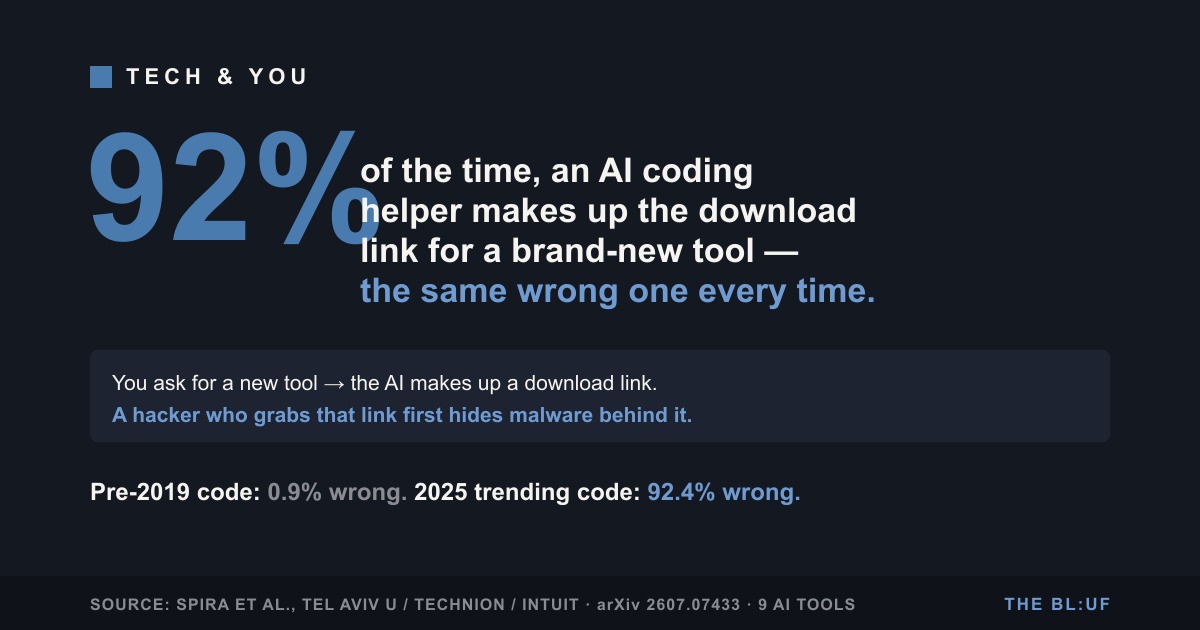
Researchers Found a Way to Turn 9 Popular AI Coding Tools Into a Botnet. It Exploits How Often AI Assistants Guess Wrong About Where Code Lives.
Ask an AI coding assistant to fetch a brand-new, trending code repository, and it guesses wrong an average of 92% of the time — confidently. Researchers found those wrong guesses are predictable enough to register in advance and load with malware, so the assistant infects itself just by doing normal work. They call it "HalluSquatting," and they've shown it works against nine of the most popular AI coding tools, including Cursor, GitHub Copilot, and Gemini CLI. It's a responsibly disclosed research finding, not an active attack in the wild — but the mechanism is real, and it's the first prompt-injection technique with the potential to scale into a genuine botnet.
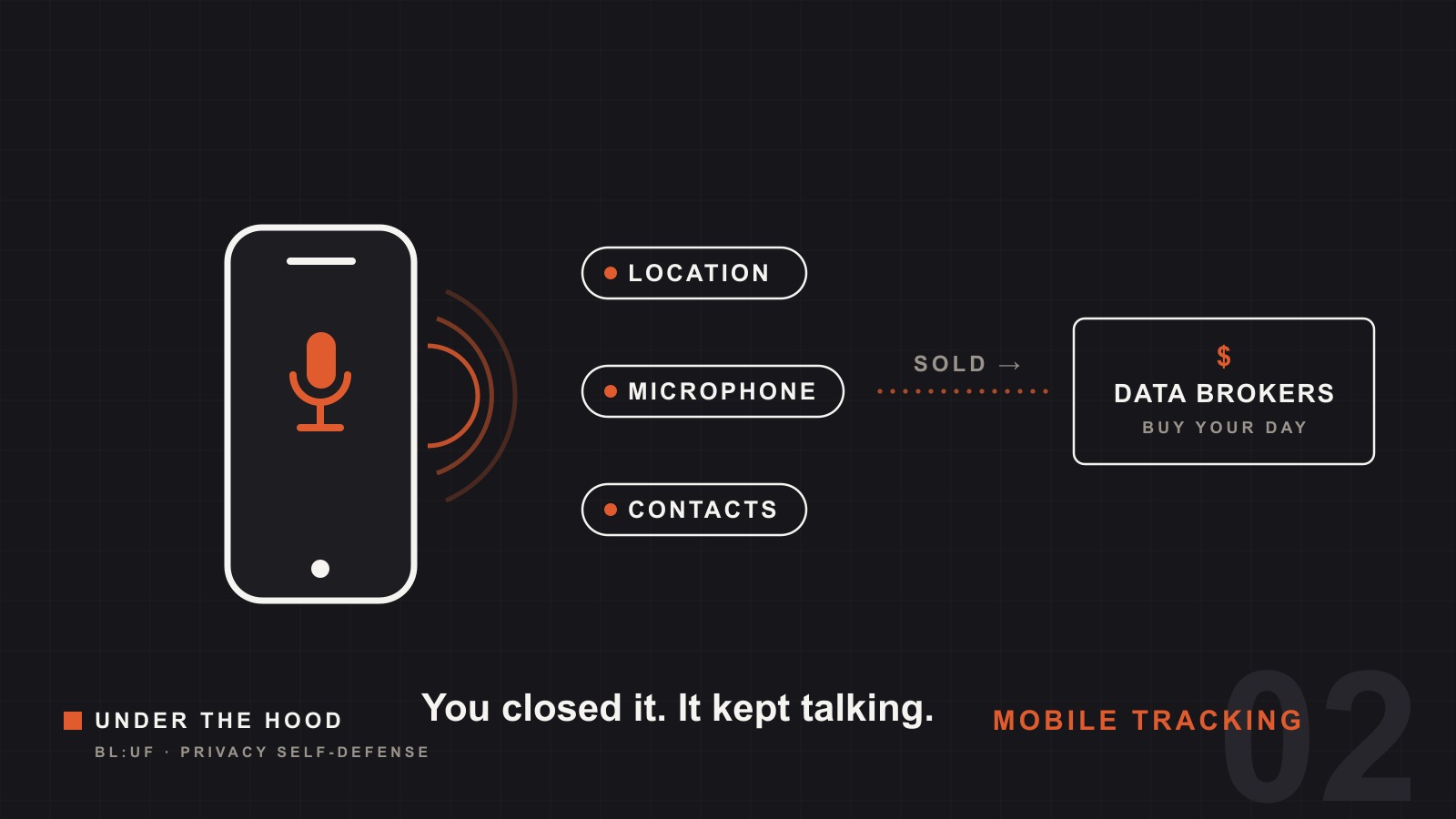
Your Phone Never Stops Talking. I Put a $20 Filter on Mine to Hear What It Was Saying.
In under a week, my phone made 91,118 requests to the internet — about one every six seconds, awake or asleep. A $20-a-year filter called NextDNS flagged 5,937 of them (7%) as ads, trackers, and junk I never agreed to, and blocked them before they connected. I didn't feel one. Here's why you'd want it, what it actually does for you, and where it falls short.
Your TV Is Watching You Watch It. Here's the Setting That Makes It Stop.
Almost every smart TV ships with a feature called ACR — automatic content recognition — switched on by default. It snapshots whatever's on your screen (even from your console or laptop), fingerprints it, and sends it back to be matched and sold. In 2017 the FTC caught Vizio doing it on 11 million TVs — over 100 billion data points a day, tied to your age and income. It's still standard. Here's the buried toggle on every major brand, and why you should block the TV at your network too.
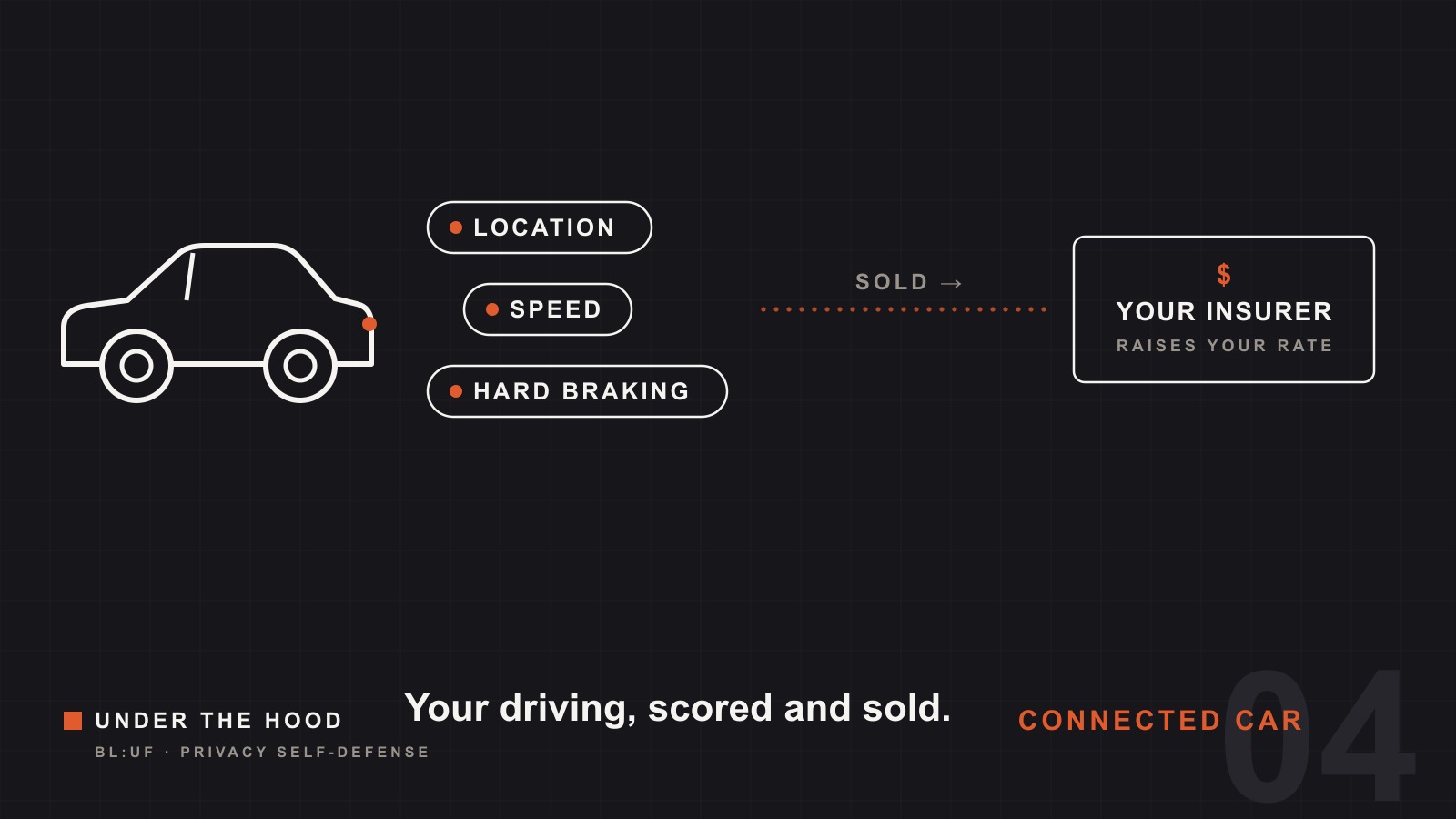
Your Car Is a Data Broker With Wheels. Here's How to Make It Stop Selling You.
Your car may be one of the worst privacy threats you own. Mozilla reviewed 25 brands in 2023 and every one failed — 19 of 25 said they can sell your data. And it's not hypothetical: from 2020 to 2024, GM sold driving data — your speed, hard braking, late-night trips — to brokers like LexisNexis, who fed it to insurers and quietly raised people's premiums. The FTC banned GM from doing it and California reached a $12.75 million settlement with them. Here's how to find what your car shares, and shut it off.
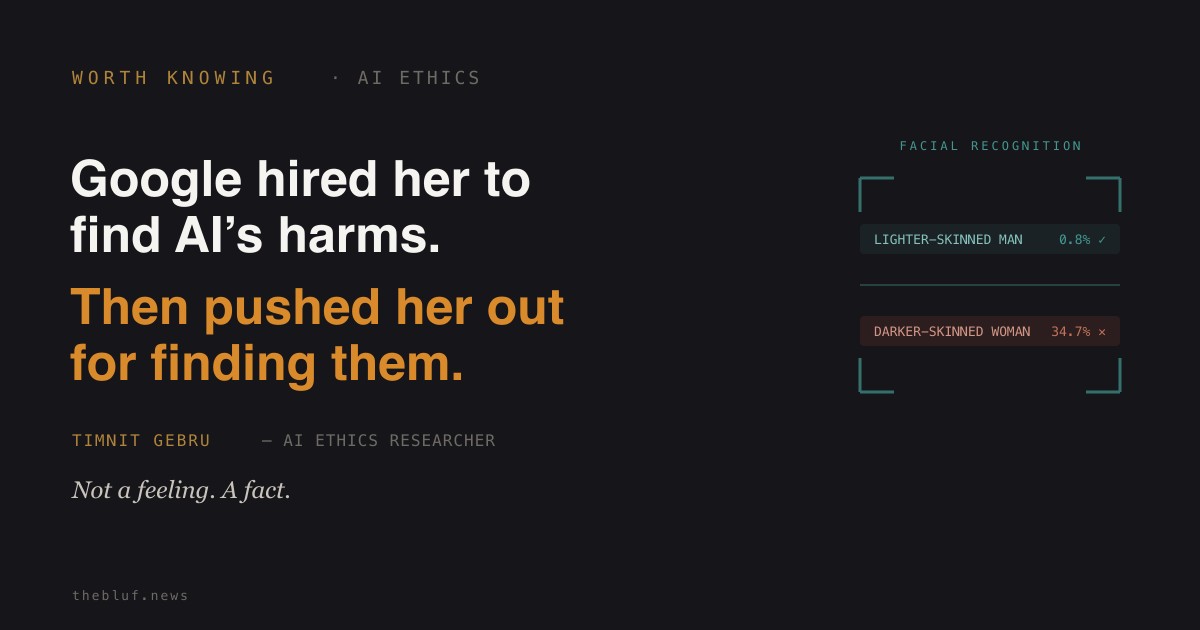
Google Hired Her to Find AI’s Harms. When She Found Them, They Pushed Her Out — and the Numbers She Measured Are Still True.
Timnit Gebru turned “AI is biased” from a worry into a measurement — proving commercial facial recognition misread darker-skinned women 34.7% of the time, versus under 1% for lighter-skinned men. When she warned that today’s AI language models carry the same flaw at far greater scale, her career at Google ended in a public rupture: she says she was fired, Google says she resigned. She built her own research institute and kept measuring. The numbers haven’t changed.
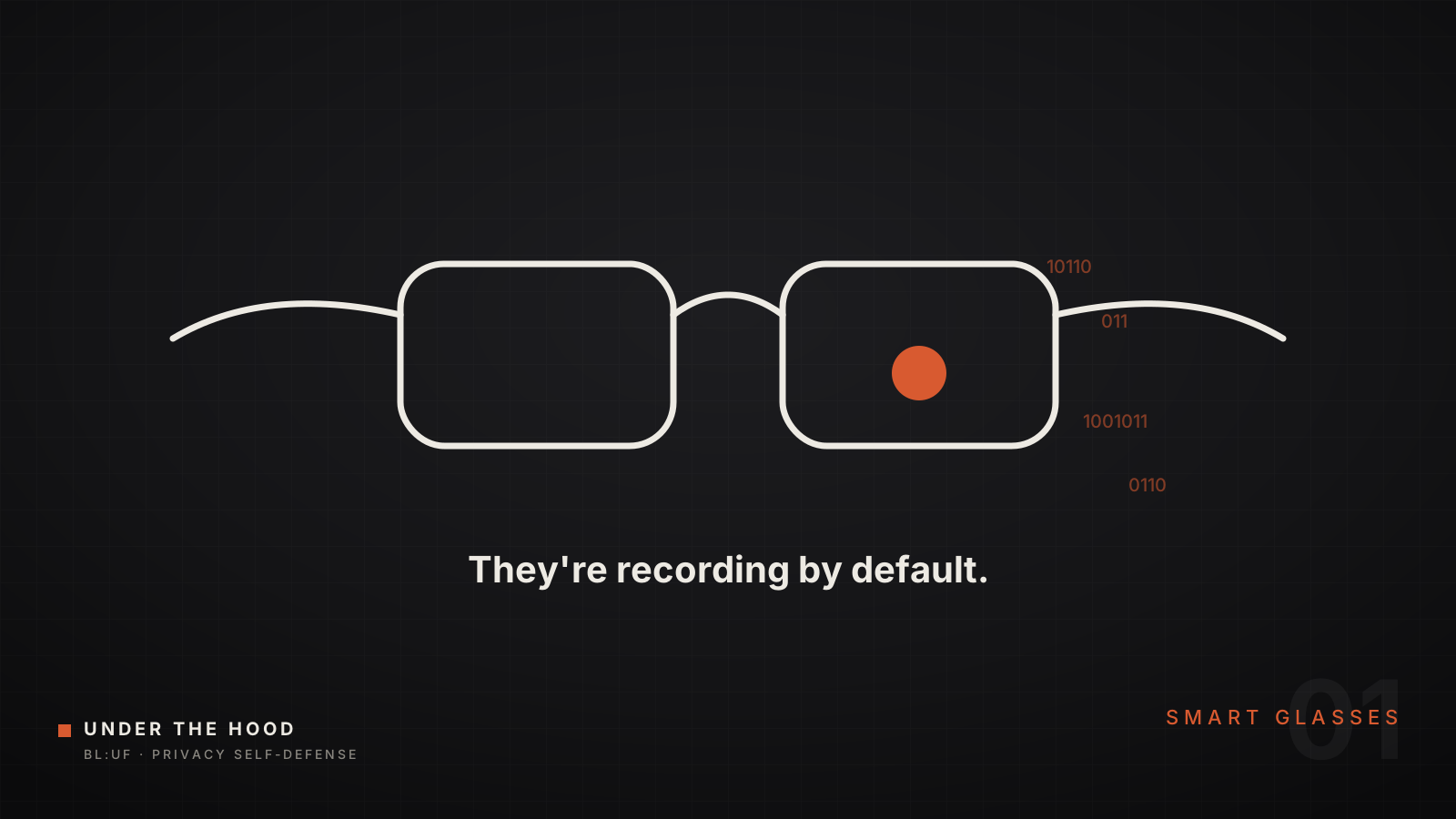
My Smart Glasses Record for Meta by Default. I Found the Switches That Make Them Stop.
I almost stopped wearing my Ray-Ban Meta glasses — all I'd heard was that footage gets reviewed by some company to train an AI, with no real oversight. The fear isn't a myth: in April 2025 Meta turned the AI on by default, made your photos and voice usable for training, and removed the opt-out for storing your voice. But you can't fix it by installing anything — the glasses are locked. You fix it in three settings, one network block, and how you wear them. Here's exactly where the switches are.
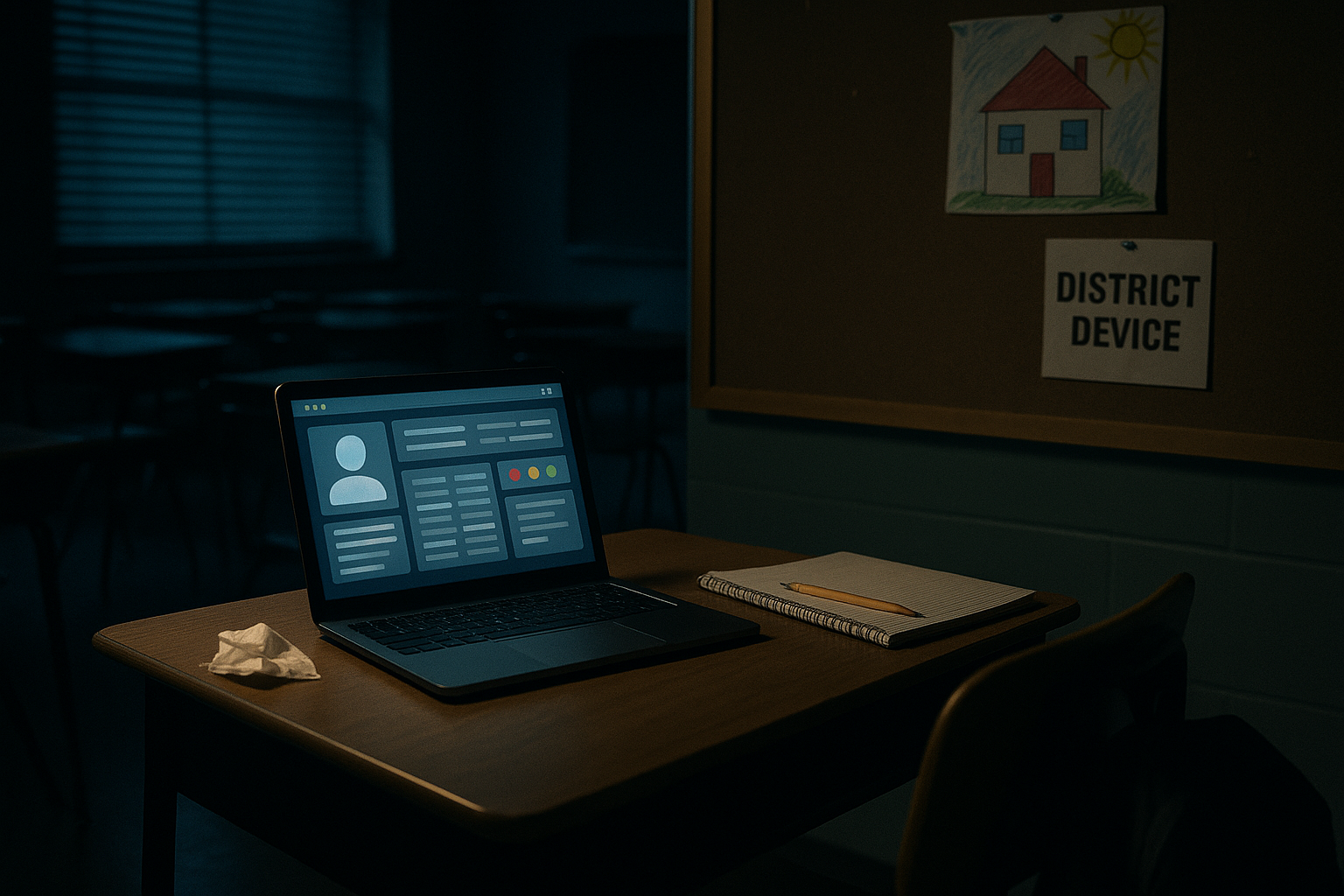
Your Kid's School Surveillance File Starts Before They're Old Enough to Consent. Sometimes It Ends With Police.
A child's school surveillance file can start with a laptop login, a cafeteria fingerprint scan, or a bus ID badge -- years before they're old enough to understand, let alone meaningfully consent to, the bargain. It runs through monitoring software reading their messages, biometric payment systems, GPS-tracked buses, hallway cameras, and data shared with an average of more than 2,700 ed-tech tools per district, most with no FTC action ever taken against them. The most alarming place that file can lead: AI monitoring software has already put a 13-year-old in a jail cell over a joke, and sent dozens more kids to psychiatric holds over false alarms -- one branch of a much bigger tree, not the whole thesis.