I added NextDNS to my phone six days ago, expecting it to catch a few ads. Then I opened the dashboard.
The number
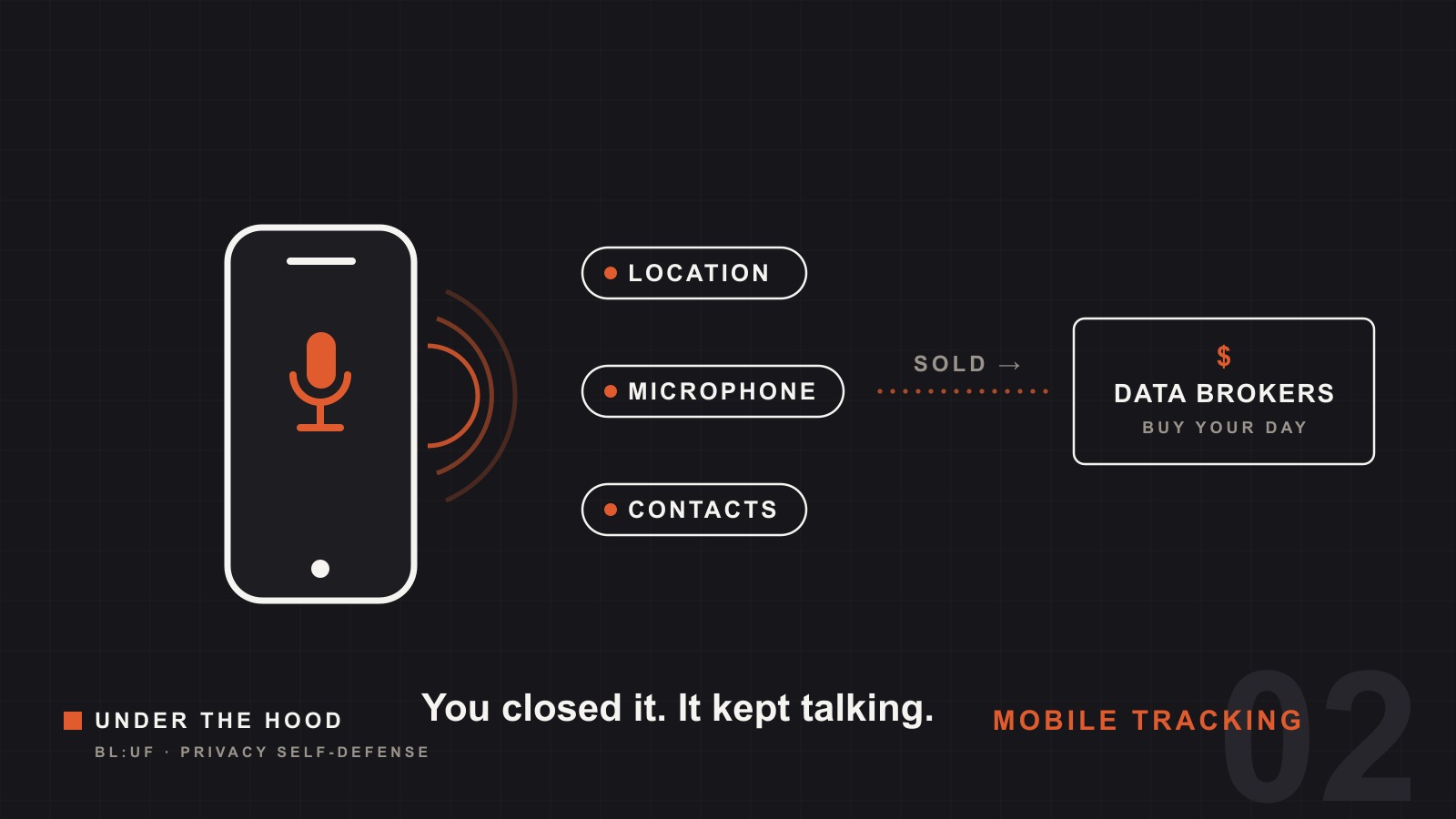
In six days my phone logged 91,118 DNS requests — about 15,000 a day, roughly one every six seconds, around the clock, including while I slept. NextDNS blocked 5,937 of them — about 7% — as ads, trackers, and known-bad domains. I tapped none of them. They ran on their own.
What a "DNS request" is
Every time an app needs a server, it first asks "where is this address?" — a DNS lookup. NextDNS sits in that one step: it answers the lookups, and for domains on its ad, tracker, and malware lists it answers with nothing, so the connection never happens. It is not a VPN — it doesn't route or read your actual traffic, only the lookups (which it also encrypts). No noticeable hit to speed or battery.
Why you'd actually want it
Most of those 91,118 requests weren't me using the phone — they were background calls: apps reaching ad networks, analytics kits, and data brokers on their own schedule, whether the app was open or not. Each one is a small note — which app, when, how long, from where — and stitched together that's a profile, packaged and sold. A lot of "free" apps are free because that profile is the product. NextDNS just showed me the receipts and cut the calls.
There's a second reason that's less about privacy and more about safety: the same filter blocks known malware and phishing domains. A bad link — clicked by you, a kid, or an aging parent on the family plan — often just doesn't connect. And one setup covers every device on the network: phones, laptops, the smart TV, the stuff you forgot was even online.
The principle underneath it is simple: none of this ever asked you. The case for a tool like this isn't paranoia — it's consent. You get to decide what your devices talk to.
The upside
- Network-wide, not just your browser. A browser ad blocker stops ads on web pages. This stops the calls every app makes, on every device, including on cellular and public Wi-Fi.
- A security layer, not just ad-blocking. Malware and phishing domains get cut off — most useful for the least tech-savvy person on your plan.
- Cheap, light, invisible. Free up to a point, ~$20/year after; no battery drain; no app required on iPhone.
- You can finally see it. The dashboard turns invisible traffic into a number you can watch.
- Optional guardrails. Parental and content filtering if you want them.
The downside
- It's not a cure-all. Ads served from the same domain as the content (YouTube is the classic) slip through, and tracking that rides an app's own servers can't be filtered by domain. Again: it is not a VPN — it doesn't hide your traffic or anonymize you.
- You trade one truster for another. NextDNS can see the domains you look up. You can set it to keep zero logs — but the satisfying stats only exist if you let it log. Decide that on purpose (you also choose where logs live and for how long).
- It can break the odd thing. Once in a while a legitimate site gets caught by a blocklist and you have to whitelist it. Minor, but real — and confusing if you don't realize the filter did it.
- Don't over-read the number. "Blocked" counts requests, not unique threats — one app can hit the same tracker hundreds of times. The volume is the story, not a body count.
- The free tier has a ceiling. 300,000 queries a month; a busy household blows past it — and then it stops filtering, not your internet.
What it costs
Free up to 300,000 queries a month. Paid is $1.99 a month or $19.90 a year — unlimited devices, one config for the whole network. Less than a streaming service.
See your own numbers (about 10 minutes)
- Make a free account at nextdns.io.
- On iPhone, open apple.nextdns.io, paste your configuration ID, and install the profile — it uses iOS's built-in encrypted DNS, so no extra app is required. (Android, Mac, and routers have their own one-time setup.)
- Add the same configuration to your other devices.
- Wait a day, then open the dashboard.
You'll get your own version of my 91,118 — and that's the whole idea of this section. What runs under the hood is invisible by design. The fix isn't fear; it's a flashlight.
Receipts: NextDNS — nextdns.io/pricing (free tier 300,000 queries/mo; Pro $1.99/mo or $19.90/yr; unlimited devices); NextDNS help/privacy docs (DNS-layer filtering, not a VPN; encrypted DNS; configurable zero-log + log region/retention; past the free cap, filtering pauses, not your internet). The 91,118 total queries and 5,937 (7%) blocked are one phone's own NextDNS dashboard over ~6 days (June 2026) — a personal reading, not a NextDNS statistic. Spotted an error? editor@thebluf.news