The ones that don't fit a single beat but stick with you anyway.


They Apologized for 32 Racist Ads. Almost Nothing Changed.
We checked 32 major companies' racially insensitive ad campaigns from 2006-2026 against what happened after they apologized. 25 of 32 (78%) show no verified policy change -- just an apology and a deletion. Only 5 made a documented change, and only one of those (Prada) came with outside enforcement rather than a self-reported announcement. Two 2026 cases (Target, Converse) remain genuinely unresolved. Real, sourced images accompany every case in this piece.

The FTC Banned Rite Aid From Using Facial Recognition for Five Years. It Was Already in Bankruptcy When the Order Landed.
For eight years, Rite Aid ran facial recognition in roughly 200 stores — concentrated in lower-income neighborhoods and neighborhoods that were majority Black, Latino, or Asian — with thousands of false alarms that got real people followed, confronted, and searched, including an 11-year-old girl. The FTC banned the company from doing it again for five years, and issued no fine: Rite Aid was already in Chapter 11 when the order came down. It liquidated in October 2025, after a second bankruptcy. Meanwhile most major retailers won't say whether they're doing the same thing right now — and separately, one Kroger shopper who used an Oregon data-access law to pull their own loyalty profile found it had been shared with more than 50 companies, including an "income predictor."

Almost Everything That Goes Wrong in Elder Care Is Decided Years Before the Crisis. Here's What to Do While You Still Can.
This series has been about the wall families hit when a parent needs care. The last part is the one that could keep you off it: a short list of moves that are easy now and impossible later. None of it is expensive. All of it has to happen before the diagnosis, the fall, or the five-year clock — not after. The whole series, turned into a checklist.

A Four-Year-Old Kept Waving at His Neighbors. They Became the Village He Was Missing.
Roman Butzlaff was lonely after his family changed — his parents separated, his father moved to Florida, his grandparents live out of state. Then a neighbor across the street, Wade Fulgum, returned more than the 4-year-old's wave. About a dozen neighbors in Concord, N.C. are now the extended family he didn't have nearby.

Ube Is Genuinely Nutritious — But Most Ube Lattes Are Sugar and Flavoring, Not Yam
The whole purple yam from the Philippines is a legitimately good food: fiber, potassium, a surprising amount of vitamin C, and the purple-colored antioxidants (anthocyanins) that also make blueberries healthy. But it is not a miracle "superfood," and here is the catch — most of what is sold as ube right now (lattes, syrups, flavored desserts) is ube extract or flavoring, mostly glucose syrup and coloring with little or no actual yam. Eat the real thing for the benefits; the trendy purple drink is closer to a dessert.

There's a Rule That Lets a Country Refuse to Hear Your Asylum Case. It's Quietly Going Global.
It's called “safe third country.” The idea: if you could have asked for protection somewhere safe along the way, the country you actually reach can refuse to even hear your claim — and send you back. The US and Canada have done it at their shared border since 2004. As of June 12, 2026, the EU's biggest asylum overhaul in 30 years builds the same logic into law across 27 countries. And on June 25, 2026, the US Supreme Court blessed a different route to the same destination — officers may turn asylum seekers away at a port of entry before they ever legally “arrive.”

Elder Care Assumes Every Family Has a Full-Time Navigator. Nobody Has One. That's the Part That Breaks You.
The money problems in this series have answers. This one mostly doesn't. The hardest part of caring for an aging parent isn't any single bill — it's that the entire system is built around a person who doesn't exist: someone with unlimited hours to sit on hold, decode forms, and chase callbacks. Here's the breakdown nobody warns you about, and the few things that actually make it survivable.

The Legal Moves That Decide Whether a Family Keeps Anything — and the Five-Year Look-Back Mistake That Wipes Them Out
Medicaid is the country's biggest payer for long-term care, but it's means-tested — and the rules for qualifying without losing everything are written for lawyers, not families. Done right, years ahead, you protect a home and a spouse. Done wrong, one well-meaning gift triggers a penalty that locks you out for months. Here are the moves that matter — and the one rule that punishes you for not knowing it.

Free and VA-Funded Tech Training for Veterans — Six Programs, and How to Apply
Six real programs will train you for an IT or cybersecurity career at little or no cost — run by universities, tech companies, and the VA. Who qualifies, what is covered, and exactly where to apply. (One VA program now draws down GI Bill entitlement — worth knowing before you sign up.)

He Turns Himself Into a Statue for 90 Minutes to Keep a Murdered Hero Alive. A Denied US Visa Kept Him Out of His Country's Biggest World Cup Match.
Michel Kuka Mboladinga — "Lumumba Vea," or "Lumumba Lives" — stands frozen, arm raised, for the entire length of every DR Congo match, honoring the independence leader Belgium helped murder in 1961. It took the country's president to get him to the World Cup at all. A US visa line still kept him from the match that mattered most.

There's Money Set Aside to Help Pay for Elder Care. The System Quietly Runs on You Never Claiming It.
Part 1 was the number that stops you cold — what aging actually costs, and how little Medicare pays. Part 2 is the part nobody hands you: real programs, already funded, that help pay for it. The catch isn't eligibility. It's that the people who qualify are never told — so most never ask. Here's the money, who it's for, and how to claim it.

Manifestation Isn't Wishing — It's a Trick for Getting Your Brain Out of Survival Mode. The Switch: Feeling Like You've Already Won.
Vision boards and affirmations always felt dumb to me. But there's a real, watch-it-work reason "act like you already have it" changes anything — and one reframe finally flipped the switch: imagine you already won the money, and you're only waiting on the check.

Pakistan Didn’t Plan a Solar Revolution. Its People Built One Anyway — and It’s Quietly Breaking the Grid.
Worn down by daily blackouts and power bills that roughly tripled, millions of Pakistanis bolted cheap Chinese solar panels onto their roofs so fast that at the height of summer 2025 solar became the country’s single biggest electricity source — about a quarter of all power at peak (across a full year, hydro, coal and gas still rival it). No subsidy, no government plan. It’s the fastest grassroots solar boom anywhere — and it’s pushing the national grid toward a death spiral, with the people who can’t afford panels left holding the bill.

Criticizing Israel Isn’t Antisemitism. Real Antisemitism Sometimes Hides Right Next to It. Here’s the Documented Line — and Why a CNN Panel Just Exploded Over It.
A CNN panel blew up this weekend over a question tangling both left and right: where does criticism of Israel end and antisemitism begin? They’re different things — criticizing a government, including Israel’s, is ordinary politics; antisemitism is hostility or conspiracy aimed at Jews as Jews. The confusion gets exploited two opposite ways, and those failures aren’t mirror images. Here’s the line, the documented stakes, and the tests that tell them apart.
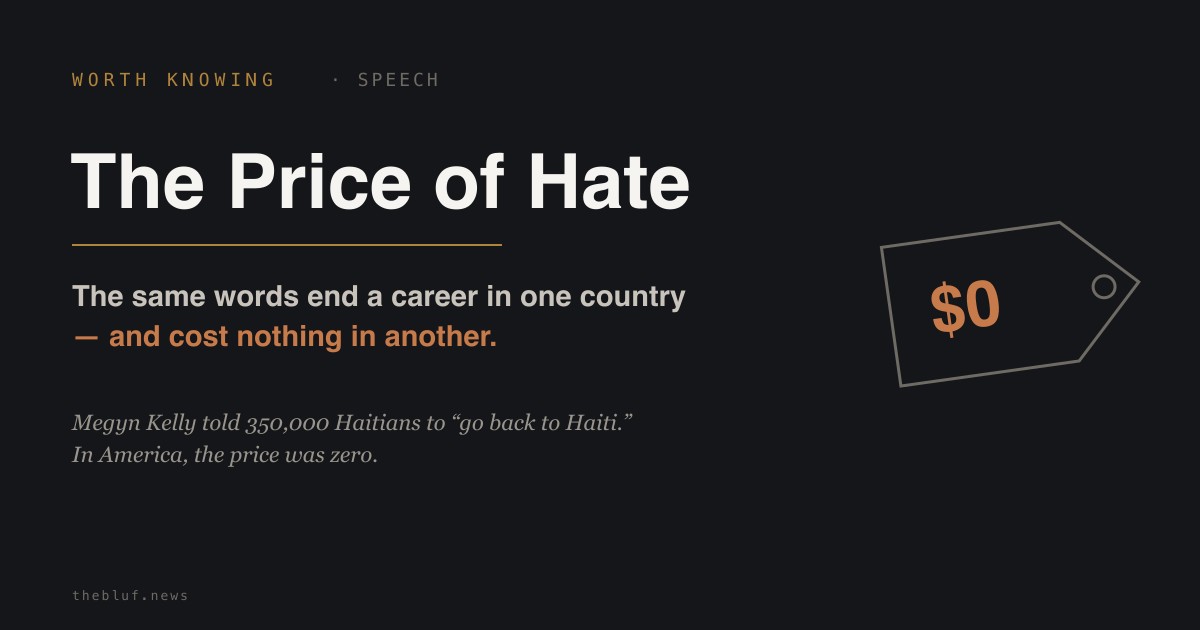
Megyn Kelly Told 350,000 Haitians to “Go Back to Haiti.” It Cost Her Nothing. Whether Hate Has a Price Depends on Who You Aim It At — and Which Country You’re In.
After the Supreme Court cleared the way to end legal status for ~350,000 Haitians, Megyn Kelly told them on a top show to “go back to f—ing Haiti” — and faced no penalty. Two rules explain the silence: in America, whether hate carries a cost turns on who it targets and whether the machinery to make it expensive was ever built for that group; and the same words are protected speech here but a regulated offence across most of the democratic world. Here’s how both work — and what you can do about either.

Thailand Has a Law That Lets Parents Take Back Gifts From an ‘Ungrateful’ Child. The Singha Beer Heir Is Testing It.
A 1908 Thai law — the “ungrateful child” provision — lets parents legally revoke gifts they’ve already given a child judged abusive, neglectful, or guilty of “serious reputational harm.” It rarely surfaces in public. Now the heir to the $1.75 billion Singha beer fortune is being sued under it by his own mother, after he went public alleging childhood abuse. He says the law exists to silence. They’re in court July 8.
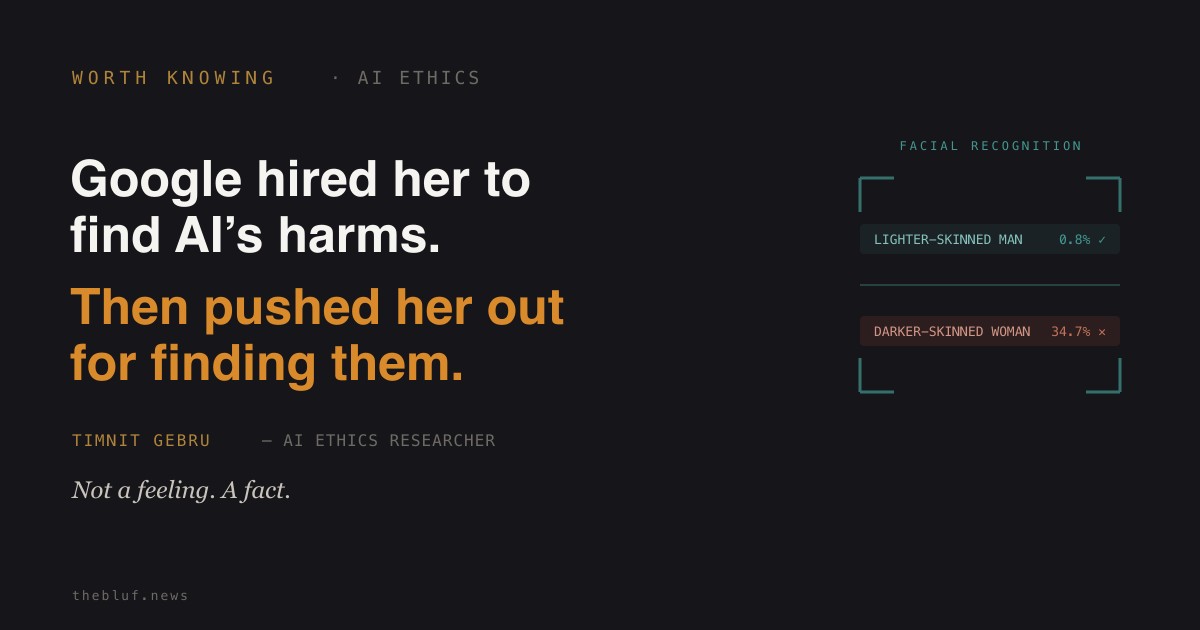
Google Hired Her to Find AI’s Harms. When She Found Them, They Pushed Her Out — and the Numbers She Measured Are Still True.
Timnit Gebru turned “AI is biased” from a worry into a measurement — proving commercial facial recognition misread darker-skinned women 34.7% of the time, versus under 1% for lighter-skinned men. When she warned that today’s AI language models carry the same flaw at far greater scale, her career at Google ended in a public rupture: she says she was fired, Google says she resigned. She built her own research institute and kept measuring. The numbers haven’t changed.

Assisted Living Costs $5,419 a Month on Average. Medicare Covers Almost None of It.
The median cost of assisted living in America is $5,419 a month; memory care starts around $6,690. Medicare covers almost none of it. Most families find out when they're already in crisis — you get the crisis, nobody gives you the guide. Here's the number, what Medicare really covers, the entry-fee trap nobody explains, and the moves to make before you're in the situation.