What ube actually is
Ube (say "OO-beh") is a purple yam, Dioscorea alata, long used in Filipino cooking for dishes like halaya and ube ice cream. It is having a mainstream moment: ube has grown more than 230% on U.S. menus over four years, and chains from Pret A Manger to Costa Coffee have rolled out ube drinks, with copycat "Starbucks ube latte" recipes everywhere online.
The real yam is nutritious — this part is true
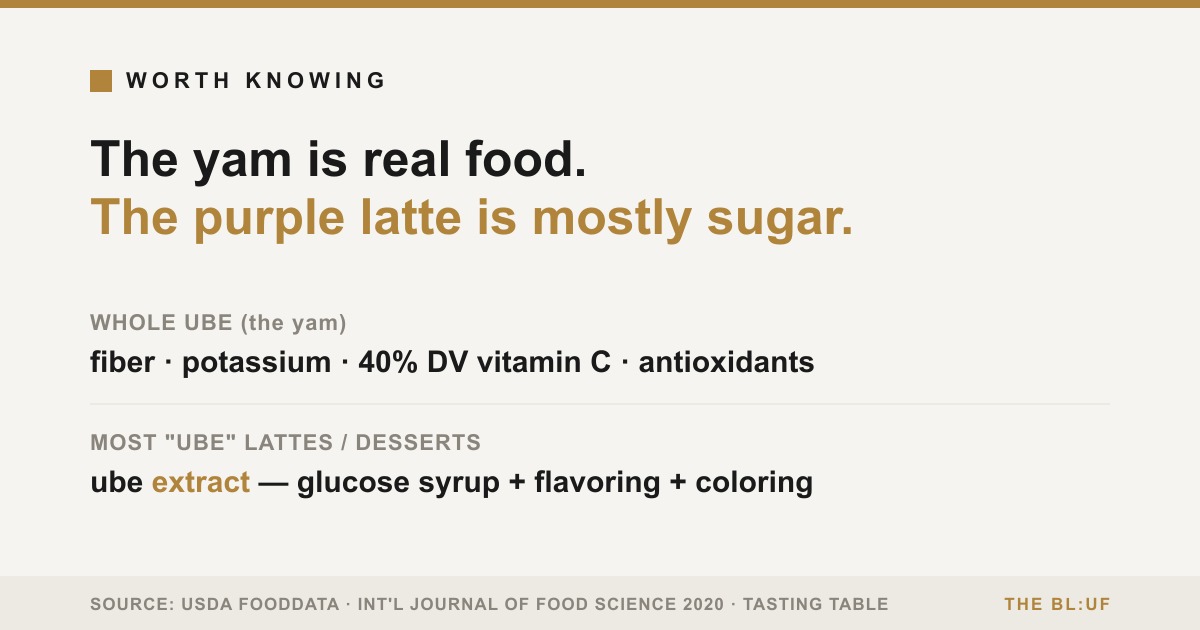
Per 100 grams, cooked ube runs about 140 calories with roughly 4 grams of fiber, only trace fat, a solid dose of potassium (about 13.5% of the Daily Value), and — the standout — around 40% of the Daily Value for vitamin C.
The purple color is the interesting part. It comes from anthocyanins — the same family of plant pigments found in blueberries. Peer-reviewed research has identified anthocyanins like cyanidin and peonidin compounds in purple yam and measured real antioxidant activity from them. A 2020 study measured anthocyanin content of 10 to 90 milligrams per 100 grams of dried tuber, depending on the variety.
Why it is not a "superfood miracle"
Antioxidants are good, but the lab studies that show ube compounds slowing cancer cells used concentrated extracts, not the amount you would ever eat. Eating a normal serving of ube will not reproduce those lab results. Ube is a healthy vegetable — think "good yam," not "cure."
The catch: your latte is probably not yam
This is where the health halo gets misleading. There are two very different "ube" products. Ube powder is made from real dried yam and carries the actual nutrition. Ube extract — the base for most lattes, ice creams, and vividly purple desserts — is a different thing entirely. A typical extract lists glucose syrup first, followed by flavorings and coloring, and some brands use artificial flavor and color instead of real ube.
So a bright-purple ube latte gets its color and sweetness mostly from syrup and flavoring, not from the yam. The fiber, potassium, and vitamin C that make whole ube worth eating do not meaningfully carry over into a sweetened drink. Bottom line: the yam is real food worth eating; the purple drink is a treat — enjoy it as one.
The Receipts
BL:UF doesn't ask you to trust us. Check our work:
- Ube nutrition (fiber, potassium, ~40% DV vitamin C, ~140 cal/100g cooked) — USDA FoodData Central, via dietitian-reviewed summary: Healthline, reviewed by Susan McCabe, RD
- Anthocyanins in purple yam + antioxidant activity + 10–90 mg/100g content — International Journal of Food Science (2020): PMC7368940; PubMed 25848974
- Ube extract = glucose syrup + flavoring + coloring, vs. real ube powder — Tasting Table
- Ube menu trend (+230%) / mainstream chain rollouts — Perfect Daily Grind