
Almost Everything That Goes Wrong in Elder Care Is Decided Years Before the Crisis. Here's What to Do While You Still Can.
This series has been about the wall families hit when a parent needs care. The last part is the one that could keep you off it: a short list of moves that are easy now and impossible later. None of it is expensive. All of it has to happen before the diagnosis, the fall, or the five-year clock — not after. The whole series, turned into a checklist.
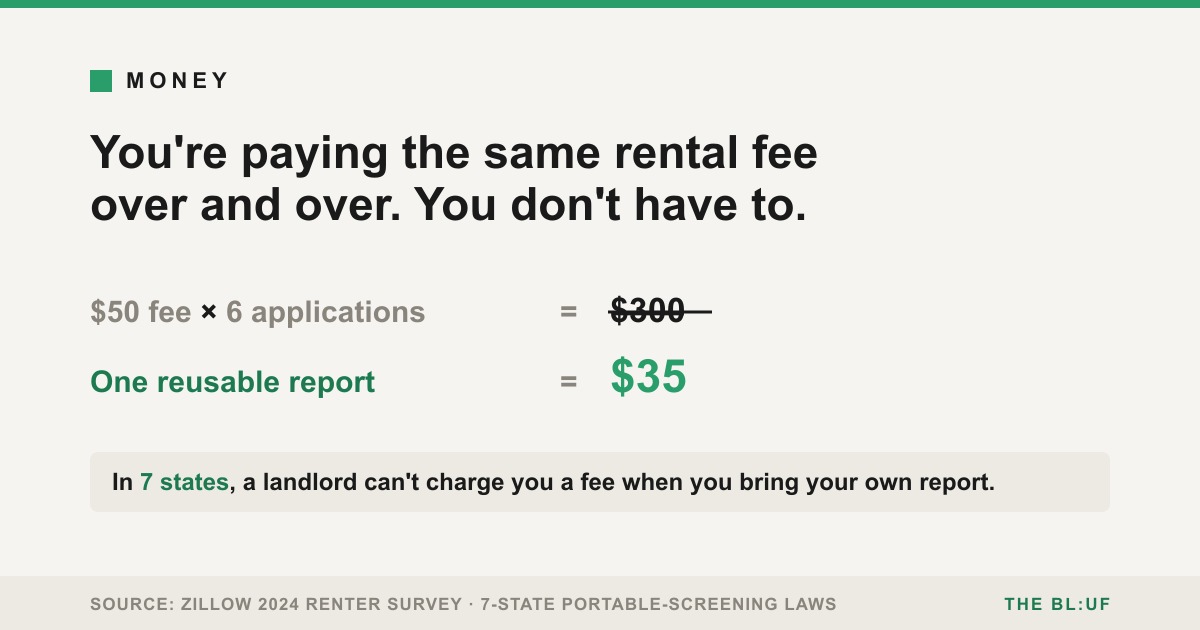
You Can Apply to Many Rentals on One $35 Report. In Seven States, a Landlord Can't Charge You a Fee When You Bring It.
Most renters still pay $40–75 per application for a credit-and-background check that doesn't change from one application to the next. A "portable" screening report — pay once (~$35), reuse for about 30 days — lets you apply to many rentals on a single file, and seven states now legally bar landlords from charging an application fee when you bring one. The reason you've never heard this: the companies positioned to tell you make their money from the fee.

The Legal Moves That Decide Whether a Family Keeps Anything — and the Five-Year Look-Back Mistake That Wipes Them Out
Medicaid is the country's biggest payer for long-term care, but it's means-tested — and the rules for qualifying without losing everything are written for lawyers, not families. Done right, years ahead, you protect a home and a spouse. Done wrong, one well-meaning gift triggers a penalty that locks you out for months. Here are the moves that matter — and the one rule that punishes you for not knowing it.

Assisted Living Costs $5,419 a Month on Average. Medicare Covers Almost None of It.
The median cost of assisted living in America is $5,419 a month; memory care starts around $6,690. Medicare covers almost none of it. Most families find out when they're already in crisis — you get the crisis, nobody gives you the guide. Here's the number, what Medicare really covers, the entry-fee trap nobody explains, and the moves to make before you're in the situation.