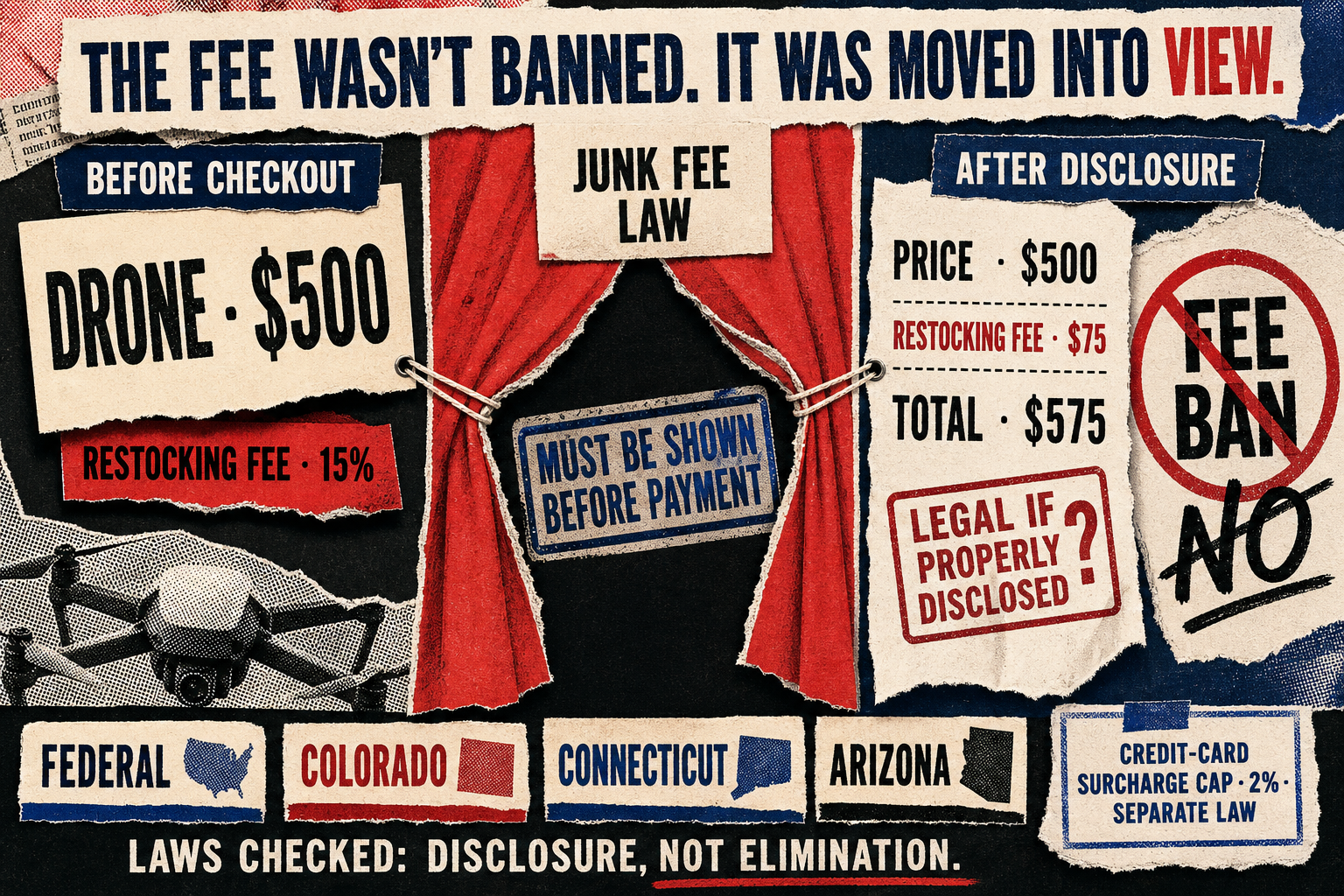
States Are Passing “Junk Fee” Laws. Every One Checked Requires Disclosure, Not a Ban.
New state and federal "junk fee" laws sound like a crackdown on convenience fees, restocking fees, and resort fees. They're not. Every law checked for this piece -- federal, Colorado, Connecticut, Arizona -- requires a business to show you the fee before you pay. None of them stop the fee itself. Best Buy charges 15% on drones, cameras, e-bikes, and projectors, and $45 on activated phones. Retailers say it's about return-processing costs and shipping, per their own trade group's survey. Restocking fees are getting more common, not less: 72% of retailers now charge some return fee, up from 66% the year before.
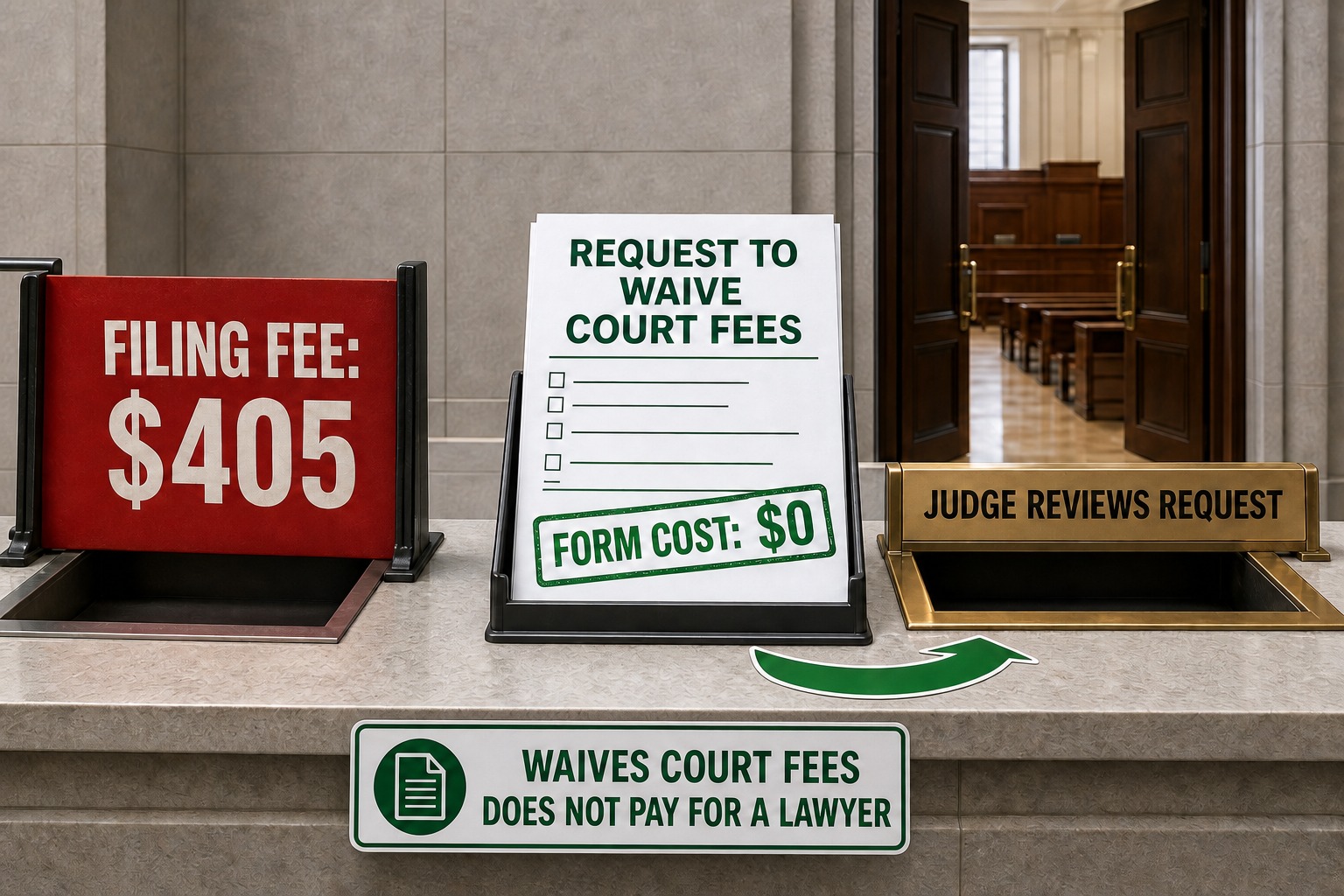
Courts Will Waive Your Filing Fees If You Can't Afford Them. The Form Is Free — and Almost No One Fills It Out.
Court filing fees can top $400 in federal court and run $50 to several hundred dollars in state courts — money you owe just to open your case, before a judge hears a word. But a right on the books since the founding lets people who can't afford those fees file for free: in federal court it's called proceeding “in forma pauperis”; in state court it's usually a one-page fee-waiver form. The catch: it waives court fees, not a lawyer — a judge can toss a federal case that's frivolous, and if you later win or settle for real money, the court can take the waived fees out of your recovery. Here's how the request actually works, who qualifies, and the fee scam to steer around.
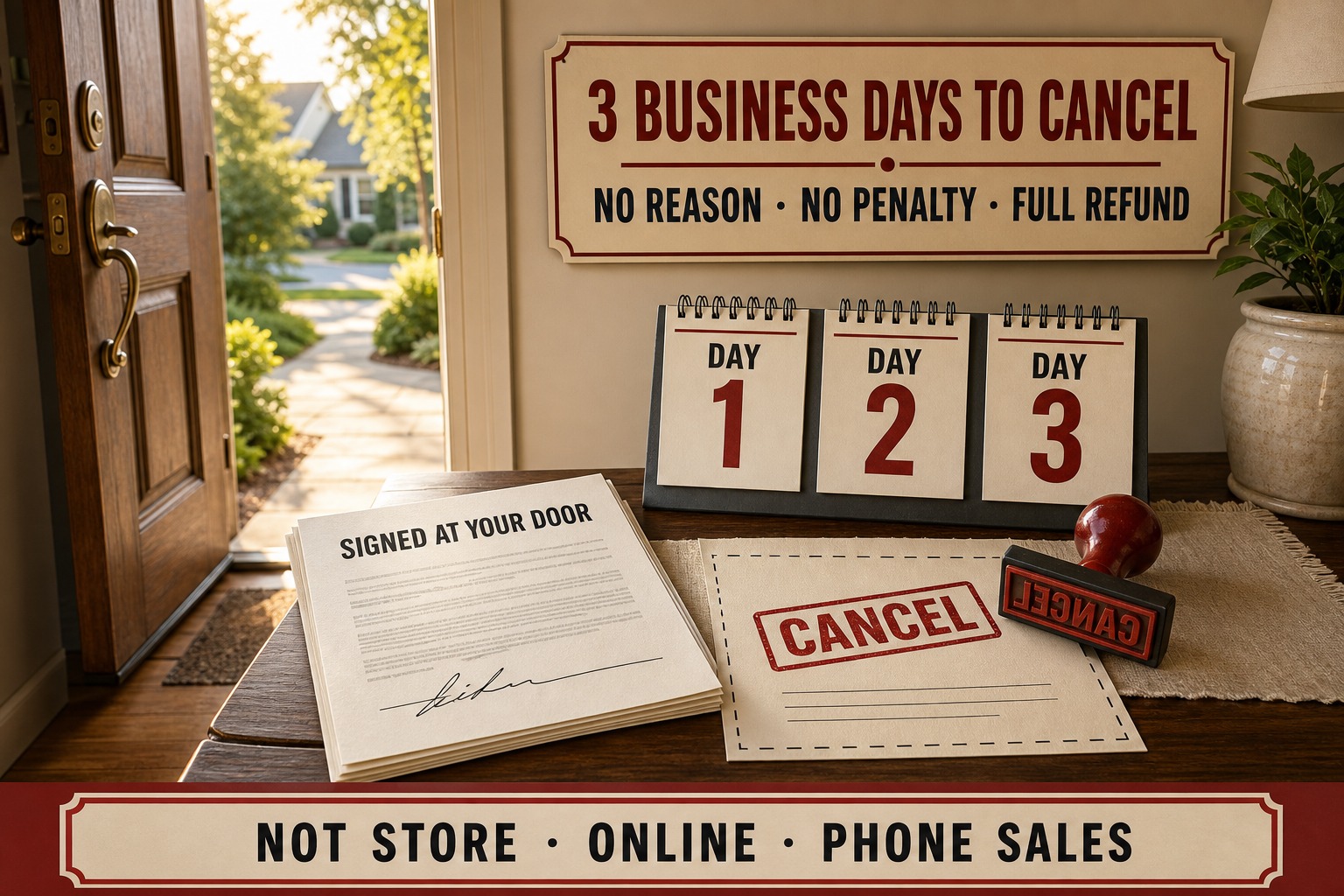
Sign a Deal at Your Door or in a Hotel Ballroom, and Federal Law Gives You Three Days to Cancel — No Penalty, Full Refund. Almost No One Uses It.
When a salesperson closes the deal in your living room, at your job, or in a rented hotel meeting room, federal law hands you a safety valve: three business days to cancel, no reason required, and the seller has to refund every penny within ten business days. It's the FTC's Cooling-Off Rule, on the books since the 1970s. The catch: it's narrower than people think — it doesn't touch anything you buy at a store, online, or by phone, and plenty of sellers 'forget' to give you the cancellation form the law requires. Here's exactly when it applies, the scam version to watch for, and how to pull the ripcord in time.

I Graded Every App on My Phone From A to E. Instagram and PayPal Both Failed.
A volunteer project called Terms of Service; Didn't Read has spent since 2012 reading the agreements nobody else does, grading them A through E. I checked what's actually on my phone: Instagram and PayPal both land at E, the worst grade, for reasons including PayPal tracking you even after you opt out of tracking. Headspace — the meditation app — isn't much better. There's a free browser extension that shows you the grade before you tap agree, which is the closest thing to actually reading the fine print that most people will ever do.
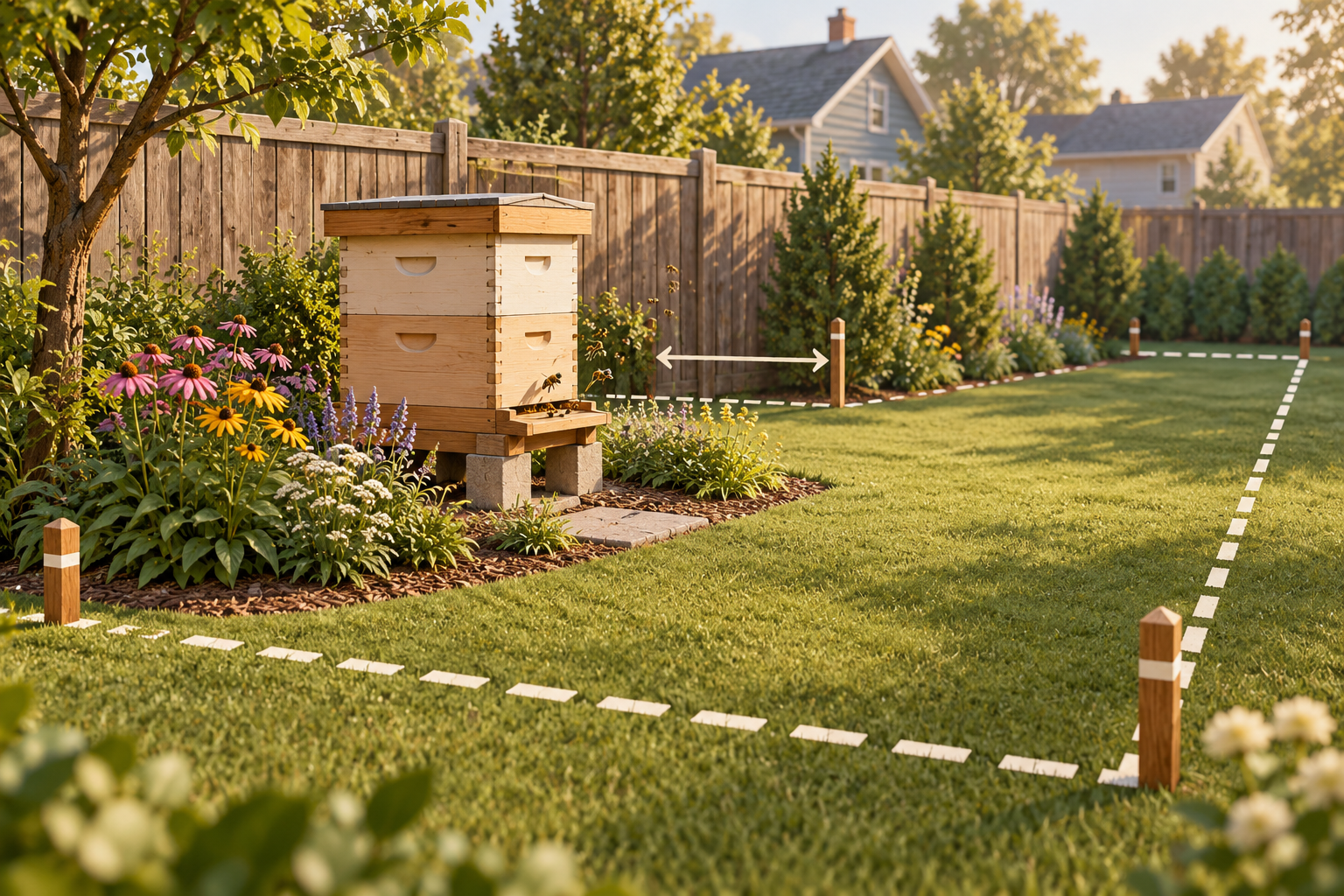
What a Beehive Really Costs — and What Your City Actually Allows
Year one runs $750 to $1,500. But for most people the real obstacle isn't money — it's a zoning rule they never looked up. Cleveland allows one hive per 2,400 square feet of lot. Madison allows six, with no minimum. Alameda caps most neighborhoods at two.

You Don't Need an App to Find Your Farmer. The Government Already Built One.
The USDA runs a free directory of 7,148 farmers markets and 2,002 CSA farms, searchable by ZIP code. A nonprofit runs a bigger one — more than 30,000 farms, markets, and local grocers. Neither advertises, which is most of why you've never heard of them.
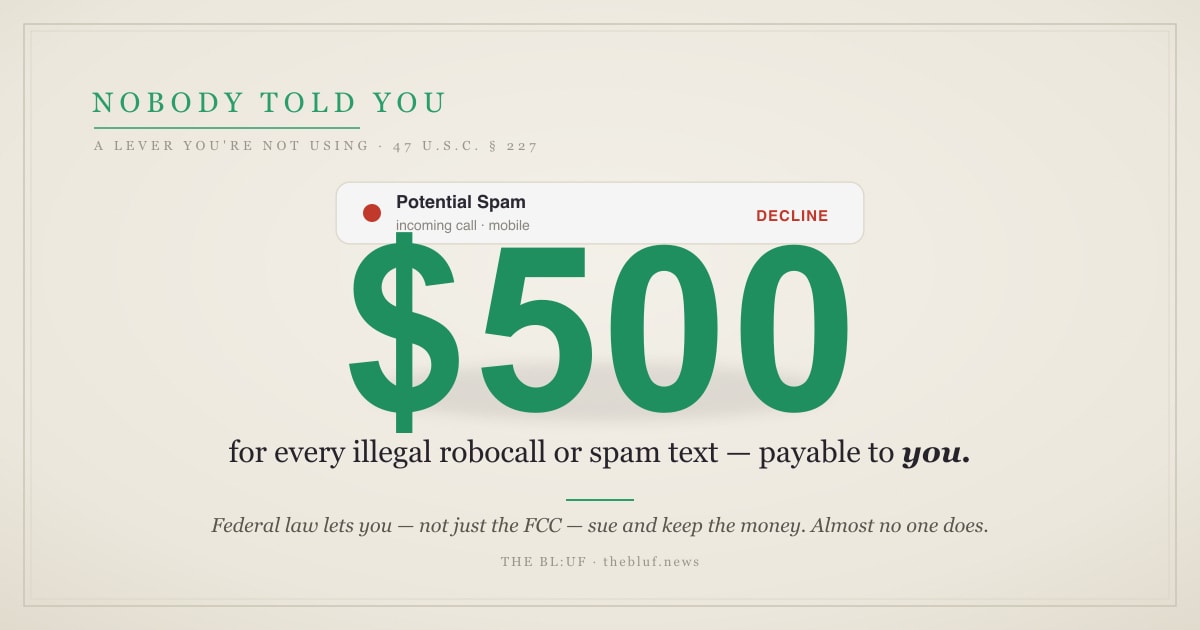
That Illegal Robocall or Spam Text Is Worth $500 — and Federal Law Lets You, Not Just the FCC, Collect It.
A 1991 federal law puts a price on illegal robocalls and spam texts — $500 for each one, up to $1,500 if the caller broke the rules on purpose — and it lets you, the person who got the call, sue and keep the money, often in small-claims court. The catch: it works against real, traceable companies, not the overseas scammers you can never find — and there's a fee scam that dresses itself up as this very law. Here's how the statute actually works — and what to check before you rely on it.
Free and VA-Funded Tech Training for Veterans — Six Programs, and How to Apply
Six real programs will train you for an IT or cybersecurity career at little or no cost — run by universities, tech companies, and the VA. Who qualifies, what is covered, and exactly where to apply. (One VA program now draws down GI Bill entitlement — worth knowing before you sign up.)
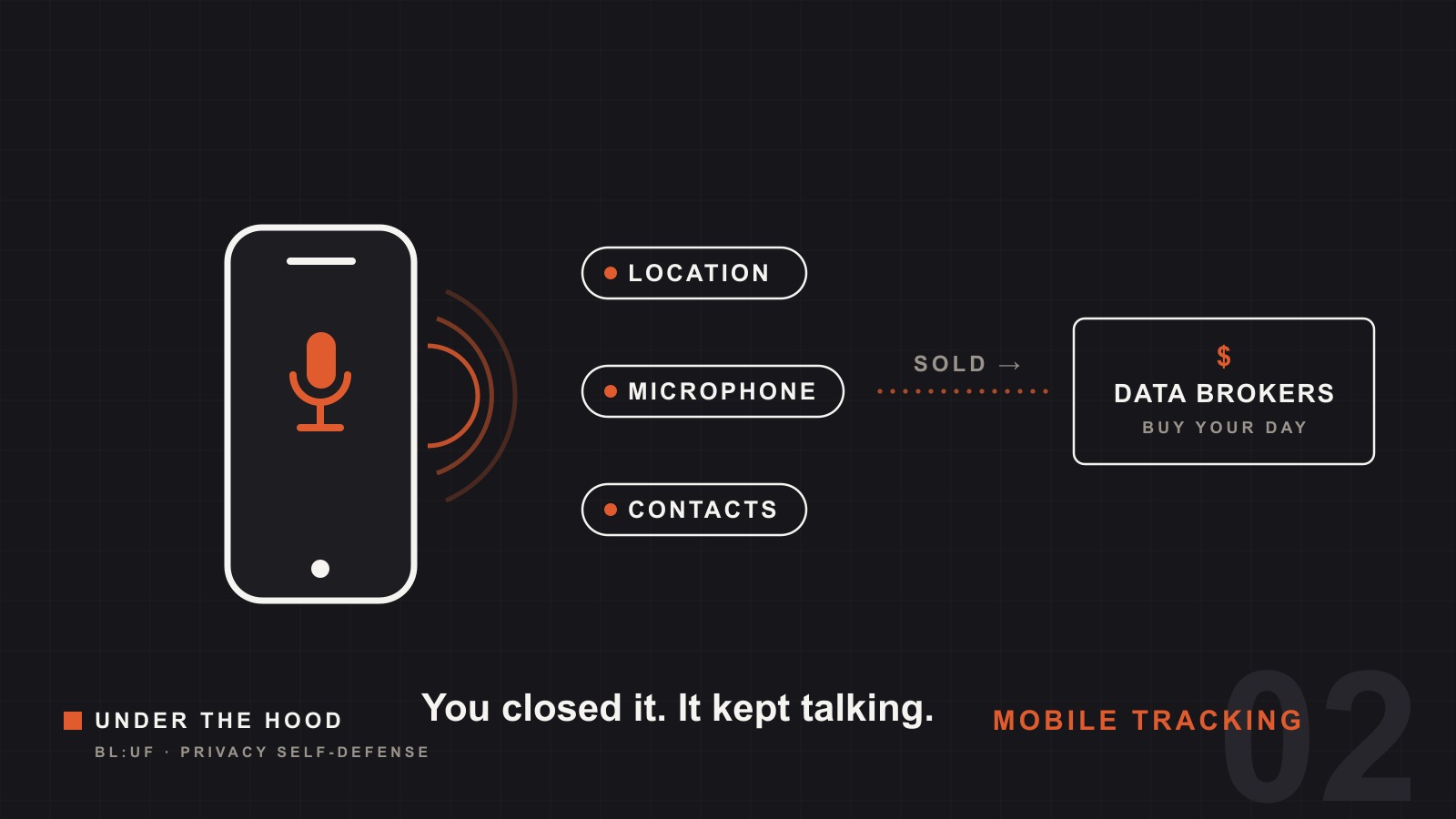
Your Phone Never Stops Talking. I Put a $20 Filter on Mine to Hear What It Was Saying.
In under a week, my phone made 91,118 requests to the internet — about one every six seconds, awake or asleep. A $20-a-year filter called NextDNS flagged 5,937 of them (7%) as ads, trackers, and junk I never agreed to, and blocked them before they connected. I didn't feel one. Here's why you'd want it, what it actually does for you, and where it falls short.
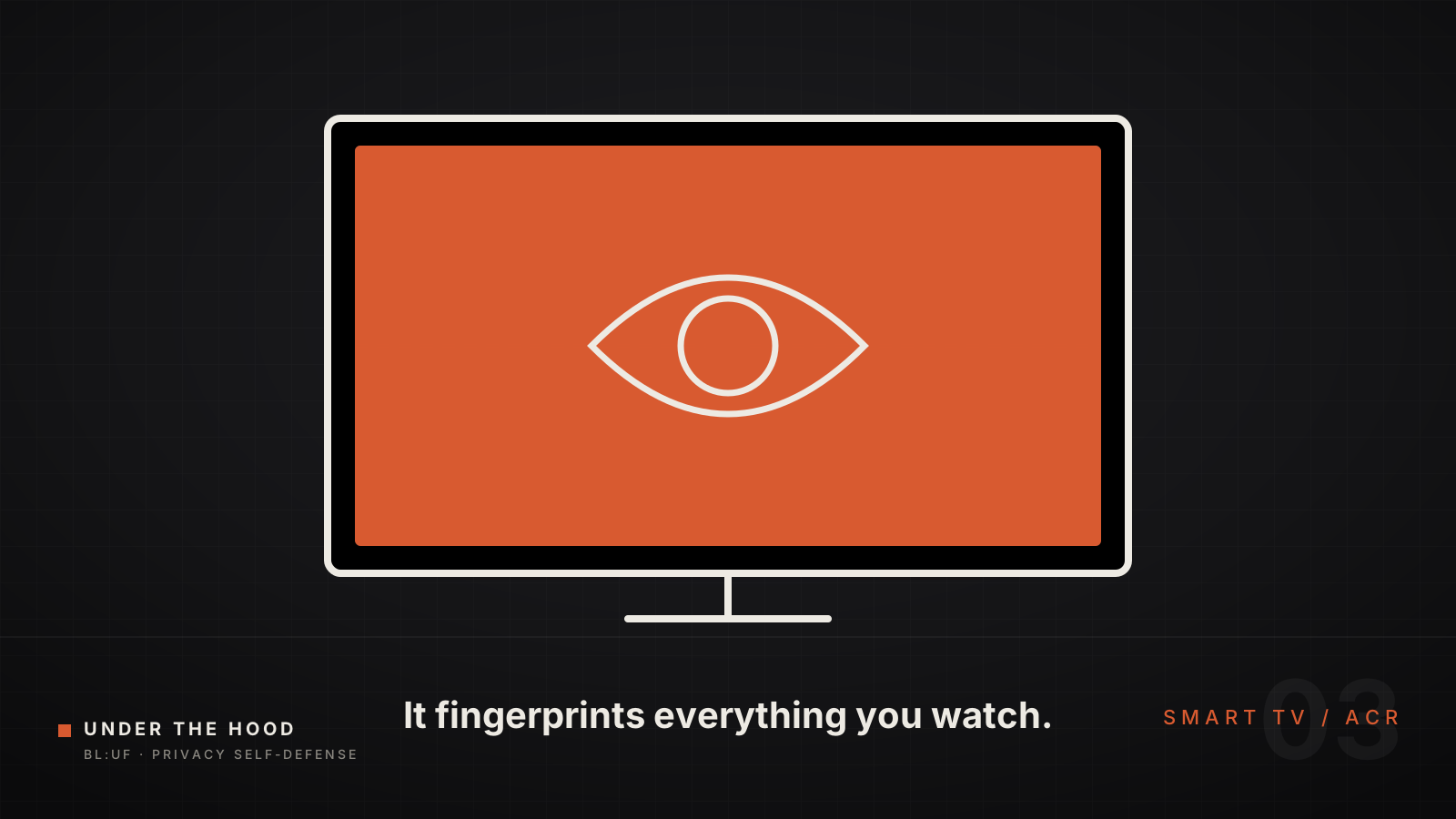
Your TV Is Watching You Watch It. Here's the Setting That Makes It Stop.
Almost every smart TV ships with a feature called ACR — automatic content recognition — switched on by default. It snapshots whatever's on your screen (even from your console or laptop), fingerprints it, and sends it back to be matched and sold. In 2017 the FTC caught Vizio doing it on 11 million TVs — over 100 billion data points a day, tied to your age and income. It's still standard. Here's the buried toggle on every major brand, and why you should block the TV at your network too.
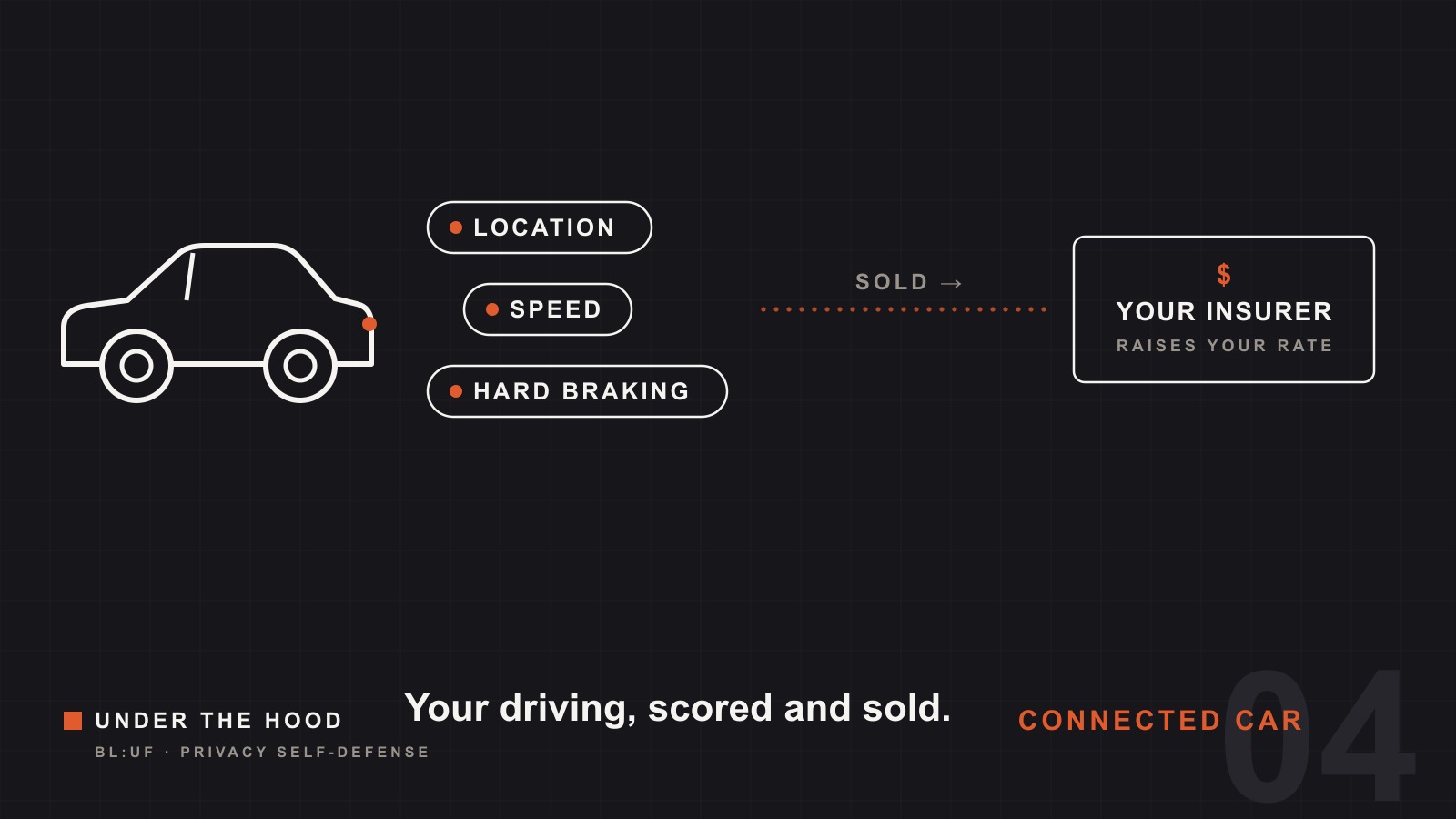
Your Car Is a Data Broker With Wheels. Here's How to Make It Stop Selling You.
Your car may be one of the worst privacy threats you own. Mozilla reviewed 25 brands in 2023 and every one failed — 19 of 25 said they can sell your data. And it's not hypothetical: from 2020 to 2024, GM sold driving data — your speed, hard braking, late-night trips — to brokers like LexisNexis, who fed it to insurers and quietly raised people's premiums. The FTC banned GM from doing it and California reached a $12.75 million settlement with them. Here's how to find what your car shares, and shut it off.
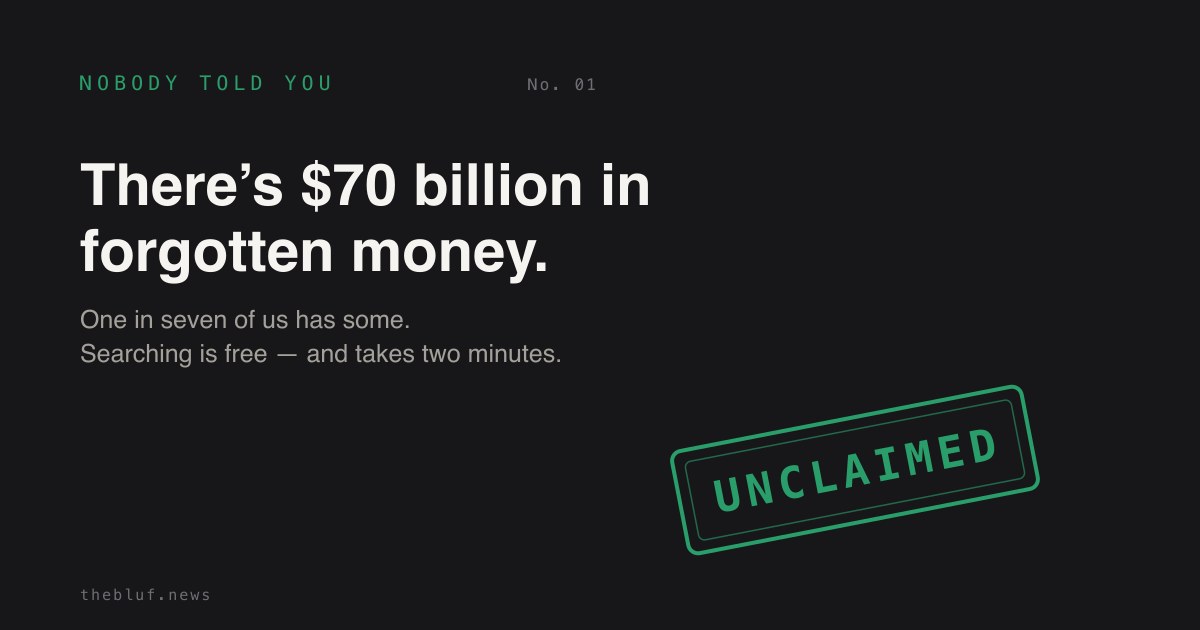
There’s About $70 Billion in Forgotten Money. One in Seven of Us Has Some — and Checking Is Free.
More than $70 billion in forgotten money — old paychecks, deposits, insurance payouts — sits in state government accounts. About 1 in 7 Americans has some. Searching for yours is free and takes two minutes. The only real catch: because it’s free, anyone who offers to “find” it for a fee is working an angle.
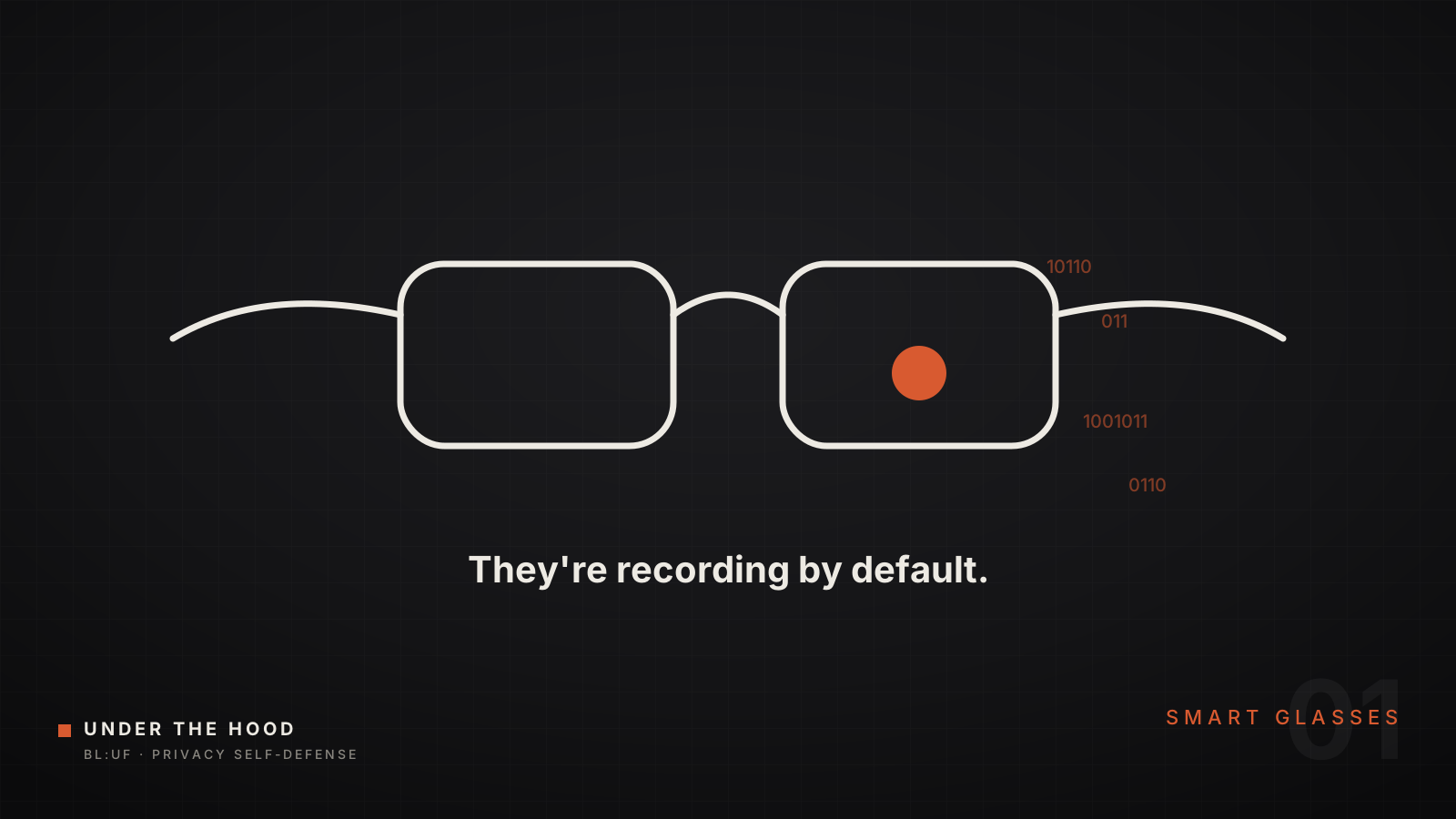
My Smart Glasses Record for Meta by Default. I Found the Switches That Make Them Stop.
I almost stopped wearing my Ray-Ban Meta glasses — all I'd heard was that footage gets reviewed by some company to train an AI, with no real oversight. The fear isn't a myth: in April 2025 Meta turned the AI on by default, made your photos and voice usable for training, and removed the opt-out for storing your voice. But you can't fix it by installing anything — the glasses are locked. You fix it in three settings, one network block, and how you wear them. Here's exactly where the switches are.

Harvard Will Teach You for Free. The Catch Is One Word: “Certificate.”
You really can take Harvard's most famous class — CS50 — completely free, certificate included. But “free Harvard” usually means free to *learn*, not free to get the paper that proves it. Here's exactly what's free, what quietly costs money, and how to start even if you don't own a computer.