What's documented
Enough people keep bees now that most cities have had to write rules about it. Most new beekeepers never look them up.
The cost is the part people research. The permit is the part they skip.
What it actually costs
Year one runs $750 to $1,500 for a single hive, all in. That breaks down roughly like this:
- $200–$300 — the hive itself: boxes, frames, foundation
- $100–$150 — a starter package of bees and a queen
- $75–$150 — protective gear
- the rest — tools and odds and ends
After year one, feeding and upkeep run $50 to $100 a month. Most of what you buy up front lasts years, not one season.
What most people never check
Bee rules are a patchwork. They're specific enough that no national rule of thumb tells you what's legal at your address.
A few real examples:
- Cleveland allows one hive per 2,400 square feet of lot. Smaller lot, no hives.
- Madison, Wisconsin allows up to six hives, with no minimum lot size.
- Alameda, California caps most residential zones at two — but allows ten in its agricultural zone.
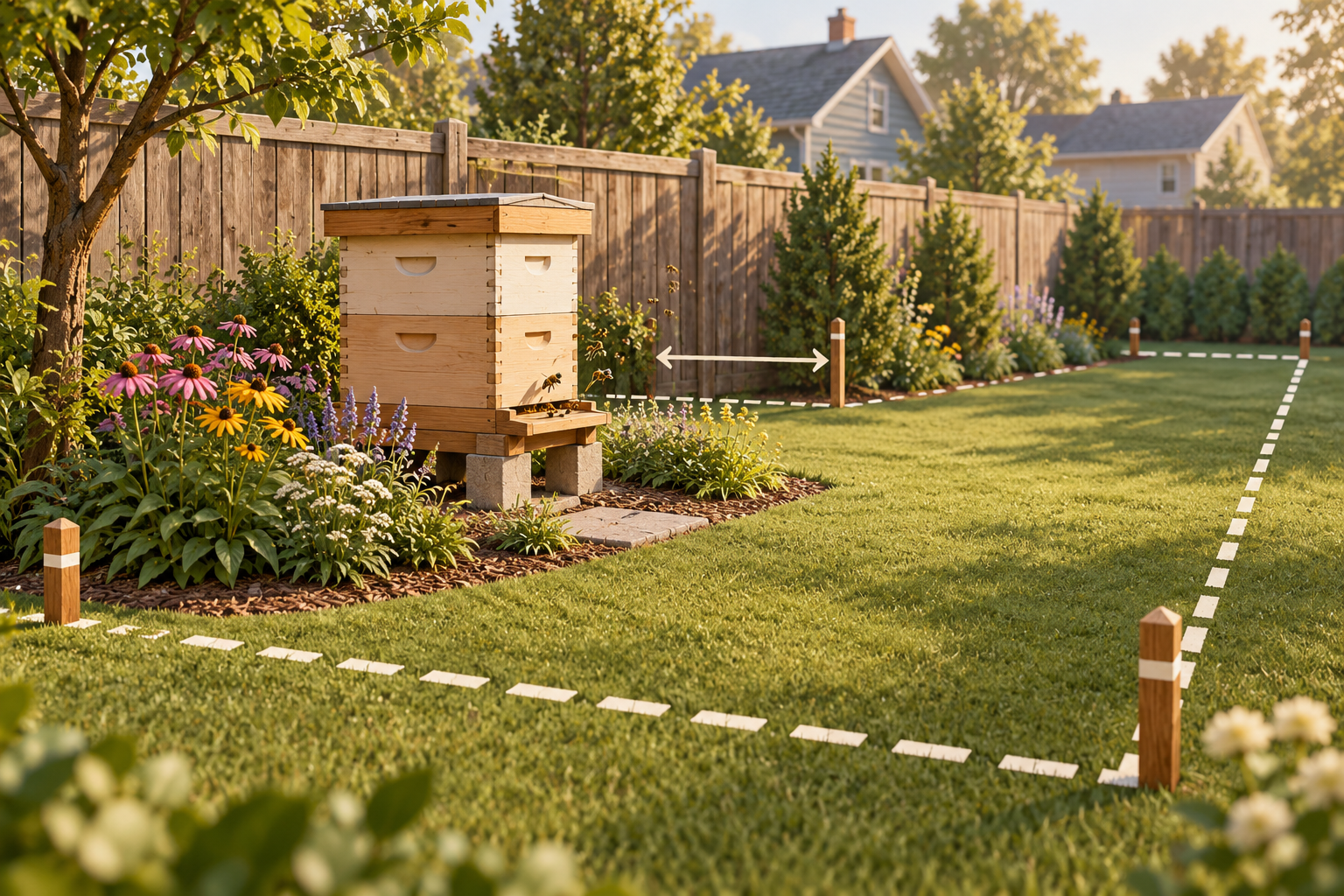
Most cities that allow hives also require a setback, usually 5 to 25 feet from the property line. Some want the hive registered with a local agriculture office. That serves two purposes: officials can reach you during a disease outbreak, and a neighbor's complaint doesn't turn into a legal problem after your bees already have a home.
Some cities never updated their code to mention bees at all. That sounds like a loophole. It usually isn't. Beekeeping-law guides are clear that silence doesn't reliably mean yes — the only way to know is to ask your zoning office directly.
What this piece is not saying
Beekeeping isn't illegal in most places. And the permit process usually isn't designed to be hard — in a lot of cities it's a short registration, not a real barrier.
This also isn't saying cost is the big obstacle. For most people who look into it, the zoning question turns out to matter more than the dollar figure.
What's here is narrow: two real things — a real cost and a real legal check — that most first-time beekeepers research in the wrong order.
What can I do?
Call your city's zoning office before you call a bee supplier. Five minutes answers the one question no national article can: whether your specific lot, at your address, allows a hive at all.
Ask about registration, not just permission. Several states want hives registered with a state agriculture department no matter what your city says. That's a separate step, easy to miss if you only check one level of government.
If your city's code says nothing about bees, don't read that as yes. Ask the zoning office. Get the answer in writing if you can. A verbal assumption is what turns into a neighbor dispute later.
The Receipts
- Carolina Honeybees: "Beekeeping Startup Costs: What You'll Spend in Year One"
- Honey Bee Suite: "The high cost of launching a beehive for the first time"
- Beekeeping Made Easy: "Urban Beekeeping Regulations: City Ordinances, HOA Rules, Permit Requirements"
- Alameda County Beekeepers Association: "Legal status of beekeeping in Alameda County"
- California Master Beekeeper Program: "Beekeeping Laws and Regulations"
- Puget Sound Beekeepers Association: "Beekeeping Laws"