What's documented
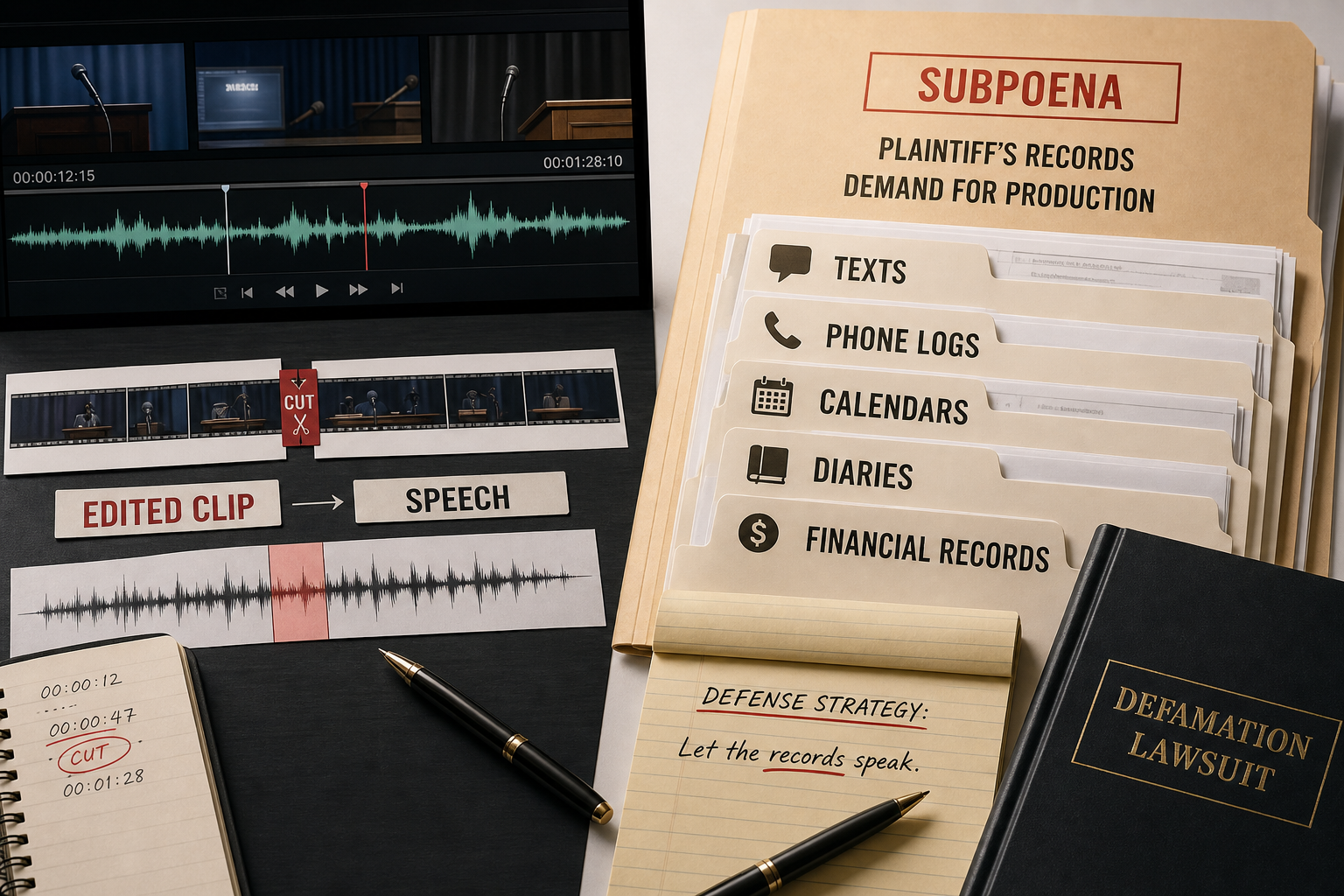
A BBC Panorama documentary that aired October 28, 2024 — eight days before the US election — spliced parts of Trump's January 6, 2021 speech together into what looked like one continuous line. The broadcast version had him saying: "We're going to walk down to the Capitol, and I'll be there with you. And we fight. We fight like hell." In the actual speech, those are two different moments almost an hour apart. What Trump said near the start was "we're going to walk down to the Capitol, and we're going to cheer on our brave senators and congressmen and women" — the "fight like hell" line came separately, later.
The BBC has since formally apologized for the edit. It has not paid damages, rebroadcast the program, or admitted the edit changed the truth of what Trump did that day. Two senior BBC executives resigned in the aftermath: Director-General Tim Davie, and BBC News CEO Deborah Turness, who said in her own resignation statement, "the buck stops with me."
Trump filed a $10 billion lawsuit against the BBC in the Southern District of Florida in December 2025: $5 billion for defamation, $5 billion under a Florida deceptive-trade-practices statute. A trial date is provisionally set for February 2027.
The discovery fight — and why it's the real story now
To defend a $10 billion defamation claim, the BBC doesn't just need to show it made an edit. Under US defamation law, a public figure like Trump has to prove the broadcast was not just edited but false — that it created an implication about him that isn't true. So the BBC's lawyers are doing something that sounds backwards at first: they're demanding Trump's own personal records from the exact window of the riot, to try to prove the "fight like hell, march on the Capitol" framing wasn't actually false, whatever the edit spliced together.
The demand covers November 3, 2020 through January 20, 2021: Trump's personal text messages, phone logs, calendars, and diaries from that period, plus financial detail on roughly 400 companies inside the Donald J. Trump Revocable Trust — the vehicle that holds his business interests. ("Revocable" matters here: unlike a true blind trust, Trump can revoke it at will, it's run by his family, and ethics specialists have noted it doesn't wall him off from knowledge of the assets inside it.) BBC's lawyers put the legal logic plainly in a filing: "President Trump cannot prevail in his case if he cannot establish the falsity of that alleged implication."
Trump's team tried to keep the financial records out of the case by arguing it had narrowed to reputational harm alone; on July 22, 2026, a federal judge rejected that and ordered the records produced, since Trump's own suit still puts his businesses' reputation at issue. Separately, Trump's team is resisting the personal texts, phone logs, calendars, and diaries specifically on executive-privilege grounds — an argument tied to testimony already fought over in Special Counsel Jack Smith's January 6 investigation. That fight is still unresolved. The BBC has separately filed its own motion to dismiss the suit entirely, which remains pending.
Why "executive privilege" is a genuinely contested claim here
Executive privilege exists to protect a president's confidential communications with advisers about official government decisions — which is part of why Trump's team fought the financial-records demand on relevance grounds instead of privilege; that argument doesn't fit personal business records or a family trust. The privilege argument is aimed specifically at the personal texts, calendars, and diaries, and it isn't the first time it's been raised: courts already rejected substantially the same executive-privilege claims five times in 2022–2023, when Jack Smith's investigators sought testimony from 14 witnesses tied to January 6. BBC's lawyers have cited that history directly — in a separate proceeding before Chief Judge James Boasberg seeking to unseal the relevant Jack Smith grand-jury materials, not in the Florida docket itself — arguing the purpose is "to prevent the injustice that would arise from President Trump using already-rejected privilege claims to withhold such vital information." A civil case isn't bound by those earlier rulings, so this isn't a foregone conclusion — but it's not a blank slate either. The July 22 ruling decided only the financial-records piece, on relevance grounds; the privilege fight over the personal messages is still live.
What this piece is not saying
This isn't a ruling on whether Trump incited the January 6 riot. That is the exact question the lawsuit exists to litigate, and no court has decided it. The BBC's edit is a confirmed, apologized-for fact; whether the edit was also false — whether it misrepresented something true about what Trump did that day — is the unresolved legal question underneath the whole case. Both of those things can be true at once: an outlet can make a real, serious editing error and still turn out to have not defamed someone under the actual legal standard, or the reverse. This piece states only what's been documented — the edit, the apology, the resignations, the discovery rulings — not who wins.
It's also not saying the BBC's discovery demand is bad-faith. Demanding a plaintiff's own records to test the truth of a disputed implication is a standard defamation-defense strategy, not a novel tactic invented for this case.
The Receipts
- PBS NewsHour — Trump sues BBC for $10 billion, accusing it of defamation and deceptive practices
- PBS NewsHour — Trump's lawsuit against the BBC set to go to trial in 2027, US judge says
- PBS NewsHour — BBC asks court to dismiss Trump's $10B lawsuit over Jan. 6 speech
- The Independent US (via AOL) — BBC demands Trump hand over personal text messages in £7.5bn lawsuit
- The Daily Beast — Trump ordered to hand over financial secrets in $10B BBC court battle
- TheWrap — Trump ordered to turn over financial records in $10 billion BBC defamation suit
- Variety (AU) — BBC to file motion seeking dismissal of Trump's $10 billion defamation suit over 'Panorama' edit
- Newsweek — BBC apologizes to Donald Trump over edited Panorama Jan. 6 clip
- TIME — BBC is Trump's latest media target: what to know
- NPR — Trump sues BBC