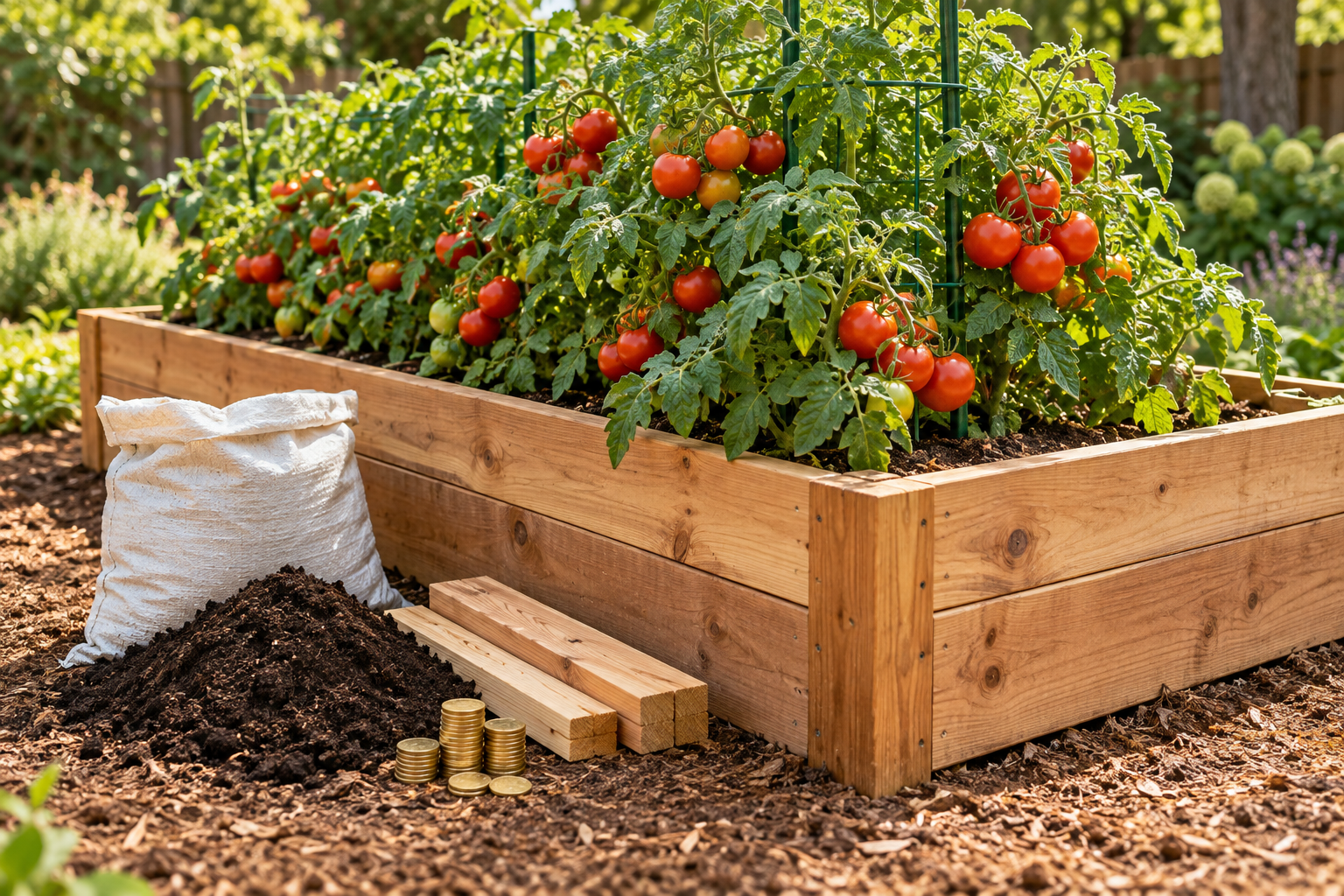
What's documented
A raised garden bed is a small, specific purchase: lumber, soil, plants. What it grows is just as specific.
The math depends less on what you spend and more on what you plant in it.
What one bed costs
A standard 4-by-8 bed, 12 inches deep, runs $83 to $455 to build. Where you land depends on materials:
- ~$83 — basic pine frame, economy soil
- ~$240 — cedar frame, premium soil mix
- ~$455 — steel kit, premium soil blend
Soil is usually the bigger line item. A bed that size needs about 32 cubic feet — roughly 16 to 19 bags once you account for settling. At $5 to $12 a bag, that's $95 to $228 in dirt alone.
The frame itself lasts 10 years or more.
What one bed actually grows
Depends entirely on what goes in it.
Tomatoes. A 4x8 bed holds 8 to 10 plants. A well-tended tomato plant gives 10 to 15 pounds over a season. So a bed planted all in tomatoes can hand you 100 to 150 pounds in one summer.
Carrots. Different math. One carrot plant yields about half a pound. Plant that bed densely and you might pull 32 pounds a cycle — way less weight than the tomato bed. But you can plant carrots several times a season. Tomatoes you can't.
There's a reason raised beds beat rows: density. Oregon State University's extension service found that the tight spacing raised beds allow produces 2 to 5 times more food per square foot than traditional row gardening on the same ground. The advantage isn't the soil. It's how close together you can plant.
The honest annual number
Spread that frame cost over its 10-year life and one bed runs about $24 a year.
A productive bed, depending on what's in it, grows $200 to $600 worth of vegetables at store prices in a single season.
That's a real ratio, and a good one. It also assumes a bed that's actually productive — tended all season, planted with things that grow well where you live. It's not a promise that holds for every bed, every year, everywhere.
What this piece is not saying
Your bed won't hit these exact numbers. Yield swings on climate, sun, water, pests, and plain luck, in ways no national average captures.
This also isn't saying gardening is free. Tending a bed all season takes hours, and none of the math above puts a dollar on your time. For some households that time is worth more than the vegetables.
What's here is the materials math: what a bed costs to build, and what comparable beds have actually grown. Sourced to real breakdowns, not a garden center's estimate.
What can I do?
Build one bed sized to what you actually eat. Not the biggest one on the shelf. A single 4x8 planted with things your household already buys gets you real data on your own numbers inside one season, before you commit to anything bigger.
Plant for density if you're chasing savings. Tomatoes and peppers put out more pounds per square foot over a season than most root vegetables. Worth knowing before anything goes in the ground.
Weigh what you pull, and price it against your receipts. That's the fastest way to know if the bed is really saving your household money. Weigh the harvest. Check what that would've cost you at the store that week.
The Receipts
- Gardeners Idea: "What is the Cost of a Raised Bed Garden?"
- Anleolife: "How Much Soil for a 4x8 Raised Bed? 2026 Calculator + 3-Layer Recipe"
- Anleolife: "Raised Garden Bed Yields — Maximize Your Harvest"
- LandscapioAI: "Raised Garden Bed Cost Guide 2026: DIY vs Pro Prices"
- Abundant Permaculture: "How Much Does it Cost to Grow a Garden?"