What's documented
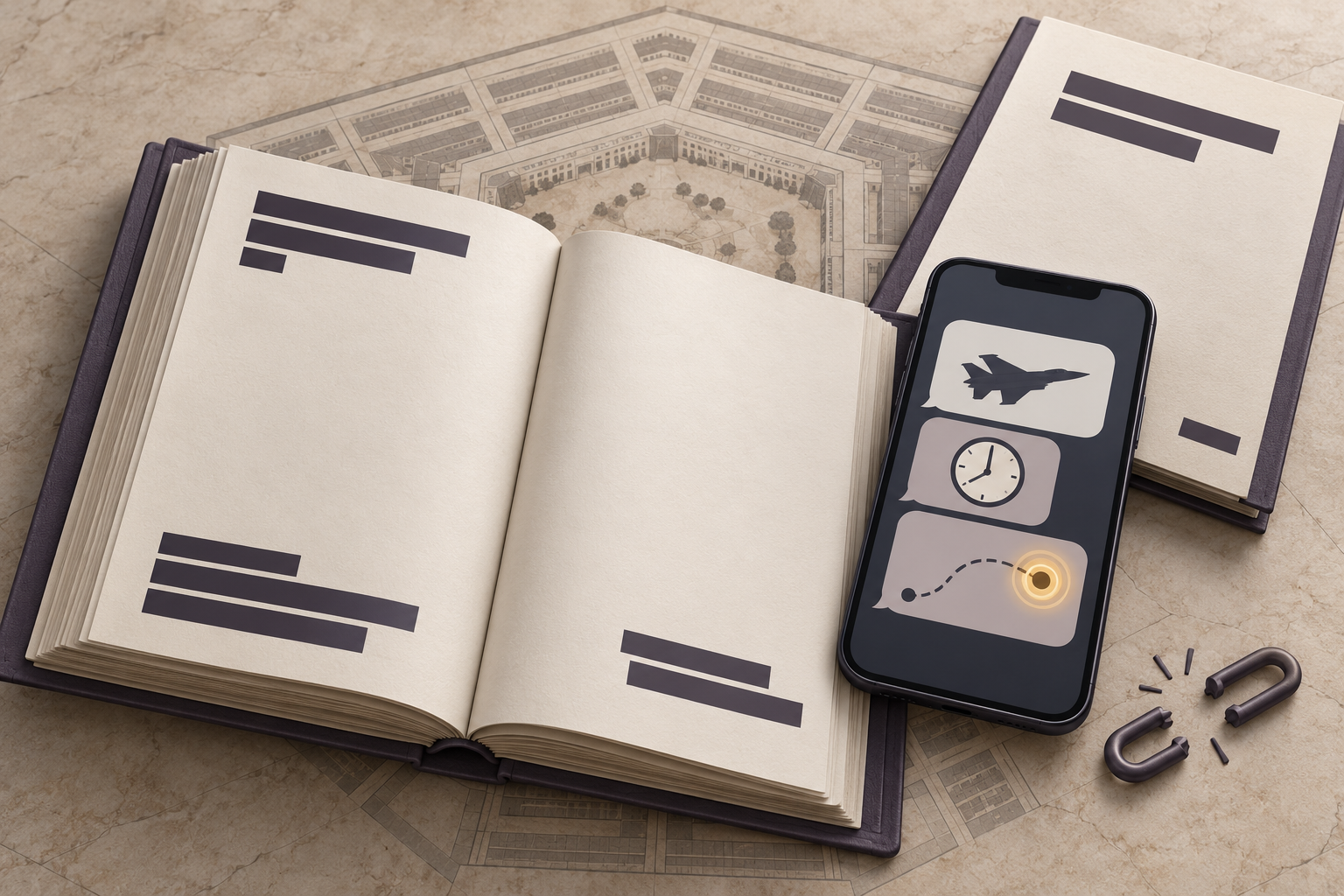
In March 2025, Defense Secretary Pete Hegseth typed details of a coming U.S. airstrike into a Signal group chat, on his personal phone. The target was Houthi positions in Yemen. The details included which aircraft, which weapons, and what time they would launch and hit.
The chat went public by accident. National Security Adviser Mike Waltz had added a journalist to it by mistake — Jeffrey Goldberg, editor-in-chief of The Atlantic. A second Signal chat surfaced later. That one reportedly included members of Hegseth's own family.
The Pentagon's inspector general opened a review. When the findings came out in December 2025, Pentagon spokesman Sean Parnell called the report "a TOTAL exoneration of Secretary Hegseth" that "proves what we knew all along -- no classified information was shared."
What the report actually found
Something else.
PBS, CNN, and NBC News all read it. The watchdog found that Hegseth's messages "created a risk to operational security that could have resulted in failed U.S. mission objectives and potential harm to U.S. pilots."
It also found he broke two sets of rules.
Department policy. You can't use a personal device for sensitive Defense Department business. You can't use an unapproved messaging app for it either. He did both.
Federal recordkeeping law. Make an official record on a personal account, and the rules give you 20 days to forward it to an official one. The report found that didn't happen.
The report did find one thing in his favor. As defense secretary, Hegseth is the one who decides what counts as classified. So nobody could rule the material classified against his own call.
FactCheck.org read the report and concluded that narrow point is the only thing in it that resembles exoneration. Its verdict on the document as a whole: "not 'total exoneration'" — a report about broken rules and risk to troops, released to the public under a different name.
One more thing, reported by five outlets — CNN, CBS News, NPR, PBS, and the Associated Press. Hegseth wouldn't sit down for an interview with the inspector general. He sent written answers instead.
A separate legal matter, the same official
This next part is a different case entirely. It's a First Amendment fight over press access — not a personnel review, not a recordkeeping review. Nothing in it proves or disproves anything about the Signal report above. It's here because it involves the same defense secretary. Not because the two make a pattern.
Since late 2025, The New York Times has sued the Pentagon twice over press-access rules.
The first time, U.S. District Judge Paul Friedman ruled in March 2026 that the Pentagon's original restrictions were unconstitutional.
The second time, on June 30, 2026, Friedman blocked a rule that required reporters to have a Pentagon escort at all times. He found that rule "likely violates the First Amendment." His evidence that it was retaliation and not housekeeping: Hegseth's own words about the press. Hegseth had called coverage an "endless stream of garbage" and referred to the "legacy Trump-hating press."
The Pentagon appealed, and won the first round. On July 16-17, 2026, a D.C. Circuit panel ruled 2-1 that the Pentagon is likely to succeed on the merits and reinstated the escort policy while the appeal proceeds, with full briefing set for mid-September. That doesn't erase Friedman's finding or the words he cited to reach it — it means a higher court has, for now, put the policy back in effect and left the constitutional question unresolved rather than settled in either direction.
What this piece is not saying
Hegseth's Signal use wasn't a crime, and the inspector general didn't say it was. The report is about broken rules, missed recordkeeping, and risk to troops. Not criminal conduct. And it credits his authority over classification.
Here's the narrow thing that's documented. The Pentagon's own watchdog described risk and broken rules. Hegseth's spokesman described that same report as a total exoneration. Two descriptions, one document — and you can read it yourself.
In a completely separate case, a federal judge found a Pentagon press rule unconstitutional and retaliatory, using Hegseth's own words as the evidence.
Neither one proves the other. And we're not saying Hegseth's team knew "total exoneration" was wrong when they said it. We don't know that, and we're not claiming it. We're reporting what each case found, on its own.
What can I do?
Read the report yourself, not the press release about it. PBS published the whole thing. Comparing what it says against the phrase "total exoneration" takes about five minutes, and it means taking nobody's word for it — including ours.
Read Judge Friedman's rulings. Both are public federal court opinions. The retaliation finding rests on Hegseth's own quoted words. You can check them against the text.
If you want oversight, the House and Senate Armed Services Committees have authority over whether the Pentagon follows federal recordkeeping law. A specific question — has the department fixed the recordkeeping problem the report found — is answerable. "Is Hegseth doing a good job" isn't.
The Receipts
Appeals court sides with Hegseth, Pentagon in access case — Washington Times
Appeals court reinstates Pentagon press escort policy — CBS News
PBS: "Read the full report on Hegseth's use of Signal from the Pentagon inspector general"
PBS: "Hegseth's Signal chat put U.S. personnel at risk, Pentagon watchdog finds"
NBC News: "Pentagon's Signalgate review finds Pete Hegseth violated military regulations"
FactCheck.org: "Pentagon Inspector General Report Not 'Total Exoneration' for Hegseth"
Deadline: "Judge Sidelines Pete Hegseth Policy Requiring Press Escorts In Visits To Pentagon"
The New Republic: "Judge Cites Hegseth's Own Words as He Blocks Pentagon's Media Limits"
Washington Times: "Hegseth loses another round to NYT over attempt to limit reporters at Pentagon"
Bloomberg Law: "Judge Rebukes Hegseth, Says Pentagon Violated Court Order"
NPR: "Pentagon watchdog finds Hegseth risked the safety of U.S. forces with use of Signal"