What's documented
Growing your own food is one of the oldest ideas there is. It's also one of the most oversold, in both directions.
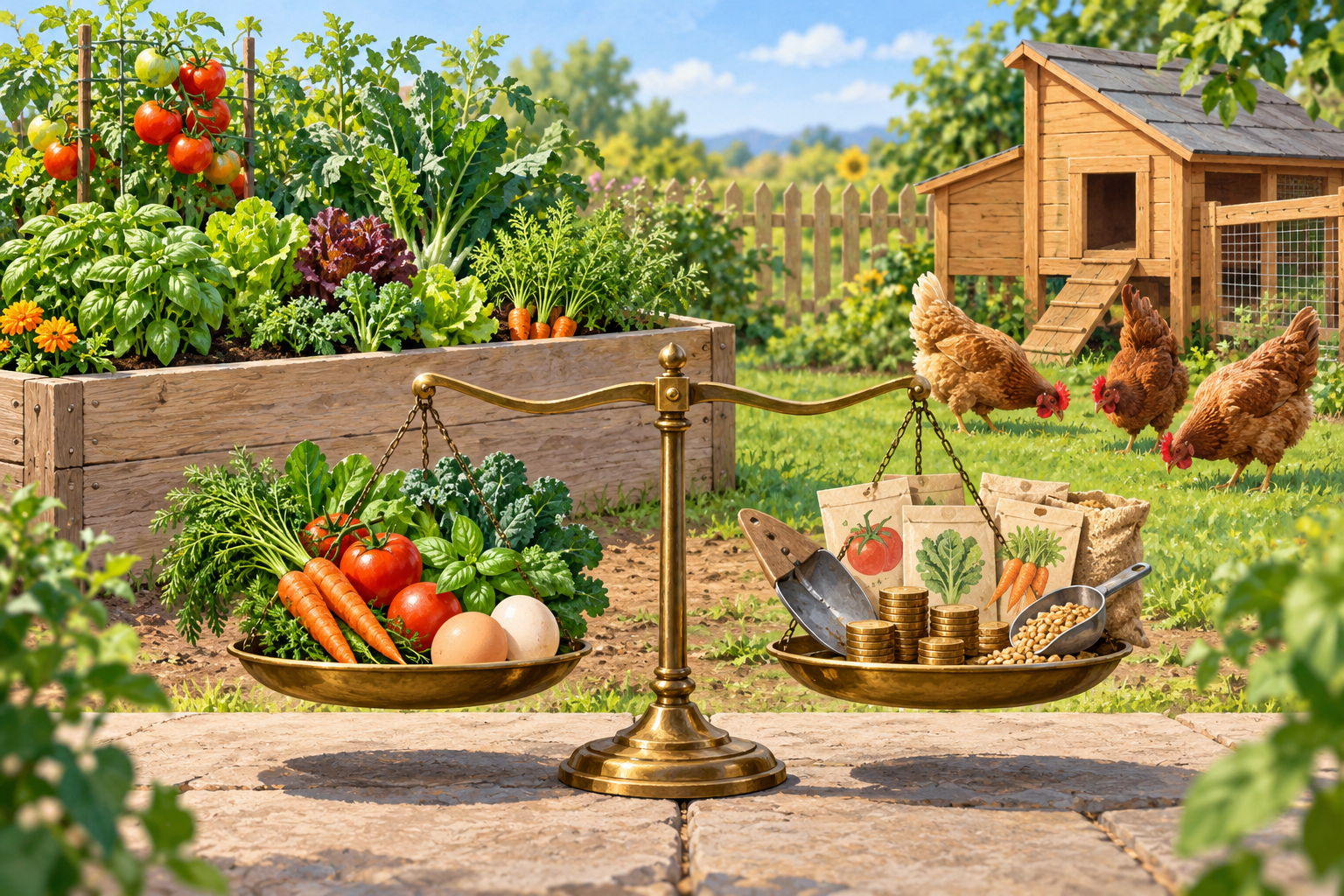
It won't fix your grocery bill. It also isn't a waste of time. What it actually is: a set of specific trade-offs that depend on what you grow, how you grow it, and — most of all — what you're comparing it to.
This week we're running the numbers on three common starting points: a vegetable garden, a few chickens, a beehive. Plus one separate question: how to find the farms already growing food near you, without downloading anything.
The garden math, both directions
One family tracked every dollar. Over six months they spent $688 and grew $652 worth of food, and they kept harvesting after that. Abundant Permaculture, which published the numbers, works that out to about $2.73 of food for every $1 spent.
Getting started runs about $200 for one small raised bed. A bigger build runs into the thousands.
Now the honest part, from the same reporting: a kitchen garden usually doesn't save you money in year one. The payoff builds slowly, as the soil gets better and the gardener gets better. Judge it over three years, not three months.
The chicken math, which surprised us
Here's the one that cuts against what most people assume.
Add up everything — the coop, the feed, the bedding, the birds themselves, over a flock's whole life — and a backyard egg costs close to $1.98. That's the figure from a detailed five-year accounting. Against a supermarket carton, that's not a savings plan. That's a hobby.
But most people asking this question aren't buying the cheapest eggs. Local free-range eggs run $3 to $6 a dozen. At a farmers market, $6 to $9. Measured against those prices, five hens can genuinely save a household a few hundred dollars a year.
So the real answer to "do chickens save money" is: compared to the cheapest eggs, no. Compared to the eggs you'd actually buy — the reason you wanted chickens in the first place — often yes.
What's coming in this series
- What a beehive really costs, and what your city actually allows. Year one runs $750 to $1,500. But for most people the real obstacle isn't money. It's a zoning rule they never checked.
- You don't need an app to find your farmer. There's a free government directory of farmers markets and CSA farms. Almost nobody knows it exists.
What this piece is not saying
Growing your own food isn't always cheaper. For plenty of households, in plenty of situations, it plainly isn't. It's also not a waste of effort — that's just the same mistake pointed the other way.
What we've got is narrower: the real numbers for each specific choice, so you can decide on math instead of a feeling.
What can I do?
Run the numbers for where you live, before you start. Your soil, your water bill, what good eggs cost near you, what your city allows — all of it moves these numbers. A national average is a starting point, not your answer.
Read the source breakdowns yourself. The garden and chicken figures above come from people who tracked their own spending and published the receipts. That's not marketing copy. It's someone's actual ledger.
The Receipts
- Abundant Permaculture: "How Much Does it Cost to Grow a Garden?"
- Gardenary: "How Much Does a Raised-Bed Kitchen Garden Really Cost?"
- Alliant Credit Union: "Egg-onomics: The real cost of raising backyard chickens"
- Homestead How-To: "Do Backyard Chickens Actually Save You Money On Eggs?"
- FarmKeep: "How Much Does a Chicken Cost? Complete Price Guide for Backyard Chickens (2026)"