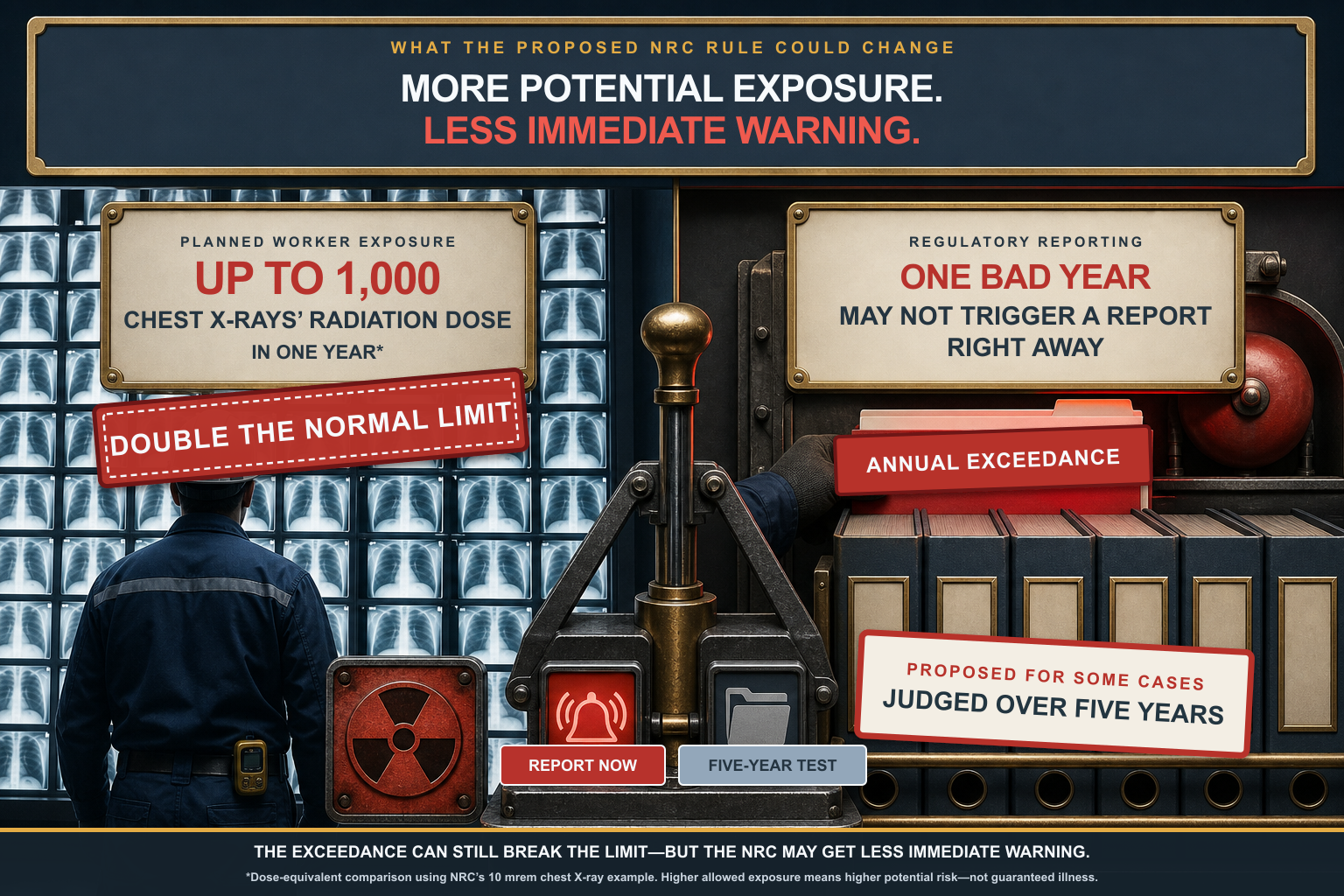
To Build Nuclear Fast Enough for AI, the NRC Wants to Kill the 50-Year Rule That's Kept Radiation Exposure Low
For 50 years, US nuclear facilities have had to follow a rule called ALARA — keep radiation exposure "as low as reasonably achievable," on top of hard legal dose limits. The Nuclear Regulatory Commission wants to kill it, as part of a broader rule change the agency's own analysis estimates saves industry about $9.5 million a year overall. The reason traces directly to one thing: an executive order telling the NRC to help quadruple US nuclear capacity by 2050 to feed surging electricity demand from AI data centers. Officials say the hard dose limits themselves aren't changing. Having read the actual 164-page proposal, that's true in the narrowest sense — the headline numbers stay on the books — but the document changes how three of those limits actually work in practice: how much a worker can receive in a single year, how high a public dose limit can go with NRC sign-off, and whether an overexposure even has to be reported.
No, the Earth Isn't Opening a Bottomless Pit — That Sinkhole Has a Floor
A clip of the ground caving into a black hole gets millions of views with a caption like “the planet is opening up.” The real story is calmer and older than any of us: rain that’s a little bit acidic has been dissolving soft rock underground for thousands of years, and one day the thin roof over the gap finally gives way. It looks sudden. It isn’t. And it is not bottomless — every one of these holes stops, because rock deep enough down doesn’t crack open, it gets squeezed shut.
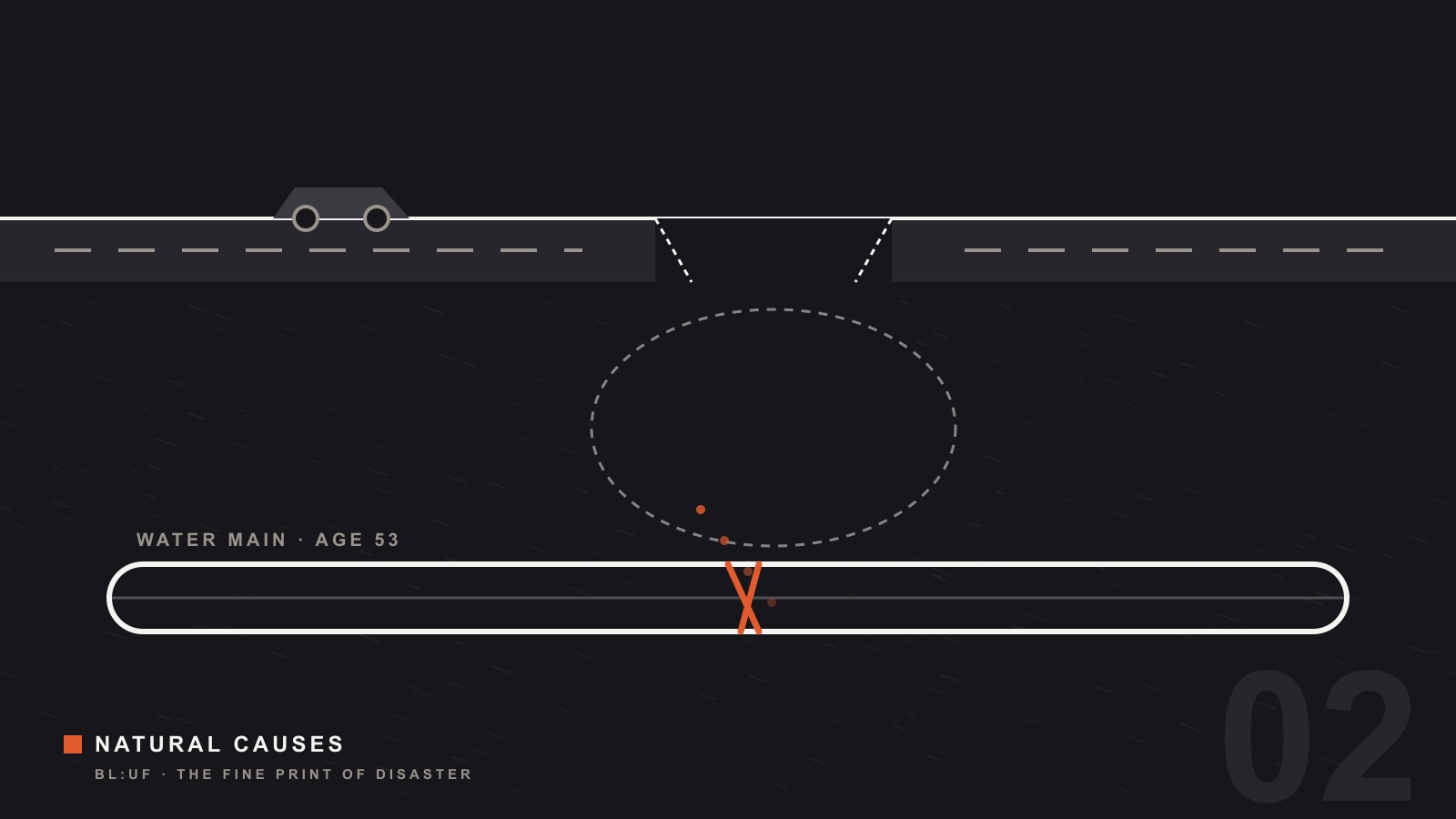
That Monster Sinkhole Isn't the Planet Waking Up. It's Usually a 53-Year-Old Pipe.
City streets keep collapsing on video — Tokyo's suburbs, Bangkok, Seoul, Surrey, St. Louis — and the clips read as the Earth misbehaving. The engineering post-mortems say otherwise: a corroded 42-year-old sewer, a cracked subway tunnel, a burst water main. North America breaks a water main about every two minutes, and the average failing pipe is 53 years old. The planet isn't waking up. The pipes are wearing out.
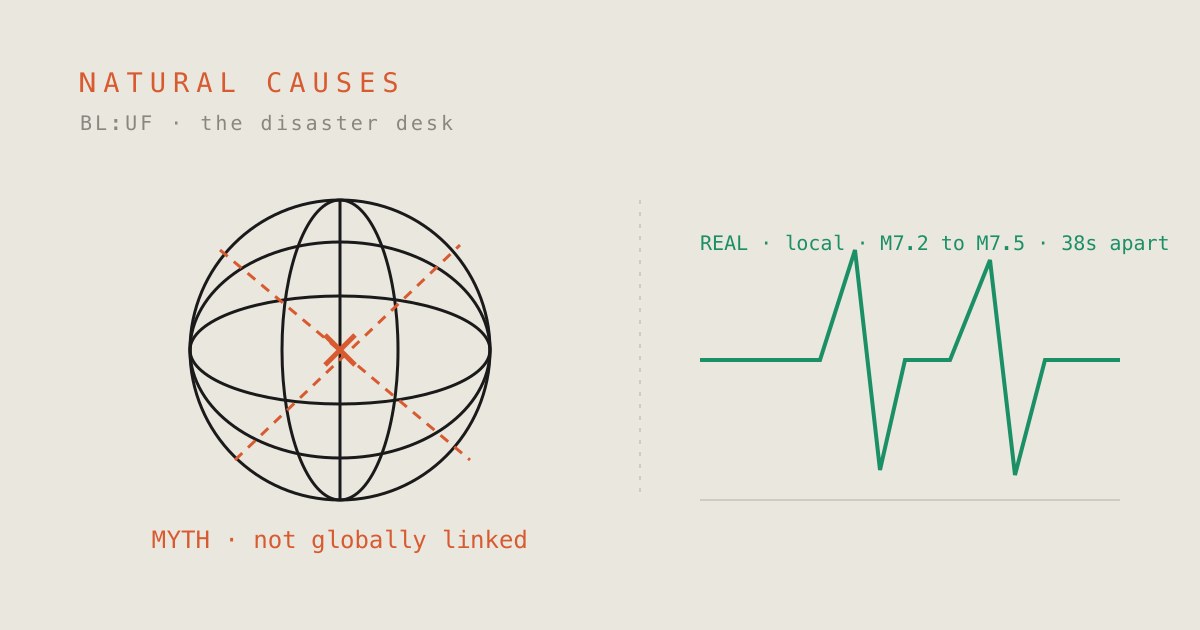
The Planet Isn’t Waking Up. But Some Disasters Really Are Connected.
A monster quake, a stirring volcano, a freak heat wave — all in one news week. It feels like the planet is winding up for something. It isn't — but some of it genuinely is connected. Here's the honest sort: what's real, what only looks linked, and what's pure myth.