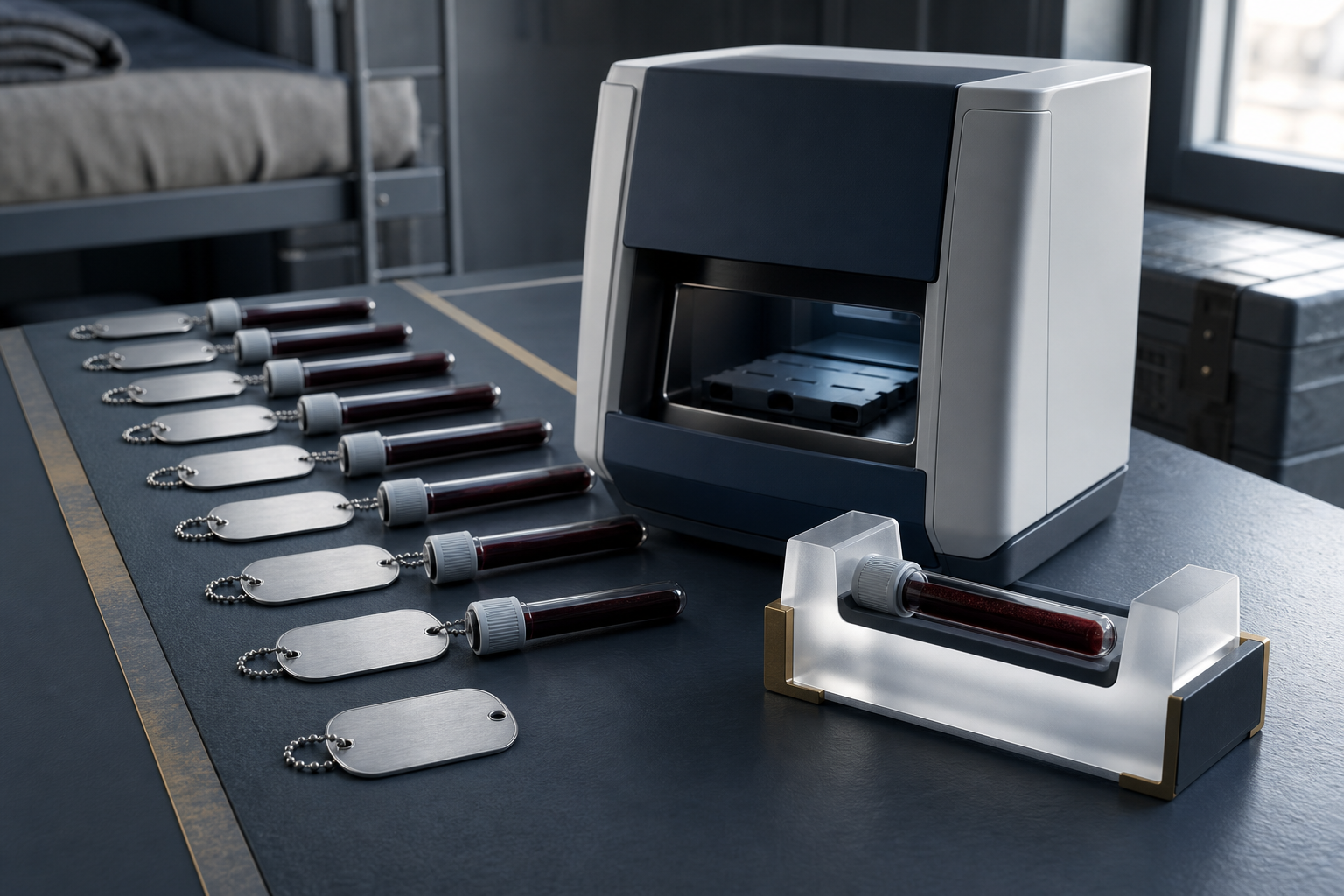
Defense Secretary Pete Hegseth says male service members 30 and older will be screened every year for testosterone deficiency as part of their required health assessment. Younger troops may opt in, and any treatment will be voluntary. Screening an entire age group, however, runs against the Endocrine Society's clinical guidance, which says low testosterone by itself does not establish a diagnosis and recommends against population screening. The Pentagon has explained the goal in the language of strength and readiness. It has not yet publicly supplied the clinical protocol that would show how an abnormal result becomes — or does not become — a diagnosis.
What Hegseth announced
In a video released Wednesday, July 15, Hegseth said the Defense Department will begin annual testosterone-deficiency screening for male troops once they turn 30. The test will be folded into the periodic health assessment troops already undergo. Men younger than 30 may request it. Hegseth said testosterone-replacement therapy would remain voluntary.
That last distinction matters. A blood test is not an order to take hormones, and the announcement should not be reported as one.
In his own words, in the video: "We have a sacred duty to maintain that advantage, which is why we must constantly look for new ways to optimize your performance, your resilience and your long-term health." Hegseth said the program is "not about artificial enhancement," but "about restoring and optimizing your natural capabilities, protecting your longevity, ensuring you have the biological foundation required to sustain the fight" and "keeping you on the leading edge of lethality." The Pentagon separately told the Associated Press that the goal is keeping troops "strong, resilient and capable" and prepared for the physical and psychological demands of modern combat. What the department has not yet made public is the part a medical program lives or dies on: who gets retested, at what time of day, under what conditions, which symptoms count, what threshold triggers a referral, and how clinicians rule out sleep loss, acute illness, medication effects, obesity or other causes of a temporarily low result.
The medical problem with a single number
Testosterone deficiency is real, and properly diagnosed patients can benefit from treatment. The dispute is not whether the condition exists. It is whether age 30, without symptoms, is a sound reason to test everybody every year.
The Endocrine Society's clinical guideline says it is not. It recommends diagnosing hypogonadism only when a patient has compatible symptoms and testosterone levels that are "unequivocally and consistently" low. Confirmation generally requires repeat morning testing. The guideline explicitly recommends against population screening because low readings occur in people without symptoms, no screening strategy has been proven effective in clinical trials, and the long-term benefits and harms of treating asymptomatic people remain unclear.
That does not automatically make the Pentagon program unsafe. A well-designed military protocol could use the first test only as a flag, repeat it under controlled conditions, require symptoms, and leave treatment to an individual decision with a clinician. But until the department releases that protocol, the public has an announcement, not enough information to judge the medicine behind it.
The strongest case for the policy
The military is not the general population. Service members face unusual sleep disruption, injury, stress and physical demands. The department already runs population-level health programs because readiness is a collective concern, not solely an individual one. A defender of the policy could reasonably argue that military-specific risks justify earlier case-finding than civilian guidelines contemplate.
That argument still needs evidence. It should identify the military population being helped, the condition being prevented, the expected number of true diagnoses, the likely false-positive rate and the cost of testing millions of samples over time. "Readiness" is a mission; it is not by itself a clinical protocol.
Sen. Tammy Duckworth, an Iraq War veteran and member of the Senate Armed Services Committee, also raised an equity question: if the department is using hormone screening to identify health and fertility issues, why is the announced program limited to testosterone in men when infertility affects male and female service members? Rep. Chrissy Houlahan has joined Duckworth in calling for the screening to be extended to women.
What remains unanswered
- Is the first blood draw a screening flag or enough to label a service member deficient?
- Will an abnormal reading be confirmed with a second morning test, as clinical guidance recommends?
- What symptoms or medical history will be required before treatment is offered?
- How will the department protect medical privacy and prevent a result from becoming an informal judgment about fitness, promotion or masculinity?
- What is the projected cost, and what military-specific evidence supports annual screening beginning at 30?
- Will the department evaluate fertility and other hormone-related conditions affecting women as well as men?
What can I do?
Before the blood draw: Ask for the written screening protocol and whether participation in the test — not treatment — is mandatory for you. Ask how the result can be used in readiness, deployability, retention and promotion decisions. Keep the answer and any consent or refusal form.
If your result is low: A screening result is not a diagnosis. Ask whether the sample was drawn in the morning, whether illness, sleep, medication or training load could affect it, and whether a second morning test will confirm it before any treatment discussion. Ask what symptoms and medical history support the diagnosis. Treatment is reported to be voluntary; request that voluntariness in writing before deciding.
If the clinic cannot resolve a concern: Every military hospital or clinic has a patient advocate. TRICARE explains the role and how to locate one; advocates can explain clinic policy, address complaints and mediate with the care team.
If medical information is disclosed or used improperly: Start with the treatment facility's HIPAA Privacy Office. The Military Health System also publishes a DHA privacy-complaint process. Record what was disclosed, by whom and when; the stated filing window is generally 180 days after learning of the alleged violation.
For any broader concern about the program itself — its safeguards, how a result gets used, or retaliation for asking questions — the Department of Defense Inspector General Hotline takes complaints about mismanagement or improper use of a program, can be filed anonymously, and communication with the IG is legally protected: a command cannot retaliate against you for making it.
If you want oversight: Use the official Congress.gov member finder and ask your representative and senators to obtain the implementation memorandum, clinical evidence, projected cost, privacy rules, false-positive safeguards and sex-equity analysis. The relevant oversight bodies are the House and Senate Armed Services Committees. Specific document requests get more useful answers than "Do you support the policy?"
The bottom line
Testing is not treatment, and a low result is not a diagnosis. Hegseth has announced the first part of a medical pipeline while leaving the safeguards largely offstage. The policy should be judged when the Pentagon releases the protocol — not by the masculinity language surrounding it, and not by assuming every abnormal number represents disease.
The Receipts
- Associated Press: Hegseth announces testosterone screening for troops
- CNN: Hegseth announces testosterone testing; Sen. Tammy Duckworth and Rep. Chrissy Houlahan call for extending screening to women
- Endocrine Society clinical practice guideline
- Endocrine Society patient guidance on hypogonadism
- The Hill / Forbes: Hegseth's exact video-announcement language, "sacred duty," "leading edge of lethality"
- DoD Inspector General Hotline — file a complaint