This is a developing story, updated July 27, 2026. An independent autopsy commissioned by Nolan Wells's family classified his cause and manner of death as "undetermined." It neither confirms nor rules out foul play. Mississippi performed its autopsy examination July 7, but the state's findings have not been released and toxicology and other testing remained pending as of July 21. The district attorney says the report will remain sealed until a grand jury reviews the investigation; no date has been announced. Wells's family questions the account that he chose to remain on Horn Island and the sheriff's drowning theory. A friend who was present says he—not Wells—is the person heard yelling in a video cited by attorney Ben Crump. Investigators have not publicly resolved those conflicting accounts or identified the speaker. We will update this report as official findings are released.
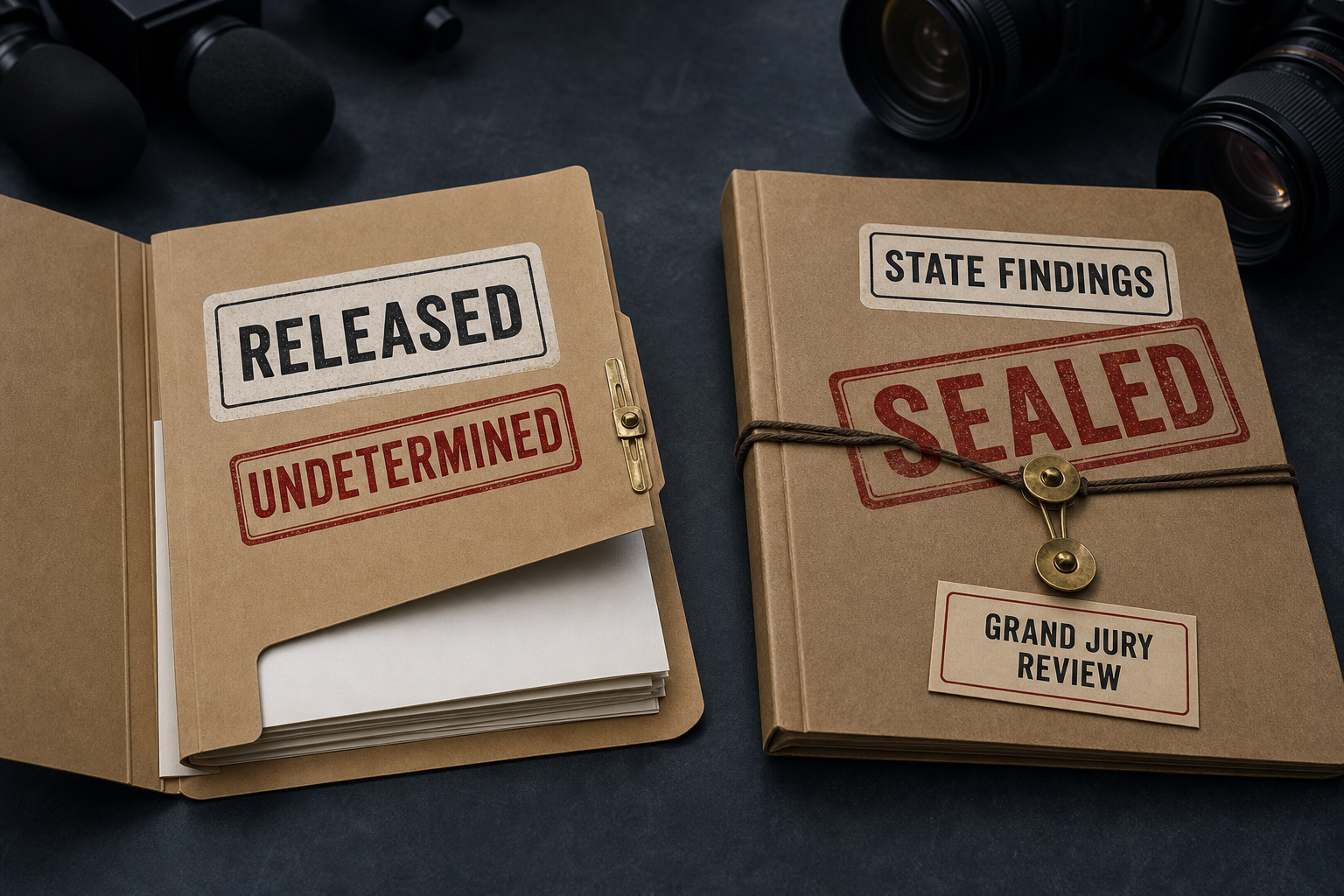 The independent autopsy came back "undetermined." Mississippi's own findings remain sealed pending grand jury review.
What is known
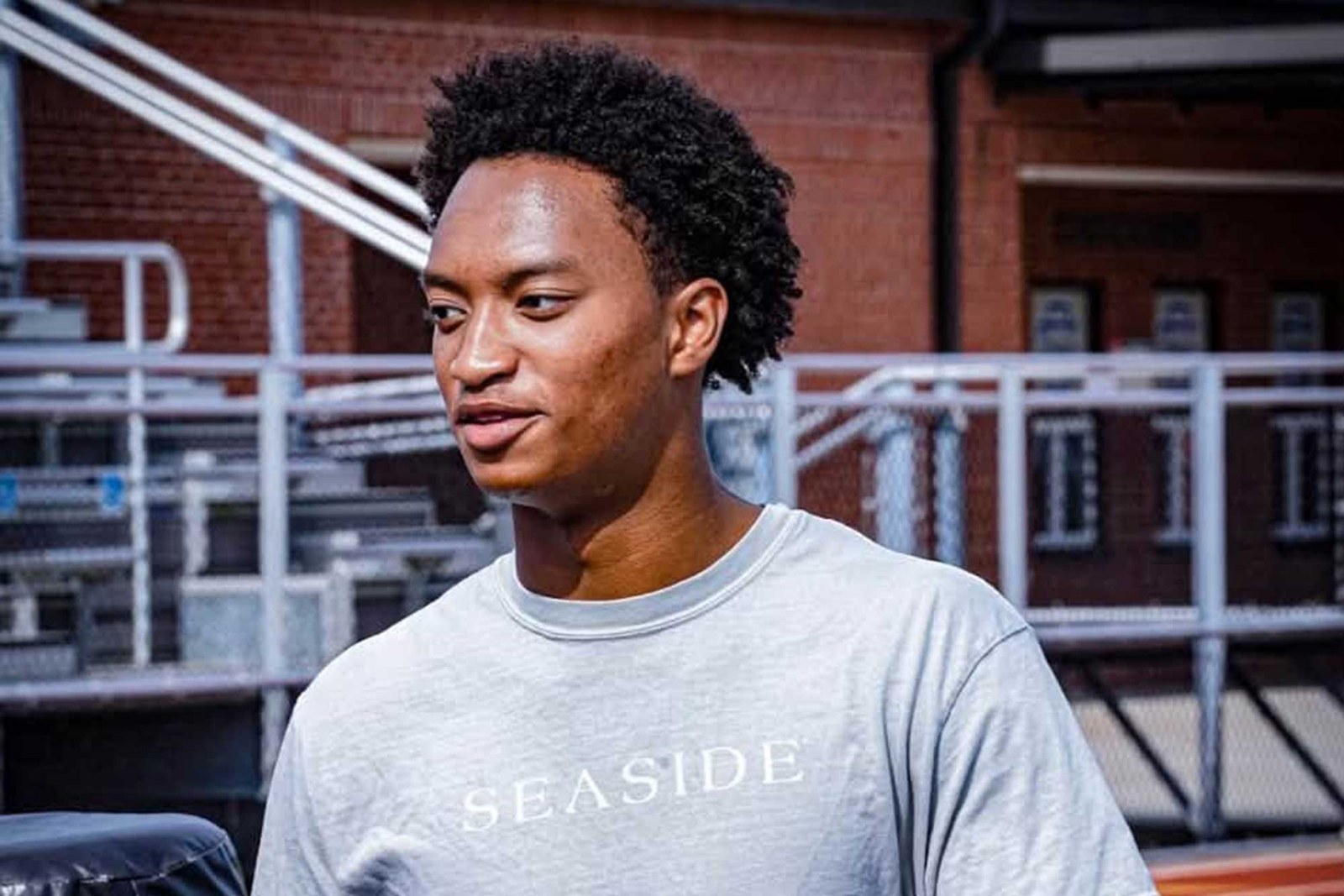
Nolan Xavier Wells was 18. He grew up in Ocean Springs, Mississippi, played football at Ocean Springs High School, and was a wide receiver at Southwest Mississippi Community College. On Saturday, July 4, he went with a group of friends to Horn Island, an undeveloped barrier island off the Mississippi coast. He was last seen there around 3 p.m. and did not leave on the same boat as the group. His mother reported him missing that night. After a two-day search involving the county sheriff, state marine resources, the National Park Service, the Coast Guard, and volunteers, a park ranger found a body in the water off the island's northwest end on the morning of July 6. Wells's family confirmed it was him that afternoon; his mother, Christine Wonsley, wrote on Facebook that the family was "absolutely devastated." Formal identification through DNA testing was still pending, though the county coroner said he had no doubt about the identity — a separate question from how Wells died, which officials had not yet ruled on.
Wells's cause of death had not been released as of publication; officials said an autopsy was set for July 7 and declined to state a cause or manner pending its results. The Jackson County sheriff said investigators do not suspect foul play, and no one has been charged or named a suspect in connection with his death.
That last sentence is the whole of what is established. Everything past it — and there is a great deal past it, online — is something other than fact.
Update, July 9: The national count has grown since first publication, and it's worth being precise about it rather than letting the original snapshot stand unrevised. In the six days since Wells's death, at least 21 separate pieces have run across outlets outside Black-owned media and Gulf Coast local news: TMZ (7, July 6–9), NewsNation (4, July 5–8), ABC News (2, including a Good Morning America follow-up), CBS News (1), NBC News (1 video segment, plus a Ben Crump interview), NPR (2, July 8), Fox News (1), HuffPost (1), Rolling Stone (1), and Oxygen (1). One of those pickups ran his case without using his name in the headline. Ben Crump and the Rev. Al Sharpton are holding a joint press conference in New York on July 11, which will likely generate another wave — we'll update again if the count materially changes.
Be precise about what that count does and doesn't prove. It is not a mentions count in the sense the Petito figure above is — the 844 is a Washington Post tally of spoken references on three cable networks in a single week; no comparable on-air tracking exists for Wells, because no network ran him often enough for anyone to have bothered counting. What's above is a count of distinct published pieces, mostly digital and print, gathered over six days rather than seven — a different, more modest unit than "cable mentions," and if anything it likely understates the true gap: cable networks' actual on-air airtime for Wells almost certainly ran well behind their own web output. Whatever the precise number, "one belated national story" is no longer an accurate description of the coverage — which is why it no longer appears in this piece's headline.
What the growing count does not change: every one of those 21-plus pieces ran after Wells's body was found. Not one ran during the roughly 40 hours he was actively missing and being searched for — the window when Black-owned and Gulf Coast local outlets were the only press covering it, and the window when national attention, tips, and pressure would have actually mattered to the outcome. Petito's 844 mentions accrued largely while she was still missing and a search was underway. That distinction — not the raw count on either side — is the actual disparity this piece is measuring, and it hasn't moved.
Update, July 10: Two developments move the altercation question out of online speculation and onto the official record as an open question, not a confirmed fact.
On July 8, the Jackson County Sheriff's Department publicly asked anyone who was on or near the northwest tip of Horn Island that Saturday to turn over photos and video — "particularly those depicting alleged altercations or containing images of, or believed to include Nolan Wells" — and asked to hear from anyone who "observed or heard an argument, disturbance, or other unusual activity while on the island."
On July 9, Ben Crump told ABC News there are "students who recorded an altercation while they were on the boats," which he described as "Nolan and somebody yelling at one another on the boat." Crump said the family has arranged an independent autopsy, to be performed in Washington, D.C.
None of that establishes how Nolan Wells died. The sheriff's office says investigators believe he drowned and do not suspect foul play, while stressing they are "working diligently to determine exactly what occurred." No one has been named a suspect. No one has been charged.
On the autopsy this piece said was set for July 7: the state medical examiner performed it that day. As of July 9, the Jackson County coroner said he still did not have her final report — "the state medical examiner…has not given us her final report as of yet" — and that toxicology was still outstanding, which he expected back in roughly a week. No cause of death has been determined.
The national list above has also grown: CNN and Newsweek have both since published pieces on Wells.
We flag it here for a reason that cuts at us. On July 7 this piece described talk of an altercation as speculation rushing into the vacuum that national silence left behind. As of July 8, it is also a thing the sheriff is publicly asking for video of. Both sentences can be true at once — a rumor and an open request for evidence are not the same object — but we are not going to let our own line stand unexamined while the record moves. A piece about a press that arrives late does not get to be late.
Update, July 14: The investigation is still open, the two autopsies are still unreleased, and the story the video is supposed to tell has gotten more contested, not less.
On the investigation: Jackson County Sheriff John Ledbetter said July 13 the case is “active” and “ongoing,” and that the public had supplied “a lot of valuable information” that past week. He did not announce a cause of death, a toxicology result, or any change to the working theory (drowning suspected, no foul play suspected). The state autopsy was performed July 7; as of this update, the medical examiner's office still has not issued a final report, and outside-lab toxicology — which officials said could take about two weeks when this piece first published — remains outstanding. The family's independent autopsy, performed in Washington, D.C. by a pathologist with no ties to Mississippi law enforcement and funded in part by Colin Kaepernick, was expected back July 10; Crump has said the release was delayed by transportation and flight problems, and as of July 14 no findings from it have been made public either.
On the video: this piece has twice noted an unverified claim, from Ben Crump, that a video shows an argument between Wells and someone else on the boat, with Wells asking, “Give me my freaking phone, what are you doing.” On July 13, a friend who was on the trip, Tracestin Shepherd, said on Good Morning America and separately to Fox10 that he — not Wells — is the person heard yelling, and that Wells does not appear in the video at all. “That's me yelling,” Shepherd said, adding, “nobody would ever hurt Nolan.” Neither account has been confirmed by investigators, who have not said whose voice is on the recording or verified either version. We're stating both because they directly conflict, not because one has been established over the other.
On the circumstances themselves: at their July 10 press conference, Wells's parents, Christine and Elmore Wonsley, pushed back on two things that had circulated — that their son chose to stay behind on the island, and that he drowned — saying Wells was an experienced swimmer and calling an accidental drowning inconsistent with that. Investigators have not withdrawn the statement that drowning is their working theory; it remains unconfirmed pending the autopsies, not resolved either way.
Separately: Mississippi Coast Coliseum & Convention Center officials have approved the venue for Wells's funeral on Monday, July 20 — visitation 9–11 a.m., service 11 a.m.–2 p.m., in a room set up for 1,200–1,500 people. Filmmaker Tyler Perry is covering funeral costs; the Rev. Al Sharpton is set to officiate.
The national count keeps growing, including from outlets this piece originally listed as having run nothing: CNN, silent as of July 7, has since published at least three pieces (July 9, July 11, and a July 13 timeline), and The Washington Post — also on the original zero list — ran one on July 10. PBS NewsHour, NBC News (a second piece, on the misinformation surrounding the case), Mississippi Today (twice, including a July 13 piece placing the case against Mississippi's broader history), and continuing coverage from ABC News, Fox10, NewsNation, and Newsweek have also run since our last count. Every piece on that list, again, ran after Wells's body was found — not during the search.
A second contested detail has surfaced alongside the video dispute. WLOX reports the sheriff's account is that Wells chose to stay behind on the island, expecting alternate transport back. Ben Crump says a witness disputes that, telling his team Wells had actually planned to leave with his friends. Those friends have since retained their own legal counsel, and as of July 14 Crump's investigators had not yet interviewed them. Neither version is confirmed; we're stating both because, again, they conflict.
Sheriff Ledbetter's July 13 update also included, per WLOX's reporting, that his department has conducted witness interviews and been in contact with other agencies, including the FBI — WLOX did not report that as a direct quote from Ledbetter, and nothing so far indicates a federal investigation has formally opened; we're flagging it as reported, not as our own confirmation of FBI involvement.
Financial support for the family has grown substantially. Media executive Byron Allen donated $100,000 to the family's GoFundMe — the largest single donation so far — which had raised more than $647,000 as of July 13. Filmmaker Spike Lee attended the family's July 10 press conference. Tyler Perry, who is covering funeral costs, said: "I know what it's like to not have the answers that loved ones so desperately need. The agony is debilitating."
Update, July 15: The case is headed to a grand jury, a viral photo turned out to be old, and the disputes over the video and the departure account have gotten more specific — not resolved.
After a meeting with the family, the Jackson County District Attorney's office said the sheriff's investigation will be presented to a grand jury once complete — standard procedure for unnatural or suspicious deaths in the county, officials said, not an indication that a crime has been established. No timeline has been given for when the investigation itself will be considered complete.
Neither autopsy has produced public results. The state medical examiner's report on the July 7 exam remains, in officials' own word, "pending." The family's independent autopsy — expected back July 10, then delayed by transport problems — still has no results and no firm timeline; Crump says he hopes to share findings "soon."
The video dispute has sharpened rather than resolved. Tracestin Shepherd, the friend who says it's his voice on the recording, has now given a more specific account: the argument was about being restrained from continuing a separate fight, he says — not, as Ben Crump has characterized it, an argument over a phone — and Wells does not appear in the video at all. Investigators have not publicly authenticated either version. We're stating both because they still conflict, not because one has displaced the other.
The account of why Wells stayed behind has also gotten more specific, and more contested. Shepherd says Wells wanted to stay after meeting someone on the island and was expecting a ride back later; sheriff's investigators say witness interviews similarly indicate Wells chose to remain. Crump says a separate witness told his team Wells intended to leave with the original group. Wells's family has disputed Shepherd's account directly. To be precise about what that dispute is and isn't: it's conflicting public accounts of what happened, not evidence that any single witness changed their story.
The phone remains unresolved, but new detail narrows what "unresolved" means. Shepherd says Wells left his phone on a boat dashboard along with roughly 15 others' — he says it's common practice in that boating community to leave phones behind while swimming, and Shepherd's uncle, who piloted one of the boats that day, backed that up publicly. The family believes messages may be missing from the phone. No forensic report has yet established whether anything was deleted, by whom, or when; both the family's own investigators and sheriff's investigators are now expected to examine the device. Separately: Crump's team saying it had not interviewed Wells's friends does not mean the friends haven't cooperated with investigators — those are two different investigative efforts, law enforcement's and the family's, and a gap in one doesn't describe the other.
One viral claim is now resolved. A photo appearing to show Wells at a pool party, which some read as evidence he'd made it back to the mainland, was taken June 27 — nearly a week before the July 4 trip — not during or after it. Metadata and accounts from people at that earlier gathering support the date. Some of Wells's friends have since said publicly they feel the case is being read through a racial lens they don't recognize in what actually happened; we're not the venue to adjudicate that dispute, but we're not omitting that they've said it, either.
The national count is no longer the story by itself — coverage has become sustained rather than novel, with CNN, The Washington Post, PBS NewsHour, NBC, and continuing outlets from ABC to regional Mississippi press running near-daily updates. The gap this piece opened with — that none of it ran while Wells was still missing — hasn't changed and isn't in dispute; that window closed the day his body was found.
The part that is already on the record
You cannot read an editor's mind, and this is not an accusation against any one of them. But you can count. Zero national stories for Nolan Wells during the roughly 40 hours he was missing and a search was underway. Eight hundred and forty-four cable mentions for Gabby Petito during hers. Ten times the coverage, in the broader research, for a missing white woman as for a missing Black man in the same city.
Whatever the medical examiner eventually rules about how Nolan Wells died, the pattern in who heard about it is already written down — and no ruling will change how much quieter the country was when the face on the flyer looked like his.
Where the story lived, and where it didn't
Follow this death across the American press and you find it living in two places and missing from a third.
It is everywhere in Black-owned media. Capital B, NewsOne, theGrio, Ebony, Atlanta Black Star, and The Shade Room all published within a day. It is everywhere in Gulf Coast local news — WLOX, WKRG, the Mississippi Free Press, and NOLA.com covered the search from July 5, the day it began. It is present in national digital and tabloid outlets — TMZ alone ran seven separate pieces between July 6 and July 9, Fox News's website covered it, and NewsNation posted at least four stories.
And in the tier that decides what counts as a national story, there was, as of July 7, exactly one entry. ABC News had posted a single item on Nolan Wells — days after his death, appearing at the bottom of its page under "trending," the label a site attaches to what readers are already sharing, and only after Black-owned outlets and the Gulf Coast press had carried the story since July 5. A search of CNN, NBC, CBS, the New York Times, the Washington Post, USA Today, and People turned up nothing at that point, and no wire-service pickup had surfaced from the Associated Press or Reuters. (A "CBS" clip circulating at the time traces to KYTX, a local affiliate in Tyler, Texas — not the network.) The one national outlet carrying his name at that point appeared to be doing so because the story trended — on the very attention Black media and social platforms had generated, and that the national desks had otherwise passed over. One algorithmic link, days late, against a search and recovery that had already made news across an entire coastline: that was the whole of the national response, as of the day this piece first published.
That has since changed, and holding the correction back would make this piece less accurate, not more. NBC News and CBS News have both since run their own pieces, and NPR — not on the original list, because it hadn't covered Wells at all as of July 7 — has since published two. What hasn't changed: none of that later coverage, from any outlet, ran while Wells was still missing and the search was underway. It began only after there was a body.
We have date-stamped this deliberately, because it is still moving — more outlets may follow ABC's lead in the days ahead. But a wave of belated coverage would not undo the gap; it would confirm it. Whose death becomes national news is a question not just of whether, but of how fast, how loud, and how many days too late.
What national coverage looks like when it arrives
We know what it looks like when the national press decides a missing young person is the country's story, because we watched it in 2021. In a single seven-day stretch, according to a Washington Post analysis, the cable networks mentioned Gabby Petito 844 times — 398 on Fox News, 346 on CNN, 100 on MSNBC. The hashtag passed a billion views.
At the moment the coverage decisions got made, the circumstances were the same — a young person missing on a trip, a family pleading for attention, a search underway, no cause of death known for either. The national response was not. And this is not a comparison the Petito family would reject — her father, Joseph Petito, went on to start a foundation that now works with the families of missing Black and brown people, precisely because he saw the imbalance in the attention his own daughter received.
The pattern has a name
The late PBS anchor Gwen Ifill popularized the phrase in 2004: "missing white woman syndrome." If there is a missing white woman, she said, we are going to cover that every day. Two decades of data have since put numbers under the phrase. The Black and Missing Foundation reports that roughly 40 percent of Americans reported missing in 2020 were people of color — a share wildly out of proportion to the attention those cases receive. A Columbia Journalism Review study of some 3,600 missing-persons stories, published in 2022, found a young white woman receives on the order of ten times the coverage of a Black man who goes missing in the same city. In Wyoming, a state report found Indigenous homicide victims were covered in newspapers far less often than white victims.
No single newsroom set out to build that gap. It is an aggregate — the sum of a thousand ordinary assignment-desk choices about what will hold an audience — and it is exactly the kind of thing that is invisible in any one case and unmistakable across thousands.
Why the gap is not just about feelings
National coverage is not a trophy. It is search-and-rescue resources, tips from strangers a thousand miles away, sustained pressure on investigators, and a case that does not quietly go cold. When that attention flows reliably toward some missing people and past others, it helps decide who gets found and whose file gathers dust.
And into the vacuum that national silence leaves, something else rushes. As is common in cases that go viral primarily through social media rather than institutional reporting, online speculation quickly filled the vacuum — including unverified claims about how he died. No one has been named a suspect, no charges have been filed, and authorities have not attributed the death to any person. That a case can generate this much unverified speculation online while drawing so little of the sober national coverage that would actually establish the facts is itself part of the disparity.
In Black media and across social platforms, the case became a story explicitly about race — about whether a young Black man's death would be treated, by the institutions that assign national importance, as an emergency. Whether this particular silence is an instance of the pattern or the coincidence of a slow news week is not something anyone can prove from a single case. What is not in dispute is that the pattern is real and measured — and that it is the reason the question gets asked at all.
Update, July 27: The second autopsy produced findings—but not a cause of death
Dr. Roger Mitchell Jr.—president of the National Medical Association and a former chief medical examiner for Washington, D.C.—classified both the cause and manner of Wells's death as "undetermined."
His examination found no evidence of fractures or deep-tissue injuries. Mitchell also documented a roughly 12-by-8-inch area of red discoloration in tissue at the back of Wells's skull and neck. According to Mitchell, the area could not have been observed during the state autopsy because the examiner had not dissected it. He could not determine what caused the discoloration.
Mitchell wrote that he could not rule out the possibility that non-accidental factors contributed to or caused Wells's death. That is not a finding of homicide. It means the available evidence did not allow him to exclude it. Ben Crump, the family's attorney, described the finding as another question requiring investigation—not an answer.
The second examination faced substantial limitations. Mitchell received Wells's body after the state autopsy and without its organs or neck structures. His report notes that organ removal is not unusual following an autopsy, but their absence prevented him from examining Wells's airway and lungs for water, evaluating parts of his throat for a possible neck injury, or examining his stomach contents. Decomposition also limited what could be determined from the body.
The state's findings remain unavailable. The Mississippi State Medical Examiner's Office performed its examination July 7, but Jackson County Coroner Bruce Lynd Jr. said on July 21 that toxicology and other testing remained pending.
District Attorney Angel Myers McIlrath says the state report will be withheld until a grand jury reviews the completed investigation. She characterized the presentation as routine rather than an indication that prosecutors have found a crime: "Every death in the county—except those of natural causes and non-criminal car wrecks—is presented to your grand jury. ... We have handled death investigations in this manner my entire career." No grand-jury date has been announced. Until the state findings are released, it is impossible to determine whether the two examinations agree or conflict.
The reward for information has reached $125,000: $50,000 from Rev. Al Sharpton's National Action Network, a matching $50,000 from Tyler Perry—who also paid for Wells's funeral—and $25,000 pledged by Terrell Owens. It is offered for information leading to an arrest and conviction.
The FBI is assisting Jackson County investigators with digital evidence. Sheriff John Ledbetter described that cooperation as routine because Horn Island is federal land. Separately, the FBI says it is addressing interstate threats received by people connected with the case. The agency has not identified them, although a friend who saw Wells before his disappearance and the stepparent of another friend have publicly reported receiving threats.
The central factual dispute remains unresolved. Investigators initially said witnesses told them Wells chose to remain on Horn Island and expected to obtain another ride. Crump says another witness told his team that Wells intended to leave with the original group.
A second dispute concerns a widely circulated video. Crump said Wells could be heard demanding his phone. Wells's longtime friend Tracestin Shepherd told ABC News that the voice was his and that Wells does not appear in the footage. Law enforcement has not publicly identified the speaker or confirmed that the recording depicts an altercation involving Wells.
Wells's mother has also said that some messages appeared to have been deleted from his recovered phone. That remains the family's observation; investigators have not publicly authenticated it as evidence of deletion or wrongdoing.
Sheriff Ledbetter has said he personally suspects Wells drowned. His department's investigation remains open, however, and neither the state medical examiner nor the district attorney has publicly determined how Wells died.
None of this proves homicide. None of it proves an accident. The narrower conclusion is also the frustrating one: the publicly available evidence cannot settle either possibility. The state autopsy findings and pending laboratory work may answer some of the outstanding questions, but they will not be released before the grand-jury review.
The Receipts
BL:UF doesn't ask you to trust us. Check our work:
TMZ (7 pieces, July 6–9) — tmz.com/2026/07/06/nolan-xavier-wells-found-dead; tmz.com/2026/07/07/police-investigating-viral-video-amid-nolan-wells-death; tmz.com/2026/07/07/nolan-wells-family-hires-ben-crump-wants-investigation; tmz.com/2026/07/07/nolan-wells-gofundme; tmz.com/2026/07/07/nolan-wells-friends-social-media-tributes; tmz.com/2026/07/08/nolan-wells-death-investigation-no-evidence-of-crime; tmz.com/2026/07/09/ben-crump-suggests-contradictions-with-nolan-wells-disappearance
NewsNation (4 pieces, July 5–8) — newsnationnow.com/missing/mississippi-teen-missing-fourth-of-july-nolan-wells; newsnationnow.com/missing/mississippi-teen-nolan-wells-body-found; newsnationnow.com/missing/jackson-county-sheriff-altercation-nolan-wells-disappearance; newsnationnow.com/us-news/mid-south/ben-crump-represent-nolan-wells-family
ABC News (July 7, 4:01pm ET) — abcnews.com/US/body-found-believed-missing-mississippi-18-year-absolutely/story?id=134544120; plus a Good Morning America follow-up.
CBS News — cbsnews.com/news/nolan-wells-missing-mississippi-horn-island-family-ben-crump
NBC News — nbcnews.com/video/shorts/ben-crump-to-represent-family-of-nolan-wells-266360901839
NPR (2 pieces, July 8) — npr.org/2026/07/08/g-s1-132521/nolan-wells-mississippi-ben-crump; npr.org/2026/07/08/nx-s1-5886150/why-the-death-of-ms-student-athlete-nolan-wells-is-capturing-national-attention
Fox News (July 6, 6:39pm ET) — foxnews.com/us/search-called-off-after-body-matching-missing-teen-nolan-wells-found-off-mississippi-coast
HuffPost (July 7, 3:17pm ET) — huffpost.com/entry/18-year-olds-body-missing-july-fourth_n_6a4d2f68e4b0c806bbefd9a4
Rolling Stone — rollingstone.com/culture/culture-news/nolan-xavier-wells-boat-island-death-what-we-know-1235591066
Oxygen — oxygen.com/crime-news/nolan-wells-found-dead-on-horn-island-latest-details-on-investigation
July 11 press conference (Crump + Sharpton, National Action Network's House of Justice, Harlem) — wlox.com/2026/07/09/family-nolan-wells-hold-press-conference-with-ben-crump-rev-al-sharpton-independent-autopsy-ordered
State autopsy performed July 7; coroner says final report and toxicology still outstanding as of July 9, 2026 — Mississippi Free Press, "Officials Seek Public's Help in Nolan Wells Death Investigation as Misinformation Spreads": https://www.mississippifreepress.org/officials-seek-publics-help-in-nolan-wells-death-investigation-as-misinformation-spreads/
Jackson County Sheriff's Department public appeal for photos, video and witnesses from Horn Island, including "alleged altercations" (July 8, 2026) — ABC News, "Nolan Wells latest: Sheriff asks for public's help in mysterious death of Mississippi teen": https://abcnews.com/US/nolan-wells-latest-sheriff-asks-publics-mysterious-death/story?id=134589240
Ben Crump on recorded altercation and the family's independent autopsy (July 9, 2026) — ABC News, "Nolan Wells' family to do independent autopsy, attorney describes 'altercation'": https://abcnews.com/US/nolan-wells-family-independent-autopsy-attorney-describes-altercation/story?id=134612634
Gabby Petito — 844 cable mentions (398 Fox News, 346 CNN, 100 MSNBC), tallied by the Washington Post over one week largely spent still missing and under active search — Washington Post, "Gabby Petito coverage even has some in media wondering if it's too much," Sept. 23, 2021, cited via The Boston Globe, "Missing white woman syndrome" (Dec. 6, 2024): bostonglobe.com/2024/12/06/opinion/missing-white-woman-syndrome-bias
CNN (3 pieces, July 9–13) — cnn.com/2026/07/09/us/nolan-xavier-wells-what-we-know; cnn.com/2026/07/11/us/nolan-wells-investigation; cnn.com/2026/07/13/us/nolan-wells-death-mississippi-timeline
The Washington Post (July 10) — washingtonpost.com/nation/2026/07/10/independent-autopsy-planned-mississippi-drowning-case
PBS NewsHour — pbs.org/newshour/nation/what-we-know-about-death-of-nolan-wells-black-teen-who-went-missing-on-mississippi-boat-trip
NBC News (second piece, on misinformation around the case) — nbcnews.com/news/us-news/nolan-wells-death-rcna587323
Mississippi Today (2 pieces) — mississippitoday.org/2026/07/10/nolan-xavier-wells-update; mississippitoday.org/2026/07/13/racism-nolan-wells-death-mississippi
Verite News (July 10) — veritenews.org/2026/07/10/nolan-xavier-wells-horn-island
Newsweek — newsweek.com/nolan-wells-independent-autopsy-questions-remain-death-12175251
ABC News, parents' July 10 press conference — abcnews.com/US/parents-nolan-wells-call-investigation-seek-answers-mysterious/story?id=134627407
Tracestin Shepherd on the viral video (July 13) — ABC News: abcnews.com/US/hurt-nolan-friend-late-mississippi-teen-nolan-wells/story?id=134703876; Fox10: fox10tv.com/2026/07/13/nobody-would-ever-hurt-nolan-friend-nolan-wells-speaks-out-after-18-year-old-was-found-dead
Sheriff John Ledbetter, investigation “active” and “ongoing” (July 13) — wlox.com/2026/07/14/sheriff-john-ledbetter-gives-latest-nolan-wells-investigation
Funeral venue approved, Mississippi Coast Coliseum, July 20 — wlox.com/2026/07/14/coast-coliseum-officials-approve-venues-use-funeral-nolan-wells; nola.com/news/gulf_coast/nolan-wells-funeral-convention-center
CBS Atlanta, Tyler Perry funeral-costs update (July 13) — cbsnews.com/atlanta/news/tyler-perry-nolan-wells-funeral-expenses-mississippi-horn-island-death-update
Variety / TheGrio, Byron Allen $100K GoFundMe donation (July 11-13) — variety.com/2026/tv/news/byron-allen-donates-nolan-wells-tyler-perry-funeral-costs-1236807312; thegrio.com/2026/07/11/byorn-allen-donation-nolan-wells-gofundme
WLOX, Sheriff Ledbetter's July 13 update (witness interviews, agency contact including FBI, public tips) — wlox.com/2026/07/14/sheriff-john-ledbetter-gives-latest-nolan-wells-investigation
WLBT, grand jury referral (July 15) — wlbt.com/2026/07/15/live-crump-family-nolan-wells-speak-following-meeting-with-da
Fox10, DA meeting + funeral services update (July 15) — fox10tv.com/2026/07/15/nolan-wells-family-ben-crump-give-updates-announce-funeral-services-after-meeting-with-das-office
Fox10, independent + sheriff's investigators to review phone data (July 15) — fox10tv.com/2026/07/15/live-ben-crump-wells-family-holds-news-conference
Rolling Stone, pool-party photo dated to June 27, not July 4 — rollingstone.com/culture/culture-news/nolan-wells-pool-party-photo-1235592507
Daily Caller / Atlanta Black Star, Tracestin Shepherd's fuller account (July 13-14) — dailycaller.com/2026/07/14/nolan-wells-white-friends-drowning-mississippi-tracestin-sphepherd; atlantablackstar.com/2026/07/13/nolan-wells-friends-fire-back-after-viral-theories-explode-say-his-case-is-being-turned-into-a-race-thing
TheGrio, family disputes friend's account of Wells staying behind (July 13) — thegrio.com/2026/07/13/nolan-wells-family-grio-interview
AP, independent autopsy finds "undetermined" cause of death (July 22) — apnews.com/article/b620c2bedf4c05d2a460b5bb1e7ee02e
AP, witness conflicts and deleted phone messages (July 23) — apnews.com/article/b9327f377853d7934ea70c2e936a4f2e
Mississippi Today, Mitchell's autopsy findings and Crump reaction, toxicology still pending (July 22) — mississippitoday.org/2026/07/22/nolan-wells-autopsy-ben-crump
Mississippi Today, funeral, reward grows to $125K, FBI assisting on interstate threats (July 20) — mississippitoday.org/2026/07/20/nolan-xavier-wells-funeral-reward
WLOX/WDAM, DA McIlrath confirms autopsy report withheld for grand jury (July 23) — wdam.com/2026/07/23/nolan-wells-autopsy-report-be-withheld-until-grand-jury-review-district-attorney-says
WLOX, updated timeline — FBI assisting with digital evidence, "routine" per Sheriff Ledbetter since Horn Island is federal land (July 15 addition) — wlox.com/2026/07/07/timeline-heres-what-we-know-about-disappearance-death-18-year-old-nolan-wells
ABC7 Chicago, Tracestin Shepherd interview on the viral video — abc7chicago.com/post/nobody-would-hurt-nolan-wells-friend-late-mississippi-teen-boat-trip/19498720
🔎 The Ledger
Part of The Ledger — a running thread in The System on who the record counts, who it protects, and the language in between. See also: “Lie,” the one word the press won’t use on the powerful and Innocent Until.