What's documented
The fence is down. That part is true, and it's a real change.
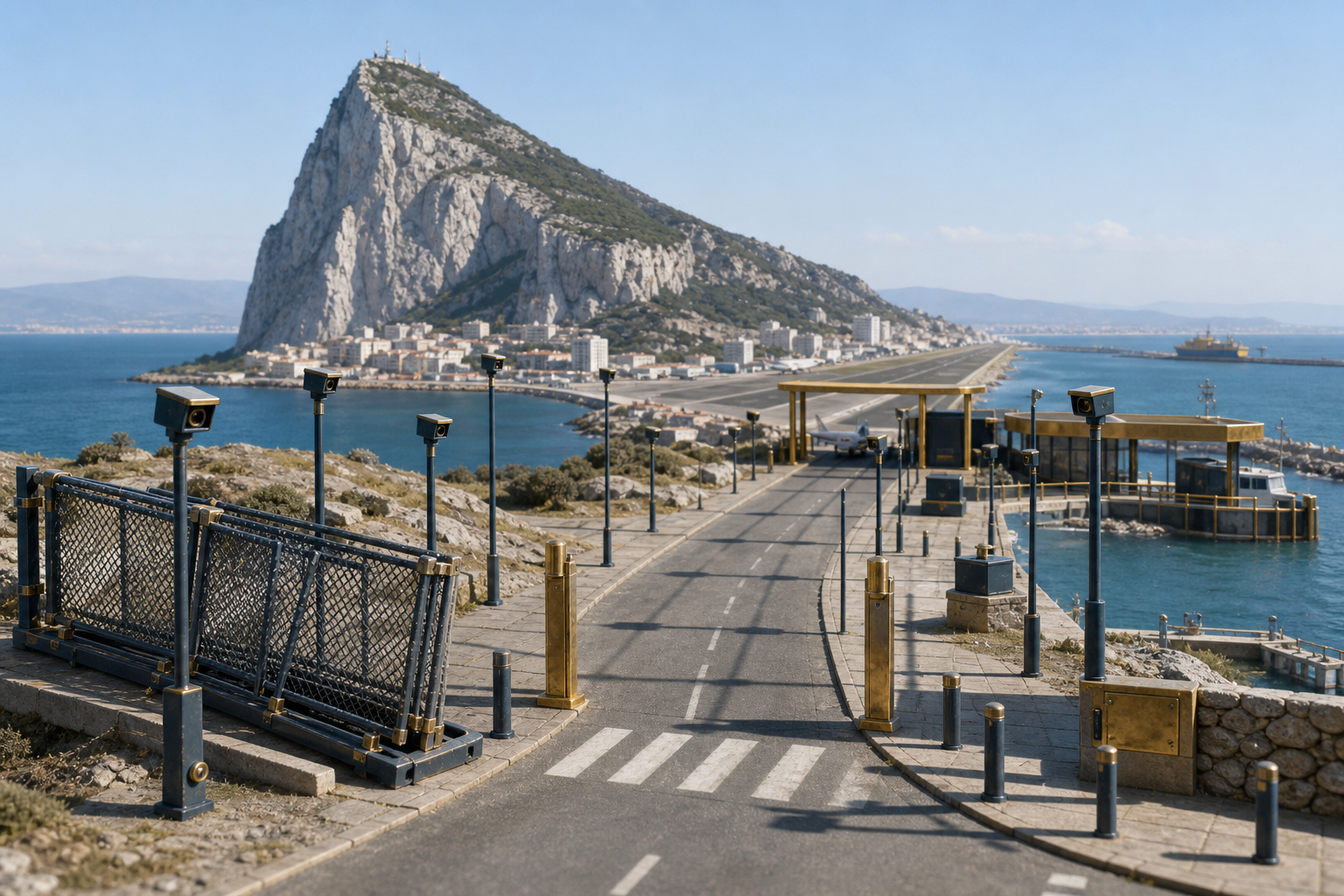
On July 14, 2026, Britain and the EU signed a treaty ending more than four years of talks over Gibraltar's land border with Spain. It took effect the next day. The routine passport and customs checks at the land crossing are gone. So is the boundary fence, first put up in 1908 — the "118-year-old border" in the headlines. Only a few protected historic pieces of it stay.
Roughly 15,000 to 15,500 people cross that line every day for work. That's roughly half of Gibraltar's workforce. For them, this is a genuinely big deal.
But the checks didn't vanish. They moved.
What actually changed, and what didn't
The border itself didn't move. Britain and Spain have argued over who owns Gibraltar for centuries, and the treaty deliberately settles none of that. The line is exactly where it was.
What changed is where the checking happens.
Instead of booths at the land crossing, Gibraltar's airport and port now handle it — twice over. Gibraltar's own officers check you. Then Spanish officers check you separately, for the Schengen area. Fly in from Britain and you clear both.
British visitors now live under Schengen-style rules, too. That means 90 days in any 180-day stretch. And your days in Gibraltar count against your days everywhere else in the Schengen zone. Gibraltar's own residents get specific exemptions the treaty spells out.
Goods and taxes changed as well. Gibraltar has joined a custom-built customs union with the EU, while staying a separate customs territory from the UK itself. A new transaction tax starts below the EU's lowest standard VAT rate and steps up over time, according to European Parliament research.
The part the good-news coverage skipped
Gibraltar's government replaced the fence with a lot of cameras.
The published security package includes:
- 26 cameras watching the old fence line, end to end
- facial recognition at the Joint Agency Facility, the road network, the tunnel entrances, and the runway
- 60 more CCTV cameras across the town center
- automatic number-plate readers
- more police, customs, and coastguard staff
Gibraltar's government says this is stronger security than a chain-link fence ever was. That may well be true.
It's also a plain fact worth stating on its own: a border that used to stop people at a fence now runs on constant digital watching instead. The celebratory headlines rarely mention which one replaced the other.
What this piece is not saying
The border didn't "disappear." Nobody's sovereignty changed hands. British visitors didn't get EU free movement — they're still third-country nationals with a day limit.
The economic wins officials are promising haven't been measured yet either. They're forecasts. They may well come true. They aren't results.
And this isn't a claim that the camera system is wrong or badly run. We don't have an independent audit of it. As far as public reporting shows, neither does anyone outside Gibraltar's government.
What's here is narrow: the checks moved from a fence to an airport, a port, and a camera network. And the treaty is already running while Britain and the EU are still finishing the paperwork to approve it.
What can I do?
If you're traveling to Gibraltar, check the UK's entry rules directly. A trip from Britain isn't treated like a domestic hop anymore, and your past Schengen days now count against your Gibraltar time.
If you work or trade across the line, the Gibraltar treaty portal has the current sector-by-sector guidance. Keep records of delays, surprise fees, or conflicting instructions. Those records matter for your own appeals — and for anyone reporting on how this actually went.
If the cameras concern you, here's a specific ask instead of a general worry. Gibraltar's government hasn't published its facial-recognition impact assessment, its data-retention schedule, or an independent accuracy audit. Ask your representative to request those three documents by name.
The Receipts
- BBC: "New era for Gibraltar with removal of 118-year-old border controls with Spain"
- UK Government: final UK–EU treaty collection
- UK Government: treaty-signing announcement
- European Parliament Research Service briefing
- House of Commons Library: draft text and next steps
- Gibraltar government: "Another historic day for Gibraltar as checks removed from frontier"
- Gibraltar government: security-framework announcement
- 1999 House of Commons Foreign Affairs Committee report on the 1908 boundary fence