Mariska Hargitay has played Olivia Benson — the detective who believes survivors — for more than 25 years. Early in the run, survivors started writing to her, not the character, with stories they'd never told anyone. In 2004 she founded the Joyful Heart Foundation in response. What she found when she dug into the system her show dramatizes was worse than any episode: the evidence existed, and nobody was testing it.
What a backlog actually is
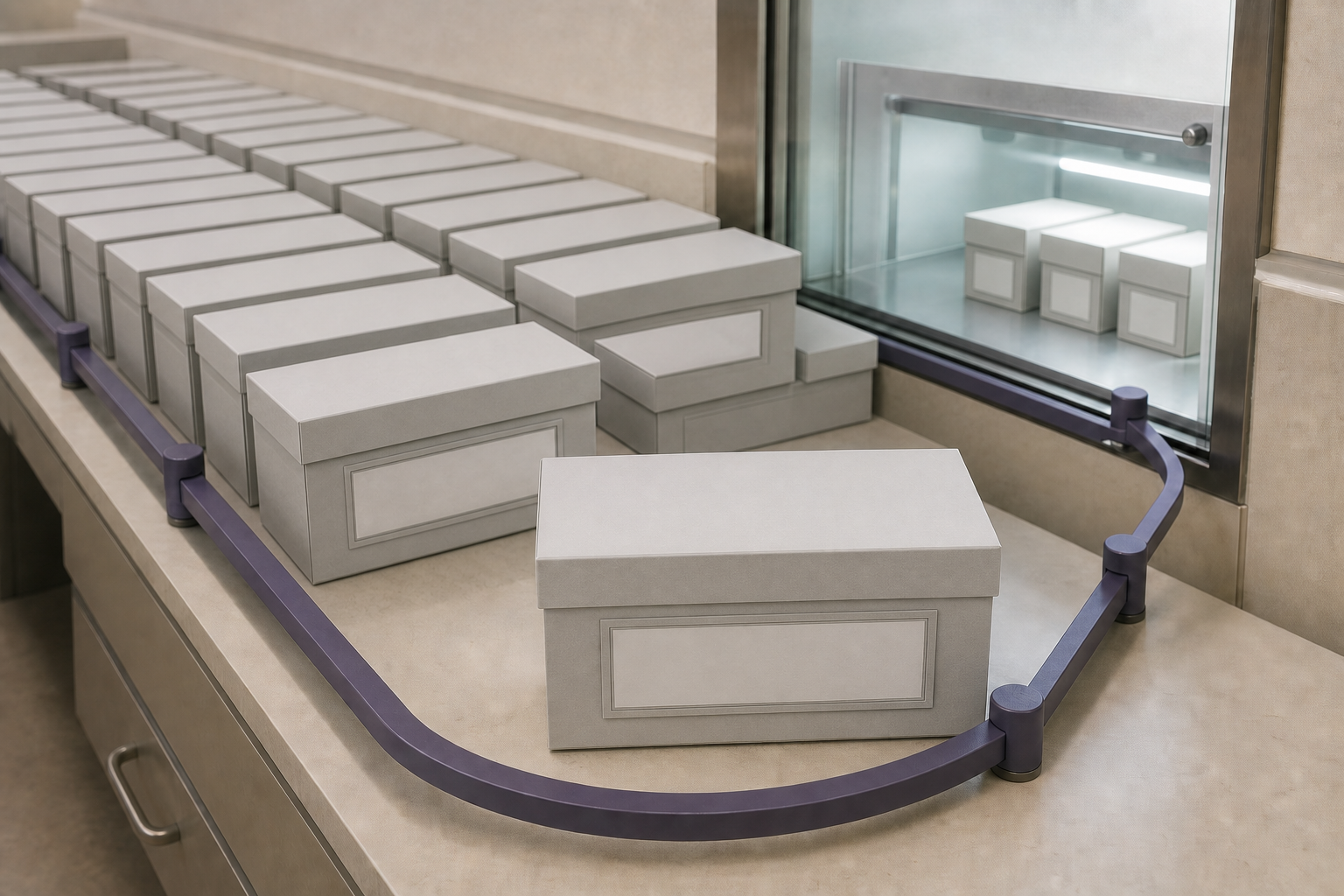
When someone reports a sexual assault and undergoes a forensic exam, the evidence collected — the "rape kit" — can carry the assailant's DNA. Tested, it can identify an unknown attacker, link a serial offender across cases, or clear the wrongly accused. Untested, it's a box on a shelf.
For decades, that's exactly what happened to hundreds of thousands of them. Nobody knows the true total, because most places never counted — the most-cited estimate is around 400,000 at the peak, an estimate, not a tally. Kits sat in police storage and crime labs for years while cases went cold and, in some cases, the same men assaulted again.
Why weren't they tested?
This is the question that makes the backlog more than a filing failure. The reasons — documented most thoroughly in criminologist Rebecca Campbell's federally funded study of Detroit's kits — fall in three layers:
1. Money and capacity. A kit costs roughly $500–$1,500 to test (an estimate, not a fixed price), and crime labs were chronically underfunded and backed up. The Campbell study and subsequent federal audits found that most jurisdictions had no written policy requiring kits be sent to the lab — testing competed with every other demand, and often lost.
2. A rule of thumb that was exactly backwards. Police frequently decided a kit "didn't need" testing — if they believed they already knew the suspect; if it was an acquaintance rather than a stranger ("he said, she said"); if they judged the case unwinnable or thought the victim wouldn't cooperate. So enormous numbers of kits were never even sent to the lab — the heart of the backlog wasn't evidence stuck in a slow queue, it was evidence police chose not to submit. The buried flaw: a kit's value isn't only the case in front of you — DNA links one offender across many cases. The "minor" and "unwinnable" kits in Detroit and Cleveland are exactly the ones that turned out to identify serial rapists. The logic for shelving them inverted the truth.
3. Whose word counted. The hardest layer, and the one the data keeps surfacing: kits went untested because the cases — and the people who reported them — weren't believed or weren't prioritized. Campbell's research documented investigators applying what criminologists call "focal concerns" — treating some cases as less worthy of resources based on assumptions about victim credibility, disproportionately affecting the most marginalized: sex workers, women struggling with addiction, the poor, women of color. A kit left on a shelf was, too often, a quiet judgment that the survivor wasn't worth the test.
None of those layers excuses the others. Together they describe a system that treated rape evidence as optional — a backlog less like an accident than a measure of how seriously the crime was taken. That's the part the reforms are really trying to change.
The campaign, and the six things it asks every state to do
Through Joyful Heart's End the Backlog initiative, Hargitay spent over a decade pushing states toward six concrete reforms — the "six pillars":
- Count every untested kit in the state.
- Test the backlog of old kits.
- Test every new kit going forward.
- Build a statewide tracking system so kits can't vanish.
- Give survivors the right to know where their kit is.
- Put dedicated funding behind it.
The milestone — stated precisely, because the precision is the point
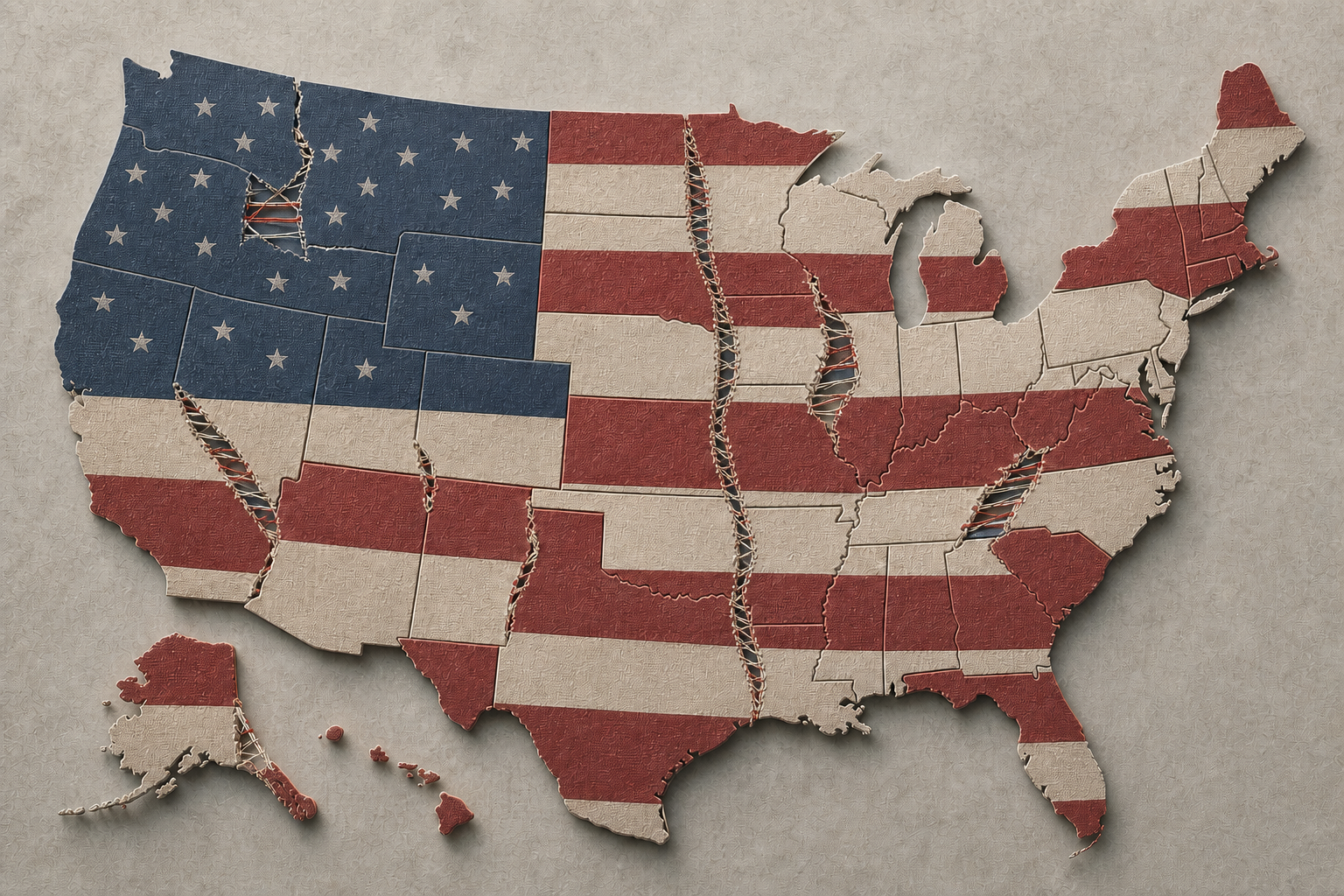
In May 2026, with Maine the last state to act, all 50 states plus Washington, D.C. and Puerto Rico had passed at least one of those six reforms. She founded Joyful Heart in 2004 for broader survivor support; she made ending the backlog specifically her fight around 2010, after learning the scope of it. Sixteen years into that fight, there is no longer a single state with zero rape-kit reform law on the books.
Here is what that milestone is — and isn't. It means every state has passed at least one pillar. It does not mean every state adopted all six, that every kit is now tested, or that the backlog is gone. Those are different things, and conflating them would do the cause a disservice.
Proof that testing works
Where jurisdictions actually tested their backlogs, the results were stark:
- Detroit found roughly 11,000 untested kits in a police storage unit. Testing them helped identify 800-plus suspected serial rapists and produced hundreds of convictions.
- Cleveland (Cuyahoga County) tested about 7,000 kits, cleared its backlog, and identified 500-plus serial rapists with hundreds of indictments.
Those aren't abstractions. Each tested kit was a chance — taken late — to catch someone who was still out there.
"Couldn't someone just pay to test them all?"
It's the obvious question — and the answer is one of the sharpest parts of the story. Testing one kit costs roughly $500–$1,500, and almost none of that is chemicals: the DNA reagents run under a dollar a reaction (from forensic-genomics firms like Thermo Fisher, Promega, and QIAGEN — not, as people assume, the big drug companies). What you pay for is time and capacity — trained analysts, accredited lab space, quality review. Because public crime labs run at capacity, jurisdictions ship backlog kits to private labs and pay per kit.
So could money just clear it? On the testing bill alone — largely yes, and people tried. In 2015, Manhattan DA Cy Vance put up $38 million (from bank-forfeiture funds), the Justice Department added about $41 million, and the federal Sexual Assault Kit Initiative was born — it has since invested hundreds of millions of dollars and sent more than 100,000 kits for testing. At a few hundred to ~$1,500 a kit, clearing the national testing backlog was a modest sum next to the institutions involved.
So why did kits keep sitting? Two things money can't simply buy. First, the decision to submit the kit — police policy and discretion, not budget. Second, what happens after a hit: a match reopens a case, and re-investigating, prosecuting, and re-contacting survivors costs far more, over far longer, than the test itself — recurring institutional capacity a one-time grant can't supply. (It's exactly why SAKI funds investigators and prosecutors, not just lab work.)
For a small or rural department, the per-kit fee genuinely was a barrier. But systemically, the lesson holds: the testing money was findable, and largely found. The wall was upstream policy and downstream capacity — not the price of the test.
The honest part
Reform laws now exist everywhere. Testing and a cleared backlog do not. An estimated ~100,000 kits are still thought to be "yet to be discovered," implementation and funding vary widely by state, and a law on the books is only as good as the lab and budget behind it. Hargitay said it plainly at the milestone: "We are far from done." Her 2017 documentary I Am Evidence (which she produced; it won a News & Documentary Emmy) put faces to the boxes precisely so the number couldn't stay abstract.
The bottom line
A television actress did something a TV detective can't: she made a real system that had been ignoring survivors start counting — first the kits, then the predators they led to. The backlog went from invisible to tracked; the laws went from nowhere to everywhere. The kits themselves still have to be tested, one state's budget at a time. That's the unfinished part, and the honest one.
If this is close to home
- RAINN — free, confidential, 24/7: 1-800-656-HOPE (4673) / online.rainn.org.
- Check your state: whether you have the right to know your kit's status, and how your state rates on the six reforms — endthebacklog.org.