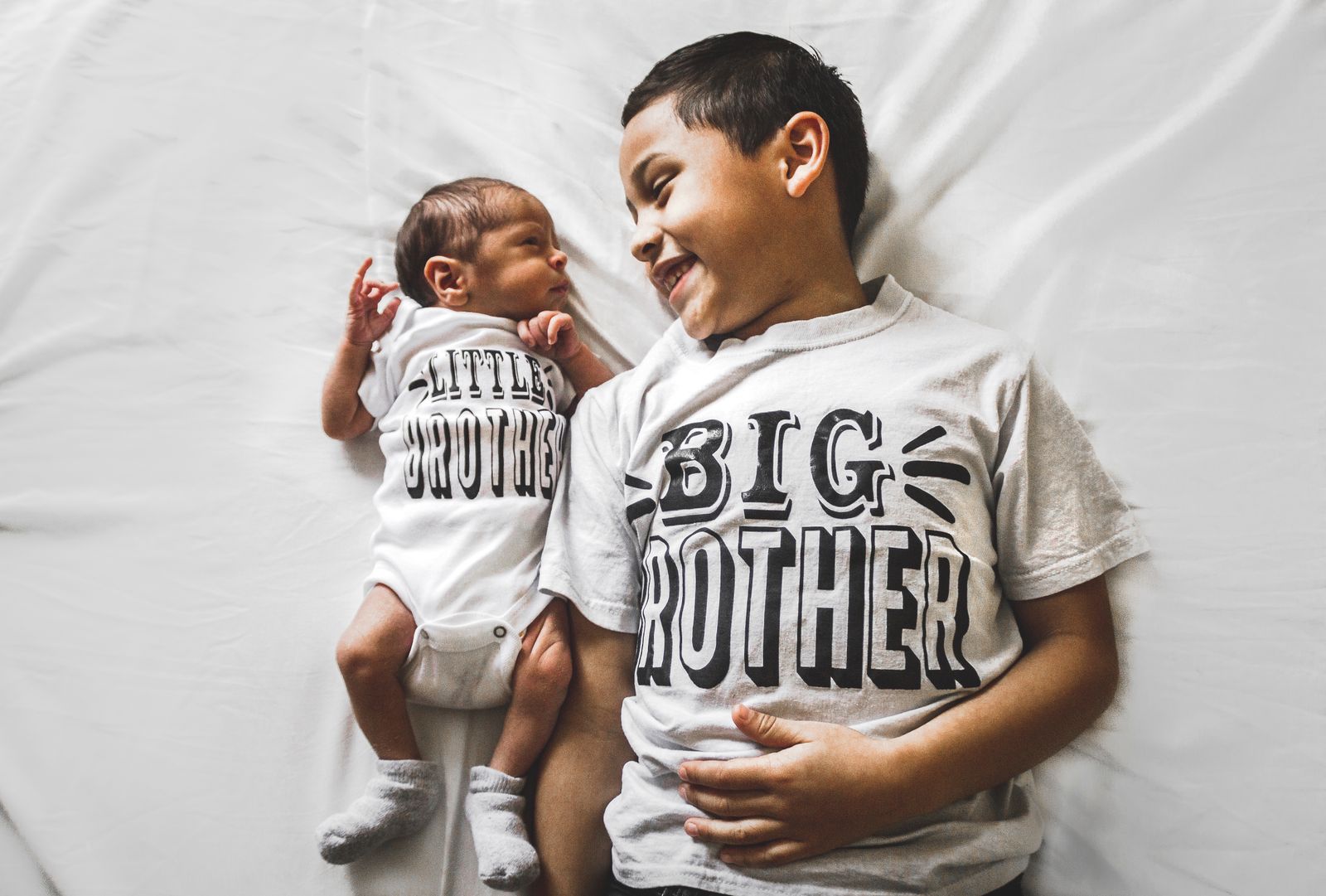
 Big brother, little brother. Photo: Pexels.
You already know your family's version of the theory. The oldest is responsible and a little bossy. The middle one got forgotten. The youngest got away with everything. It is the most durable pop-psychology on earth. It is also, mostly, wrong.
The Washington Post waded back into birth order this month, and the honest version turns out to be more interesting than the myth.
The myth doesn't survive the data
When researchers test the personality claims at scale, they tend to evaporate. Rodica Damian, a psychologist at the University of Houston, ran the numbers on roughly 257,000 people and found "no reliable differences in personality based on birth order" once you control for the things that travel alongside it — family size, income, and the rest. The firstborn "edge" she could detect came to about a single point of verbal IQ. That's the whole bossy-oldest empire.
What's real is duller — and bigger
Here's the part that holds up. Firstborns really do post better measured outcomes: more education, slightly higher earnings, higher test scores. The reason isn't temperament. It's time.
Joe Price, an economist at Brigham Young University, put a number on it using the federal time-use survey. The firstborn gets roughly 3,000 more hours of one-on-one parent time between ages 4 and 13 than the next child gets at the same ages. Three thousand hours — same parents, same house, just more of them, banked before the siblings arrived to split the attention. Population studies in Norway have since found the matching downstream gaps in IQ and adult earnings between first- and later-borns. Not destiny. A thumb on the scale.
The twist
Two facts complicate the tidy "firstborn wins" story, which is exactly why it's fun. Elite athletes skew toward younger siblings — an older brother or sister, it turns out, makes a free built-in rival and coach. And in Indonesia, firstborns get less education, not more, because they get pulled into farm work first. Flip the environment and the "advantage" flips with it. Which is the tell: it was never about being born first. It was about what being born first happened to buy you.
The bottom line, up front: your birth order didn't write your personality. It just changed the math on how much of your parents you got.
The Receipts
BL:UF doesn't ask you to trust us. Check our work:
"Why birth order can shape a kid's future and what parents can do about it" — The Washington Post, June 9, 2026
Firstborns get ~3,000 more one-on-one hours (ages 4–13); Joe Price, BYU, using the American Time Use Survey — BYU News
"No reliable differences in personality based on birth order" — Rodica Damian's 257,000-person study — WBUR On Point, June 12, 2026